Curaçao Casino Licence for Australian Players: Legal Status
 Available in AU
A Curaçao licence describes an operator’s status offshore, while Australian law separately governs online casino services offered to residents.
Table of Contents
- Offshore Casino Access Meets Australian Law
- What a Curaçao Casino Licence Does—and Does Not—Establish
- The Australian Licence Check Is a Separate Test
- How to Read Casino Claims Without a Site List
- Online Gaming Rules and Player Protections
- Security Signals: Encryption and Identity Checks
- Crypto Claims Need Evidence, Not Rankings
- ACMA Enforcement and the 2026 Context
- What Can Be Verified About Newly Launched Sites
- The Question of Casinos in Curaçao
Offshore Casino Access Meets Australian Law
A website can be located offshore, accept Australian visitors and still have no permission to provide online casino games to people in Australia. The distinction is not a technicality about where a server sits. Australian law focuses on the service offered to people physically in the country, and on the conduct of the operator. A Curaçao-based online casino, for instance, does not become authorised to serve Australians merely because it operates from another jurisdiction.
The governing domestic law is the Interactive Gambling Act 2001. It prohibits operators from offering online casino games to Australian residents. The rule applies to the business providing the service; the operator’s location does not turn the prohibited service into an authorised one. In that sense, “offshore” describes where a business is based, not its legal status in Australia.
That distinction can be obscured by the ordinary language of the internet. A site may load, display an Australian-facing page or present its games as available across borders. Those signs describe access, not authorisation. The same is true of a site calling itself an online Curaçao casino: its own label cannot alter the Australian rule governing the service.
For Australian players considering casinos with a Curaçao connection in 2026, licensing details and practical payment information can help clarify what each listing is known for. Use these concise notes as a reference when deciding what to investigate further.
License: Curacao · Payout speed: crypto 30-60 minutes, fiat 1-5 days · Min. deposit: A$10 Wild Tokyo lists a Curaçao licence and an A$10 minimum deposit. Its stated payout times are 30–60 minutes for crypto and 1–5 days for fiat.
License: Curacao Golden Pokies is listed with a Curaçao licence. No further operator details are provided here.
License: international iGaming licence – jurisdiction not named in the source · Payout speed: PayID 1-24 hours · Min. deposit: A$30 (PayID from A$10) House of Pokies lists an international iGaming licence, though the jurisdiction is not named. PayID payouts are stated at 1–24 hours, with a A$30 minimum deposit or A$10 for PayID.
License: Curacao eGaming (Dama N.V.) JeetCity Casino lists a Curaçao eGaming licence held by Dama N.V.
License: Curacao Gaming Control Board JustCasino lists a Curaçao Gaming Control Board licence.
License: Curacao Gaming Control Board OGL/2023/176/0095 (Hollycorn N.V.) Rollero Casino lists Curaçao Gaming Control Board licence OGL/2023/176/0095, held by Hollycorn N.V.
License: Curacao (operating since 2017) · Min. deposit: A$20 Uptown Pokies lists a Curaçao licence, has been operating since 2017, and has a A$20 minimum deposit.
License: Curacao Gaming Authority (Jumpman Gaming Ltd) DragonSlots Casino lists a Curaçao Gaming Authority licence held by Jumpman Gaming Ltd.
License: Curacao Gaming Control Board OGL/2023/176/0095 (Hollycorn N.V.) Neospin lists Curaçao Gaming Control Board licence OGL/2023/176/0095, held by Hollycorn N.V.
Payout speed: crypto under 1 hour, PayID 1-3 business days · Min. deposit: A$20 (A$30 to qualify for the bonus) Ricky Casino states crypto payouts under one hour and PayID payouts in 1–3 business days. Its minimum deposit is A$20, or A$30 to qualify for the bonus.
The operator and the individual player
The Act’s position on operators should not be confused with its position on individual players. It does not explicitly criminalise a person for using an offshore casino site. That is a narrower statement than saying offshore play is approved, protected or legally equivalent to using a service authorised in Australia. It means that the law’s prohibition on providing online casino games is not, in itself, an explicit criminal offence for the individual who plays.
This difference matters because legal responsibility and practical risk do not always fall on the same party. An operator may be prohibited from offering a service to Australians even where an individual player is not explicitly criminalised for using it. The absence of a player offence is not a local licence, nor does it create a right to have a service remain available. It is a boundary in the law, not an endorsement.
An Australian searching for a casino online in Curaçao may therefore encounter two separate questions: whether a foreign business offers a service, and whether it may lawfully offer that service in Australia. The first can be answered by the site’s own presentation. The second is answered by Australian law, not by the operator’s description of itself. A foreign base does not erase the domestic restriction.
This is why terms such as “Curaçao casino online” can be misleading when treated as a category of Australian gambling authorisation. They identify a claimed location or association, not permission to provide online casino games here. The same distinction holds for casinos described as being in Curaçao, or for a site that presents itself as a Curaçao online casino while aiming its service at Australian residents. The place named in the brand does not settle the Australian legal question.
There is also a difference between a website being reachable and a service being lawful. Offshore gambling sites can be subject to blocking and enforcement in Australia. A page appearing in a browser is not evidence that the operator has approval to serve Australians; nor does a temporary ability to reach it displace the rules. Internet access is a poor proxy for legal status.
Access is not protection
The practical consequences are important. A service prohibited from operating in Australia does not offer the same basis for recourse as a service authorised under Australian law. If an offshore operator withholds winnings or disputes an account, Australian laws may not assist in the way a player might expect from a locally authorised service. Unlicensed gambling services lack Australian consumer protections. A polished interface cannot supply those protections by implication.
Using a VPN to reach a casino that is otherwise inaccessible does not change the legal status of the operator or the service. It may also breach the site’s own terms, with possible consequences including voided winnings, account closure and loss of a deposit. The technology changes the apparent route to a website; it does not create Australian authorisation.
The distinction can sound abstract until something goes wrong. A familiar payment option, customer support in English or a page tailored to Australia may make an offshore casino feel local. None changes the basic allocation of responsibility in the Interactive Gambling Act 2001: operators are prohibited from offering online casino games to Australians, while the Act does not explicitly criminalise individual players for using offshore sites.
Critical Risk
Unlicensed gambling services lack Australian consumer protections, and Australian laws may not assist if an operator withholds winnings.
That is a narrow legal distinction, not a seal of safety. The Australian framework does not treat a foreign casino’s availability as permission to operate here, and a player’s lack of explicit criminal liability does not make the service an authorised domestic option. Location, access and authorisation are different things. The distinction is the point.
What a Curaçao Casino Licence Does—and Does Not—Establish
A Curaçao casino licence and permission to offer gambling in Australia are different things. The first is a claim about a relationship with a licensing authority in Curaçao. It does not, by itself, establish that an operator is authorised under Australian law. The word licence can sound complete, as though one official decision settles every question about where a service may operate. In practice, permission is bounded by the legal system that grants it.
That distinction matters because a licence is not a passport. A casino described as Curaçao-licensed may be using the label to indicate a status connected with Curaçao. The label alone does not say what Australian law permits, nor does it turn an offshore casino into a service licensed in Australia. The two descriptions answer different questions: one concerns an offshore licence; the other concerns authorisation to provide a service in this country.
The point is easy to lose in the compact language of casino websites. “Curaçao casino” may describe a site’s claimed licensing connection, its business identity, or simply the market category under which it is presented. It is not a separate legal category that exempts online casino games from Australian restrictions. Nor does the phrase “casino licence Curaçao” settle whether Australians may lawfully be offered the service.
The Australian rule is decisive on that point. Online slots and casino games such as blackjack are illegal in Australia. An offshore licence does not change the nature of those games or create Australian authorisation for offering them here. A page describing a Curaçao casino may therefore be accurate about an offshore licensing claim while saying nothing that answers the Australian legal question. Those statements can coexist; they should not be mistaken for one another.

This is not a technical quibble about wording. Licensing language carries an aura of public approval. It suggests that someone has examined a business and found it fit for a particular purpose. But the purpose and territory matter. A licence issued under one jurisdiction’s rules cannot simply be read as a decision by Australian authorities. Calling a service licensed without specifying where can blur precisely the distinction that matters to an Australian audience.
The same caution applies to variations in wording. “Curaçao casino licence,” “casino licence in Curaçao,” and “Curaçao-licensed casino” may all point toward the same offshore connection, but none is a synonym for “licensed in Australia.” Search-result snippets, banners and promotional copy often compress these differences until the licence sounds like a general seal of legitimacy. It is not. A statement about a foreign licence is not proof of local permission.
ACMA is the Australian authority responsible for regulating online gambling. Its role belongs to the Australian framework; an offshore licensing claim does not replace it or speak on its behalf. The distinction is institutional as well as geographical. A regulator’s authority arises from the law it administers, not from the fact that another jurisdiction may have issued a licence to a business.
ACMA Role
ACMA is the Australian authority responsible for regulating online gambling; an offshore licensing claim does not replace it or speak on its behalf.
It is also important not to infer more from the label than it says. The words alone do not establish the precise conditions attached to a licence, whether it remains current, which company or service it covers, or what protections apply in a dispute. Those matters require evidence about the specific claim. Even where an offshore licence is genuine, its existence does not answer whether Australian rules allow the service to be offered to people in Australia.
This leaves the phrase “Curaçao casinos” with a limited meaning in an Australian context. It can identify a group of sites associated with an offshore licensing claim, but it cannot define their status under Australian law. The distinction does not depend on whether a website looks polished, uses formal legal language or presents a licence badge prominently. Presentation is not jurisdiction.
There is a small irony here: the more confidently the word licensed is displayed, the easier it is to forget the missing preposition—licensed where? In this market, that omitted detail is not fine print. It is the whole distinction.
The Australian Licence Check Is a Separate Test
A claim about a Curaçao licence and a listing on ACMA’s public register answer different questions. The first concerns an offshore licence; the second is the Australian check for whether a wagering service holds a valid Australian licence. Treating one as proof of the other collapses two separate systems into a single, misleading label.
That distinction matters because “licensed” is not a complete description. A licence has an issuer and a scope. An offshore licence does not establish that a service is licensed in Australia, and a name that sounds official does not settle the question either. For Australian status, the relevant reference point is ACMA’s public register.
The register check is deliberately narrower than a general impression of legitimacy. It asks whether the wagering service holds a valid Australian licence. It does not turn an offshore licence into an Australian one, nor does a claim about a foreign regulator answer the domestic question. A service may make several claims about its standing; only the Australian register addresses this particular test.
There is also a limit to what the register can mean in the casino context. Australian law does not permit operators to provide real-money online casino games to people in Australia. A register entry for a wagering service should therefore not be read as a general approval for online casino games, slots or table games. The category matters. A licence is not a passport valid for every product a business might offer.
This is where casual wording creates confusion. “Licensed in Australia” can sound like a broad quality mark, when the practical question is whether the relevant service and product are authorised under Australian rules. The public register is a way to check the former claim about a wagering service; it should not be stretched into a blessing for prohibited casino gaming. A label cannot enlarge the law.
The useful sequence is simple in principle: identify the service being discussed, then consult ACMA’s public register to check its Australian licensing status. A broad corporate name or an offshore certificate is not a substitute for that check. The question is not whether a company can display a licence from somewhere, but whether the wagering service holds a valid Australian licence.
Licensing Status Check
Determine the specific wagering service or operator being discussed.
Visit ACMA’s public register to check for a valid Australian licence.
Confirm if the specific product (such as online casino games) is authorised, as some licences apply only to wagering.
That distinction also protects against a common rhetorical switch. A page may lead with a Curaçao licence and then use “licensed” as if the location of the issuing authority were immaterial. It is not. The Australian test remains separate, and the offshore claim cannot answer it. Even a genuine foreign licence would establish only what that licence establishes; it would not make an Australian licence appear by association.
The register is not a reason to assume that all gambling products are lawful when attached to a listed service. Australian regulatory status is tied to the applicable service and legal framework, not to a reassuring word on a page. For a casino-style offer, the central point remains that online casino games for Australian customers are prohibited. A register lookup cannot reverse that rule.
This is why the check should be read precisely rather than ceremonially. Looking at a public register is not a box to tick before proceeding with any offer bearing the word “casino.” It is a verification of Australian licensing for wagering services, and its significance should stay within that boundary. A foreign licence may be part of an operator’s own description, but it is not the Australian test.

For readers comparing descriptions, the distinction is useful even when it produces an unwelcome answer. If a service’s Australian status is unclear, an offshore licence claim does not fill the gap. The appropriate reference remains ACMA’s public register. Where the product being promoted is online casino gaming, however, the register should not be misread as permission to offer it to people in Australia.
The habit of checking the issuer, rather than stopping at the word “licensed,” is a small act of civic literacy. Australia’s system draws a line between wagering services that hold an Australian licence and online casino services that operators may not provide here. That line can disappear in marketing language. The register restores it, but only when its meaning is kept exact.
A separate test, then. An Australian licence check is not a search for a more persuasive offshore claim; it is a check against ACMA’s public register. That is the distinction worth preserving.
How to Read Casino Claims Without a Site List
A page describing the “best” Curaçao casinos can sound like a consumer guide while answering a narrower question: which sites its publisher has chosen to feature. A ranking is not a regulatory finding. Nor does a collection of names become evidence merely because it is called a list. The useful distinction is between what a claim says about an offshore licence and what can be established about a service’s standing in Australia.
Do
- Treat rankings as the publisher’s opinion
- Distinguish between access and permission
- Use the public register for verification
Don’t
- Mistake a site list for a regulatory finding
- Equate an offshore licence with local authorisation
- Assume a polished interface provides protection
That distinction matters because familiar labels do several jobs at once. “Licensed,” “trusted” and “available to Australian players” may sit close together in a promotion, though they are not interchangeable statements. An offshore licence claim concerns a licence issued elsewhere. It does not, on its own, establish that the service holds a valid Australian licence or is authorised to offer gambling here. A polished presentation can make the gap look smaller. It remains a gap.
Read the claim, not the adjectives
The wording around a site can be sorted into different kinds of assertions:
- A licensing assertion identifies a regulator or licence and says something about the operator’s status there. It should not be read as proof of Australian authorisation.
- A suitability claim—“best,” “top” or “recommended”—is an assessment by whoever published it. Without stated, checkable criteria, it is an opinion wearing a formal jacket.
- An access claim suggests that a service accepts people in Australia. Accessibility is not the same as permission to provide the service in Australia.
- A safety claim may refer to the site’s own policies or presentation. It should not be mistaken for the protections attached to a service licensed in Australia.
These distinctions are not semantic housekeeping. They prevent one statement from quietly standing in for another. A Curaçao casino list may contain sites described as licensed offshore, but that description does not make the list a register of legal gambling products for Australians. Neither a ranking nor a licence badge settles that question.
Use the public register for the Australian question
ACMA has urged people to consult its website and the national register when identifying legal gambling products available in the Australian market. That is the relevant reference point for claims about Australian licensing—not a promotional page, a comparison table or a site’s own assurance.
The register serves a different purpose from a publisher’s list. One may organise services for attention; the other is a public reference for the local regulatory question. If a promotional claim implies that a service is licensed in Australia, it should be considered against that public record. If the claim concerns only an offshore licence, it does not answer the Australian question and should not be presented as though it does.
This is a way to read claims, not a recommendation to use any service that appears in a list. Unlicensed gambling services lack Australian consumer protections, and Australian laws may not assist when winnings are withheld. Using a VPN to reach a casino may also lead to winnings being voided, an account being closed or a deposit being lost. A technical route around a block does not alter a service’s regulatory status.

The register cannot turn an offshore casino into an Australian-authorised one by association, and a publisher cannot do so with a ranking. The language may be confident. The evidence still has to answer the right question.
Online Gaming Rules and Player Protections
The phrase “Curaçao gaming casino” can make an offshore site sound like part of a regulated gaming environment. For Australians, the relevant distinction is not the style of a website but whether the service is permitted to provide the game locally. Real-money online casino games, including slots and blackjack, are prohibited services when offered to people in Australia. A Curaçao connection does not change that position.
The Interactive Gambling Act 2001 sets the domestic framework. Operators are subject to responsible-gambling requirements where they are licensed to provide permitted services, but that does not create an Australian licence for online casinos. The protection attached to a regulated service should not be mistaken for a general promise that every site using the language of licensing follows Australian rules.
This matters because consumer safeguards are not decorative additions to a site’s terms. They belong to a system of oversight: a licensed operator has obligations, and the regulator can hold it to them. Where online casino gaming is prohibited, a page describing safeguards cannot turn the underlying service into an authorised one. A polished menu is not a legal status.
Responsible Gaming
- Real-money online casino games are prohibited for people in Australia.
- A Curaçao connection does not change the domestic legal position.
- Claimed features like deposit limits do not establish regulatory oversight.
- Support links are useful but do not make a prohibited service authorised.
Deposit controls illustrate the difference between a claimed feature and a verified protection. A specialist review has described licensed online casinos as offering player-set deposit limits across daily, weekly or monthly periods. That is a description from one review, not a statement that every platform provides those settings, nor evidence that a Curaçao casino is licensed in Australia. The existence, scope and operation of a limit depend on the service; its presence on a screen alone does not establish regulatory oversight.
Information about gambling-related harm is another meaningful part of responsible practice. Reputable platforms provide material on the risks of gambling and direct people to professional support services available across Australia. Such information can help make support visible, but it does not erase the legal distinction between permitted wagering and prohibited online casino games.
Australia’s approach places the boundary before the interface: rules determine which services may be offered, while protections shape the conduct of operators within the regulated system. That distinction is easy to blur when offshore gaming sites present familiar tools as proof of safety. It is not proof. A limit-setting option or a support link may be useful, but neither by itself establishes that the service is authorised to offer online casino gaming to Australians.
Security Signals: Encryption and Identity Checks
A padlock symbol can answer a narrow question: whether a connection is encrypted. Casinos use SSL encryption to protect transactions and sensitive information as it moves between a user’s device and the site. That is a useful technical safeguard, but it says nothing by itself about who operates the service, how it handles a dispute, or whether it is authorised to accept customers in Australia. Encryption protects a channel, not the whole relationship.
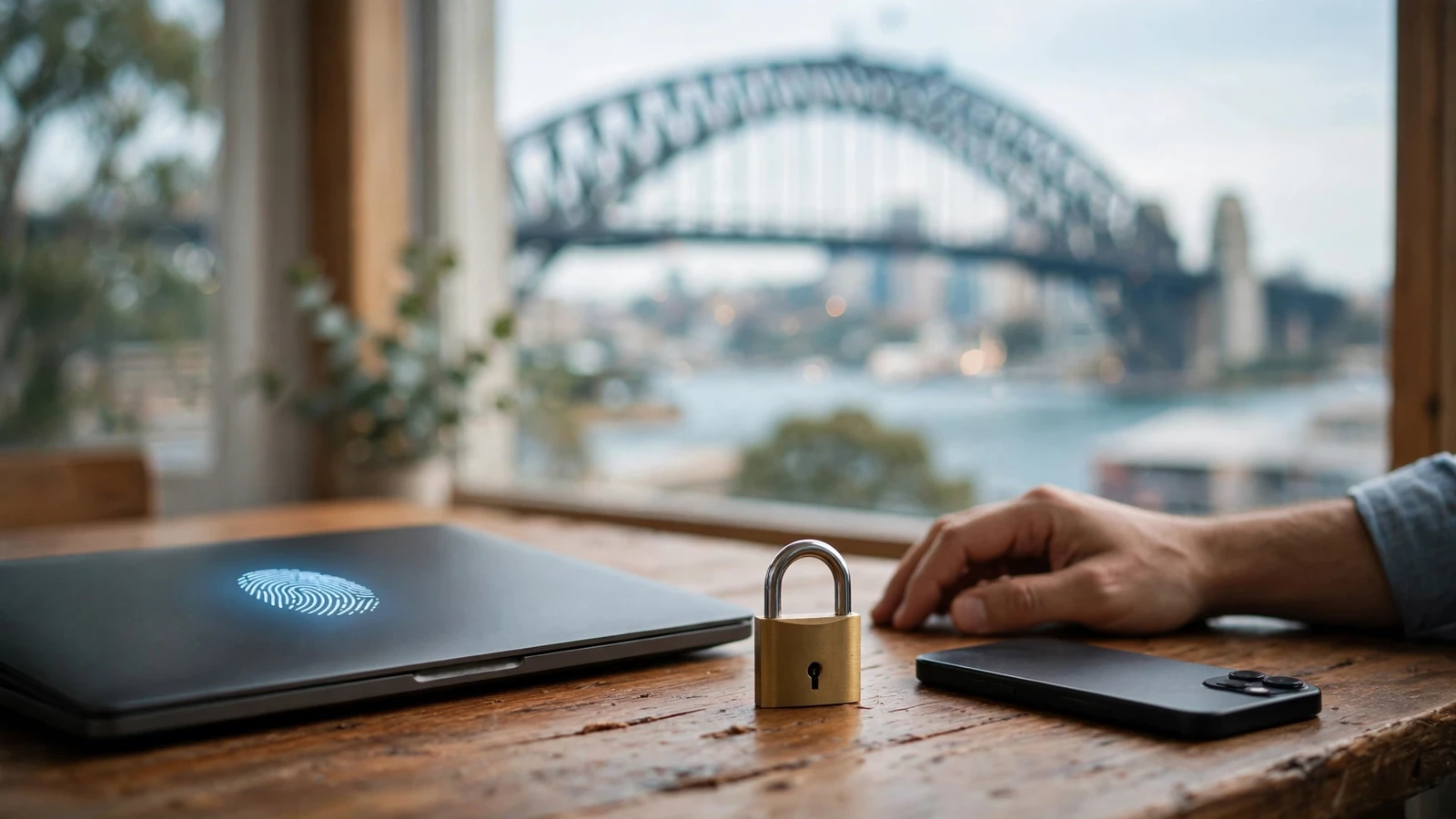
Identity checks are another visible part of account security. Casinos conduct know-your-customer procedures, and verification is required before a withdrawal. The requested documents commonly include photo identification, proof of address and evidence that the payment method belongs to the account holder. These checks can help match an account to a person and payment source; they do not certify the operator’s conduct or guarantee that a withdrawal will be paid.
The distinction matters when assessing whether a Curaçao-based or Curaçao-licensed casino is safe for Australians. Neither a security icon nor a completed identity check establishes Australian authorisation. Offshore services that are not licensed in Australia lack the consumer protections attached to the regulated Australian market, and Australian law may not assist if an operator withholds winnings. A polished verification process can look reassuring while leaving the most consequential questions unanswered.
Identity checks also involve handing over sensitive material. Photo identification, an address document and payment ownership evidence can reveal information that should be treated carefully. The presence of a KYC process does not, on its own, show how documents are stored or who can access them. Nor does SSL encryption prove that every system used by a company is secure. Those limits are easy to overlook because both measures are presented as signs of order.
A VPN does not change the underlying status of an offshore casino or make it authorised in Australia. Using one to reach a casino may lead to voided winnings, account closure and loss of a deposit. A technical route around a block is not a legal or consumer safeguard.
Attention: Using a VPN to reach an offshore casino can lead to voided winnings, account closure, and loss of a deposit.
These signals therefore have modest, specific meanings. SSL points to encrypted communication; KYC identifies the checks made before withdrawals. Neither establishes that an offshore operator is safe for Australian players, and neither substitutes for the protections that come with a service licensed in Australia. Small assurances, not a verdict.
Crypto Claims Need Evidence, Not Rankings
A ranking of Curaçao crypto casinos would look decisive: names in order, perhaps accompanied by claims about coin support, payouts or popularity. But an ordered list is only as reliable as the evidence behind it. Without independently supported information about particular operators and their terms, those claims cannot be checked, compared or responsibly turned into a “best” list.
The same restraint applies to the phrase “crypto casino”. It describes a payment-related claim, not a complete account of a service. It does not establish which digital currencies are accepted, whether the stated options are available to every customer, or what conditions apply when funds are deposited or withdrawn. Nor does the label alone verify that a casino holds the licence it claims, or that its claims have been examined by an independent body.
Search for the leading Curaçao casinos and the familiar machinery of ranking may appear: badges, confident adjectives and a numbered order. Yet an attractive presentation is not evidence of a method. A ranking needs clear criteria and information that can be checked against those criteria. Without that foundation, the order communicates certainty while leaving its basis obscure. Neat columns do not settle the matter.

That gap matters particularly in Australia. A claim about cryptocurrency or an offshore licence does not establish that a real-money casino service may lawfully be provided to people in Australia. Online casino-style games offered to Australian customers fall within the country’s prohibited interactive gambling services. A payment label cannot alter that position.
There is also a difference between describing a claim and verifying it. A site may say that it accepts crypto; that statement, by itself, does not confirm the available payment arrangements or the reliability of the service. Likewise, a list that calls one operator “top” has not demonstrated that its selection is complete, comparable or relevant to Australian residents. The word is doing more work than the evidence.
For that reason, a responsible account can describe what such labels suggest, but cannot present a ranked selection as a finding. No dependable comparison follows merely from the words “Curaçao” and “crypto” appearing together. The category may be legible. Its claims still need proof.
ACMA Enforcement and the 2026 Context
In Australia, enforcement is not a matter of recognising a foreign licence and accepting its reach. ACMA oversees online gambling and can act against operators that breach the Interactive Gambling Act 2001. Its tools include fines and requests to internet service providers to block websites offering prohibited interactive gambling to Australian customers, as well as services for adults in Australia that lack the required local authorisation.
A block is an access measure, not a declaration that a site has ceased to exist everywhere. ACMA treats formal blocking orders as a last resort, used when it considers customer safety to be at risk. That distinction matters in 2026: a Curaçao licence does not prevent an Australian access block, nor does it convert an offshore casino into a service authorised for Australian customers.
Access has been restricted to 1,369 illegal gambling and affiliate websites.
Blocking-order requests have permanently restricted access to 1,154 websites.
Around 220 illegal services have left the Australian market following tougher rules.
The enforcement record has accumulated over several years. Since ACMA made its first blocking request in November 2019, it has restricted access to 1,369 illegal gambling and affiliate websites. About 1,011 of those sites are reported as blocked, while blocking-order requests have permanently restricted access to 1,154 illegal gaming and affiliate websites. Around 220 illegal services have also left the Australian market following tougher rules.
The scale is substantial. It also shows why a site’s continued appearance online is not evidence that it may lawfully serve Australians. Unlicensed services lack Australian consumer protections, and Australian law may not help if winnings are withheld. Using a VPN to reach a casino may lead to voided winnings, account closure and loss of a deposit. A thin substitute for legal access.
What Can Be Verified About Newly Launched Sites
A claim that a Curaçao casino is newly launched is a claim about its history, not proof of its standing in Australia. The two questions are easily blurred in promotional copy: when a website appeared, and whether it may lawfully offer online casino games to people in Australia. One does not answer the other.
A launch date needs evidence tied to the particular service. A fresh design, a new domain, or an announcement calling a brand “new” does not, by itself, establish when the operator began trading. Nor does the age of a website settle whether the business behind it has changed, or whether an old operation has been presented under a new name. Those details cannot be inferred from the phrase “new Curaçao casino”.
That leaves a narrow but useful standard: treat launch claims as unconfirmed unless dated, independently checkable records support them and clearly refer to the same operator and service. A claim repeated across promotional pages is still a claim; repetition is not a record of a launch. Without such evidence, it is more accurate to describe the date as unverified than to label a site new.

This distinction matters in Australia because a launch announcement cannot confer local permission. The Interactive Gambling Act 2001 bars operators from providing real-money online casino games to people in Australia. A service without Australian authorisation also lacks the protections attached to the regulated Australian market, and Australian laws may not help if winnings are withheld. A Curaçao label or a recent opening date changes none of that.
Using a VPN to reach an offshore casino may lead to winnings being voided, an account being closed, and deposits being lost. A new name is no safeguard.
The Question of Casinos in Curaçao
Whether Curaçao has land-based casinos is a separate question from whether an online casino carries a Curaçao licence. The two are often folded together in casual conversation, as if a place name could settle both the geography and the legal status of a website. It cannot.
The rules relevant to Australian customers concern online gambling services. Under the Interactive Gambling Act 2001, operators cannot provide real-money online casino games to people in Australia. That domestic rule does not establish what gambling venues exist on the island of Curaçao, nor does a reference to the island answer whether a service may lawfully offer online casino games to Australians.

The distinction matters because “casino in Curaçao” can mean a physical venue located there, an online operator licensed there, or simply a label used in a site’s marketing. Those are not interchangeable descriptions. A licence associated with Curaçao speaks to an operator’s licensing claim; it is not evidence about land-based venues, and it does not make the operator licensed in Australia.
Australia’s approach is shaped by the service being offered to people physically in the country, rather than by the distance between the customer and the operator’s stated home. Online casino-style games remain prohibited for operators serving Australian customers. The name attached to a licence does not redraw that boundary.
So the careful answer is a limited one: Australian online-gambling rules can explain why the phrase matters to a local reader, but they cannot verify whether Curaçao has land-based casinos. Treating an online licence as proof of physical casinos would be a category error; treating it as permission to serve Australians would be another. A place name does not do that work.
What are the legal consequences for Australian players using offshore casinos?
The Interactive Gambling Act 2001 prohibits operators from offering online casino games to Australians, but it does not explicitly criminalise individual players for using offshore sites. Players may still face practical risks: sites can be blocked, and Australian consumer protections may not help if an offshore operator withholds winnings or disputes an account.
What documents might be needed for verification?
You may be asked for photo ID, proof of address, and proof that you own the payment method used. Casinos commonly require identity checks before processing withdrawals.
What responsible gambling tools and support services are available?
Licensed operators provide deposit limits that can be set daily, weekly or monthly, and reputable platforms provide information about gambling-related harm and direct players to professional support services in Australia. Offshore sites may not offer the same protections as locally authorised services.
How long should a withdrawal take from a secure casino?
After approval, PayID and some e-wallet withdrawals can be quick; PayID transfers may clear within minutes once released. Bank transfers and card withdrawals can take several business days, and card processing may be slower or unavailable.
Published by the Cuntspin Casino team.