Australian Casino Sites and Slots: Real-Money Guide
 Available in AU
A practical guide to demo balances, slot mechanics, bonuses and the trade-offs involved in choosing offshore casino sites in Australia.

Table of Contents
- When a Spin Starts Counting as Real Money
- The Australian Market’s Offshore Divide
- A Pokie by Any Other Name—and the Crypto Question
- What the Reels Are Actually Doing
- Machines, Percentages and the Long View
- Paylines, Cascades and the Price of a Feature
- Choosing a Casino Without Pretending There Is a Top Ten
- Bitcoin Does Not Make a Casino Safer
- A Bonus Is a Contract with Small Print
- Free Spins, Short Deadlines
When a Spin Starts Counting as Real Money
A free-play game can look convincing: the same bright symbols, the same button, the same pause before the result. Yet its resemblance to gambling is mostly theatrical. A balance shown in demo mode is not a sum held for the player, and a win on that screen cannot be withdrawn. The important change comes when a deposit enters the account and a completed spin can alter money that belongs to someone.
That change is not merely a matter of scale. In free play, the player can explore a game without risking a deposit; in real-money play, each choice has a financial consequence. A displayed balance becomes something to account for, and a result may affect what can later be withdrawn. The interface may remain almost unchanged. The position of the person using it does not.
The word “free” can also describe different arrangements. A game may be available in a demo mode, or a site may advertise a promotion that allows play without an initial deposit. Neither label alone explains what happens to any resulting balance. A promotional credit may come with conditions before winnings can be withdrawn; a demo balance has no cash value at all. The distinction lives in the terms governing the account, not in the animated reels.
Choosing an online slots site in Australia involves more than browsing games: licensing information and practical payment details can help set expectations. This list provides a concise reference to the details available for each operator.
License: Curacao · Payout speed: crypto 30-60 minutes, fiat 1-5 days · Min. deposit: A$10 Wild Tokyo lists a Curaçao licence and a minimum deposit of A$10. Its stated payout times are 30–60 minutes for crypto and 1–5 days for fiat.
License: Curacao Golden Pokies is listed with a Curaçao licence. No further operator details are provided here.
License: international iGaming licence – jurisdiction not named in the source · Payout speed: PayID 1-24 hours · Min. deposit: A$30 (PayID from A$10) House of Pokies lists an international iGaming licence, though the jurisdiction is not named. PayID payouts are stated as 1–24 hours; the minimum deposit is A$30, or A$10 with PayID.
License: Curacao eGaming (Dama N.V.) JeetCity Casino is listed with a Curaçao eGaming licence held by Dama N.V. The available details identify its licensing, without specifying payment terms.
License: Curacao Gaming Control Board JustCasino is listed with a Curaçao Gaming Control Board licence. No other operator details are provided here.
License: Curacao Gaming Control Board OGL/2023/176/0095 (Hollycorn N.V.) Rollero Casino is listed under Curaçao Gaming Control Board licence OGL/2023/176/0095, held by Hollycorn N.V. The available information focuses on its licensing.
License: Curacao (operating since 2017) · Min. deposit: A$20 Uptown Pokies is described as operating since 2017 and lists a Curaçao licence. Its minimum deposit is A$20.
License: Curacao Gaming Authority (Jumpman Gaming Ltd) DragonSlots Casino is listed with a Curaçao Gaming Authority licence held by Jumpman Gaming Ltd. No further details are provided here.
License: Curacao Gaming Control Board OGL/2023/176/0095 (Hollycorn N.V.) Neospin is listed under Curaçao Gaming Control Board licence OGL/2023/176/0095, held by Hollycorn N.V. The available details identify its licensing.
Payout speed: crypto under 1 hour, PayID 1-3 business days · Min. deposit: A$20 (A$30 to qualify for the bonus) Ricky Casino states crypto payouts under 1 hour and PayID payouts in 1–3 business days. The minimum deposit is A$20, rising to A$30 to qualify for the bonus.
This is why online gambling with real-money slots cannot be assessed by the game screen alone. The account sits between play and payment. It records deposits, credits, results and withdrawals, while the operator’s rules determine what the displayed balance means in practice. A balance that appears available for cashout may still be subject to identity checks or other terms. Depositing therefore creates a relationship with the operator, not simply a more vivid version of free play.
That relationship begins before the first real-money spin. The operator needs to be identified, and its legal availability in Australia, payment arrangements and verification requirements need to be understood before registration. Offshore casinos are not regulated by any Australian authority. A licence issued elsewhere does not turn an offshore service into a locally overseen one, nor does a polished site establish who is responsible for the account.
The legal position has two sides, and they should not be blurred. Under the Interactive Gambling Act 2001, a company may not provide real-money interactive casino games to people in Australia. The law does not make it illegal for an individual in Australia to access and gamble at an online casino, including a foreign-licensed site. That distinction concerns who is prohibited from supplying the service; it is not a promise that a particular operator is lawful, dependable or available.

A VPN does not solve that question. Masking a location to reach a casino can breach the operator’s terms, with account termination and forfeiture of winnings among the possible consequences. It also does not change the legal character of the service. The screen may show a different location; the underlying transaction remains what it was.
The practical boundary between free play and real-money gambling is clearest at the points where money moves. Before depositing, the account’s deposit and withdrawal methods should be checked, along with the identity documents required and the rules that apply to a cashout. A site can make adding funds prominent and leave withdrawal conditions in less visible terms. That imbalance is not proof of misconduct, but it is a reason to read before committing money.
Limits belong at the same early stage, not after a session has become difficult to leave. Deposit, session-time and loss limits should be set before playing, and the account’s time-out and self-exclusion tools should be located in advance. These controls are not a cure for gambling harm. They are boundaries that are easier to use when their location is already known.
Free play leaves the player outside the financial transaction. Real-money play places the player inside it: exposed to account rules, payment processes and the possibility of losing deposited funds. The visual continuity between the two modes can make that transition seem small. It is not small. A demo spin ends on the screen; a cash spin can follow the account home.
VPN Risks
Masking your location to access a casino can breach the operator’s terms, potentially leading to account termination and the forfeiture of all winnings.
The Australian Market’s Offshore Divide
Australia’s legal map draws a sharp line between the person placing a bet and the business supplying the game. Under the Interactive Gambling Act 2001, providing real-money online casino games to people located in Australia is prohibited. The law targets the operator, not the individual player: accessing an offshore casino is not itself a criminal offence for someone in Australia.
That distinction can sound like permission. It is not a seal of approval. An offshore site may accept Australian visitors, but it is not thereby part of Australia’s regulated gambling system. State and territory authorities do not license or supervise these online casinos, and a foreign licence does not become an Australian one by appearing in a footer. The commercial service is offered across a legal boundary; the player’s lack of criminal liability does not erase that boundary.
The contrast is easier to see beside land-based gambling. Australian states and territories regulate forms of gambling within their jurisdictions, while the federal law bars operators from supplying real-money interactive casino services to people in Australia. A familiar casino building and an offshore website may both display reels or card tables, but they do not occupy the same regulatory position. The difference is institutional, not decorative.
Nor is the offshore market simply a distant shelf of websites waiting untouched. The Australian Communications and Media Authority can act against prohibited services, including by seeking to block access. A specialist review reported that the authority had blocked more than 800 illegal gambling sites by 2025. The figure describes enforcement activity, not a guarantee that every blocked address stays unreachable or that every site still online has passed a test of legitimacy. Access can be interrupted as the regulator responds to services operating outside the law.

This is why the phrase “available in Australia” needs care. A page loading, or a payment option appearing, does not establish that the operator is authorised to provide online casino gambling here. Offshore casinos are not regulated by any Australian authority. Their own claims, foreign licensing details and customer-service promises do not supply the protections of local oversight.
A VPN does not resolve the problem. Masking an Australian location to get around access restrictions violates casino terms and may lead to account termination and forfeiture of winnings. The technology can alter what a website sees; it cannot alter where the service is legally being supplied or turn an offshore operator into a locally supervised business.
There is a domestic fiscal history beside this legal divide. In June 2016, the South Australian Government introduced a 15% Place Of Consumption Tax. The measure reflects a broader effort to tax gambling according to where the customer is located, rather than allowing the business’s location to settle the whole question. Tax rules and the federal prohibition are not the same instrument, but both show how the state follows a market that crosses borders with little regard for them.
The resulting arrangement is uneven by design: players are not criminalised for taking part, while companies are prohibited from supplying these games to people in Australia, and regulators work to restrict access. Offshore casino sites may remain visible, but visibility is not local regulation. A border can be crossed by a website without disappearing from the law.
Legal Distinction
Under the Interactive Gambling Act 2001, while providing real-money interactive casino games to people in Australia is prohibited for companies, it is not a criminal offence for an individual in Australia to access such services.
A Pokie by Any Other Name—and the Crypto Question
“Pokies” is the familiar Australian name for slot machines, a word shaped by the country’s everyday gambling culture rather than by the language of software. When the same reel-and-symbol format appears on a screen, the local term travels with it: an online pokie is still recognisable as a pokie, even when it is reached through a website rather than a venue.
That continuity can make online play seem like a simple change of setting. The mechanics may look familiar, but the setting matters. A website accepting real-money play is not just a digital version of a machine in a club or pub; it is a service supplied across borders, with an operator, payment arrangements and rules about who may use it.
Australian law draws a line around the supplier. The Interactive Gambling Act 2001 bars companies from providing real-money interactive casino games to people in Australia. It does not make it a crime for an individual to play through a foreign-licensed site. That distinction is not an endorsement of such services: offshore casinos are not regulated by an Australian authority, and the legal position of the player is not the same as the position of the company supplying the game.
Crypto adds another layer to the transaction, not a new kind of pokie. A casino may accept a digital currency as a way to move funds, but the payment method does not change the game’s category or make the service lawful in Australia. Nor does a crypto label establish who controls the site, what rules govern it, or how a dispute would be handled. Those are questions about the operator and the service, not the currency.

The distinction is worth keeping clear because payment language can sound like a form of assurance. “Crypto casino” describes a feature of the cashier, not a regulator’s approval. Before any account is considered, the operator’s identity, the service’s legal availability in Australia, its deposit and withdrawal methods, and its verification requirements all need to be established. A foreign licence is not an Australian licence, and Australian authorities do not oversee offshore online casinos.
Location workarounds do not solve that problem. Using a VPN to conceal an Australian location violates casino terms and may lead to account termination and forfeiture of winnings. A different apparent location cannot turn an unsuitable service into a locally regulated one.
The word “pokies” is useful because it keeps the game recognisable across settings. It should not blur the difference between a familiar format and the legal structure around its delivery. A reel can travel easily; responsibility does not travel with it.
What the Reels Are Actually Doing
An online pokie presents a familiar little theatre: reels turn, symbols pass, and a result appears to settle on the screen. The theatre matters, but it is not the mechanism. Beneath the animation, software determines the outcome of each completed spin; the moving reels show that outcome in a form borrowed from physical machines.
That distinction explains why a spin can look as though it is still unfolding while its result has already been determined. The animation is the display, not a window into a mechanical process that can be influenced by timing. A tap, a pause or a hurried repeat does not steer the symbols towards a preferred arrangement. What matters is the game’s programmed system and the random result it produces.
RNG
A Random Number Generator is the core software system that produces a random result for each spin, ensuring the outcome is independent of previous results.
The random number generator, or RNG, is the core of that system. It generates a result for each spin. The reels and symbols then make the result legible: they give it a visible shape, and the game’s rules determine whether that arrangement counts as a win. Online pokies are digital versions of slot-style games, but the digital setting separates the displayed movement from the production of the outcome. A reel can seem to slow, snap into place or pass close to a matching symbol. None of that is evidence that the next spin has been nudged.
The most persistent misunderstanding is also the most human one: that a game must somehow remember what has just happened. A run of losses can feel like an unfinished sentence, as though a win is now owed. A recent win can feel like a reason to keep going while the luck lasts. The software offers no such narrative continuity. Each spin is a separate event, and the RNG has no memory of earlier results.
That independence is easy to accept in theory and difficult to feel at a screen. People are skilled at finding patterns, especially when money and anticipation are involved. Repeated symbols, near-misses and stretches of similar results invite a story about what is “due”. But a sequence does not become a signal merely because the mind can arrange it into one. The previous spin does not make a later outcome more or less likely.
The display can still encourage interpretation. A near-miss may resemble a promise withheld; a dramatic sound may make a modest outcome feel momentous. These are features of presentation, not clues about the state of the RNG. The machinery has no sense of suspense. Suspense belongs to the person watching.
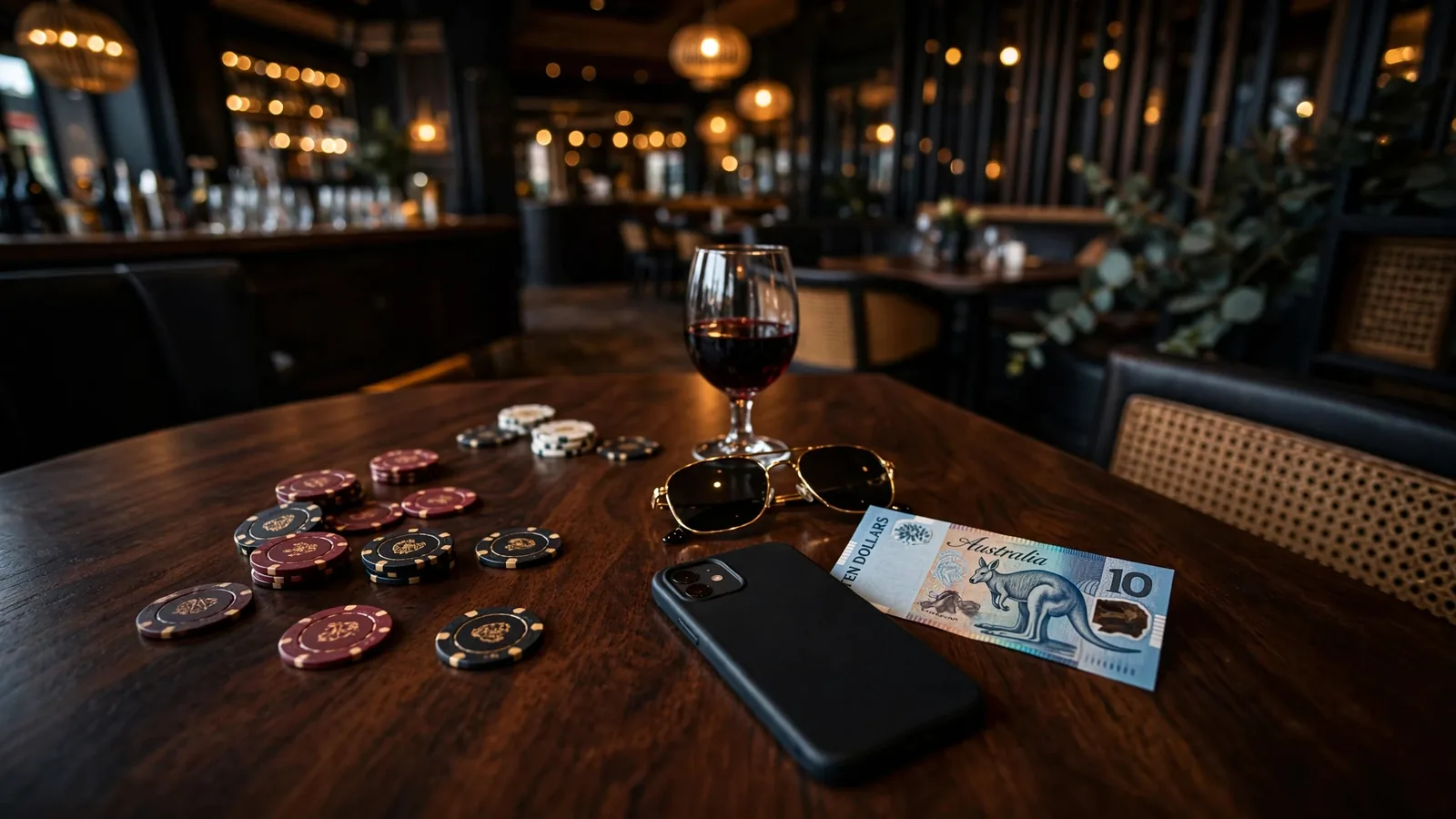
Online games also need rules for reading results. Symbols may land across reels, and a game may use paylines or another system to decide which arrangements count. The screen can therefore show matching symbols without every match being a winning combination. The rules explain how the game evaluates a completed spin; they do not make its result predictable. The shape of the game and the randomness of its result are related, but they are not the same thing.
This is why the visual theme is a poor guide to how a game behaves. A bright, friendly design may conceal rules that are not obvious from the artwork, while a plain-looking interface may have its own layers of symbols and features. Before playing, the useful reading is in the game information: its rules, published RTP, volatility and feature descriptions. Those details describe the game more reliably than a reel’s appearance, though they cannot tell anyone what an individual spin will do.
The same caution applies to speed. A quick sequence of spins can make the outcomes feel connected simply because they arrive close together. They are not linked by that speed. Each completed spin produces its own result, whether the animation is watched in full or presented quickly. The button may be pressed repeatedly; the RNG does not take a hint from the rhythm.
A casino game is designed to keep rules, images and anticipation in one compact space. That is the clever part. It is also why the visible story should not be mistaken for the underlying process. Randomness has no plot. Just the next result.
Game Mechanics
- The moving reels are a visual display, not the mechanism that determines the result.
- Each spin is a separate event with no memory of previous outcomes.
- Near-misses and dramatic sounds are presentation features, not signals from the RNG.
- Game information (RTP, volatility, rules) is more reliable than visual themes.
Machines, Percentages and the Long View
A percentage printed beside an online pokie can look like a forecast. It is not. Return to Player, or RTP, describes a game’s theoretical long-run return across a very large volume of play. It says nothing reliable about what a particular person will receive during a single session. The distinction is less dramatic than a jackpot graphic, but more useful.
A specialist review of Australian-facing pokies places their RTP figures in a range from 94% to 97%. That range describes published settings, not a promise that every game will return those proportions to each player. The statistic belongs to the game over time; the session belongs to chance. A game can sit at the upper end of the range and still produce a disappointing run, just as a lower-RTP game can deliver a striking result. Neither outcome overturns the long-run measure.
The arithmetic is easiest to see with a game set at 96% RTP. Its corresponding house edge is 4%: across an immense quantity of wagers, the theoretical share retained by the game is 4%, while the other 96% is returned in outcomes. Those figures describe the overall design, not a division of each stake into a returned part and a lost part. A spin does not pay out a neat fraction because the published percentage says so.
That is where the language of “return” can mislead. It sounds personal, as if the figure were a receipt waiting to be issued. In fact, the statistic becomes meaningful only when results are considered across a vast number of rounds. Individual sessions are too small and too variable to behave like a miniature version of that average. A short run may return less than the stated RTP, more than it, or nothing resembling it.

Volatility adds another dimension, but it does not repair the limits of prediction. It describes the distribution of outcomes: lower-volatility games are designed around smaller payouts occurring more often, while higher-volatility games tend toward less frequent payouts that may be larger. RTP and volatility therefore answer different questions. RTP concerns the theoretical long-run proportion returned; volatility concerns the shape of the path by which outcomes arrive.
A higher volatility setting does not mean a game is more generous. Nor does lower volatility ensure a steady stream of wins. “More often” is a description of a general payout pattern, not a schedule. A string of empty results can occur in a lower-volatility game; a higher-volatility one can produce a modest result rather than a large one. The categories describe tendencies in the design, not events owed to anyone.
This distinction matters when two games display similar RTP figures. Their long-run theoretical returns may be close, yet the experience of playing them can differ because payouts are distributed differently. One may produce comparatively frequent small outcomes; another may concentrate more of its potential return in less frequent, larger ones. The percentage alone cannot tell that story. Volatility supplies context, though it still cannot identify what will happen next.
The figures are most useful as descriptions, not as instruments for timing a session or choosing a moment to continue. A past run does not make a game “due,” and a sequence of wins does not establish that the next result will be favourable. Statistical language can sound like a map. It is closer to a record of the terrain across distances no individual session can travel.
Do
- Use RTP and volatility to compare theoretical game designs.
- Treat each session as a result of chance.
- View statistics as long-term records of the terrain.
Don’t
- Treat RTP as a guaranteed return for a single session.
- Assume a game is “due” for a win after a run of losses.
- Use statistical figures to time your play or decide when to continue.
There is a quiet asymmetry here. The published RTP is a long-view measure, while the money at stake is immediate. The number can help compare game settings, but it cannot settle the practical question of how a particular session will unfold. For that, it offers no answer. Just a percentage.
Paylines, Cascades and the Price of a Feature
A payline is a route across the reels on which matching symbols can form a win. Traditional pokies often keep those routes fixed: the lines are drawn into the game, and the player’s choice is less about their shape than about the stake attached to each spin. More active paylines can open up more winning combinations, but they generally raise the total cost of a spin. The screen may look unchanged; the amount committed is not.
That makes the stake display more useful than the animation. A game may show a modest value beside each line while the total bet combines that value across every active line. Before pressing spin or starting autoplay, the full stake needs to be clear. Autoplay repeats the choice; it does not make it a smaller one.
Newer formats loosen the old grid. Some use clusters, where neighbouring matching symbols matter rather than a line crossing the reels. Others use cascading reels: symbols involved in a win disappear, and new ones fall into the spaces. A single paid spin can then contain successive changes on screen. The sequence can feel like a fresh opportunity arriving for free, though it remains part of the original wager and its rules.

Ways-to-win systems can count combinations across reels without drawing each route as a visible line; some games advertise hundreds of possible ways. These formats alter how a combination is recognised, not the basic fact that the stake is placed before the outcome. A complicated display is not a better explanation. The game rules should make clear which symbols count, how cascades are treated and what the displayed bet covers.
Feature Buy options add another decision. They let a player pay to enter a bonus feature rather than wait for it to occur during ordinary play. That price can be significantly higher than a normal spin, and paying to trigger a feature raises short-term volatility: a costly entry may return less than it cost, or nothing of consequence. The possibility of reaching a bonus round is not a promise of a useful payout. When the entry cost exceeds what the feature returns, the bankroll can shrink quickly.
Before using a Feature Buy, the total amount should be checked as carefully as the ordinary spin stake. A vivid button is still a commitment, not a preview. The same applies to autoplay: the controls can repeat or enlarge a decision faster than the player has time to reconsider it.
Some games also attach a progressive jackpot to eligible wagers. A small share of those wagers feeds a shared pool, which grows until a qualifying win. That arrangement adds a prize structure, not a change to the price shown for a spin or a reason to treat the jackpot as likely.
Responsible Play
- Set deposit limits
- Set loss limits
- Set session-time limits
- Locate time-out tools
- Locate self-exclusion controls
The format is a choice about how a game presents combinations and charges for play. Set deposit, loss and session-time limits before playing, and locate the account’s time-out and self-exclusion controls. A VPN used to conceal location violates casino terms and may lead to account closure and forfeited winnings. The reels have enough theatre already.
Choosing a Casino Without Pretending There Is a Top Ten
A recommendation is only as useful as the checks behind it. In Australia, that starts with a distinction a polished homepage can blur: real-money online casino games cannot lawfully be supplied to people in Australia, and offshore casinos are not regulated by any Australian authority. The Australian Communications and Media Authority blocks gambling sites; a page that loads is not proof that the service is legally available or locally supervised. A VPN does not repair that gap: masking a location breaches casino terms and can lead to account closure and forfeited winnings.

The operator’s identity matters more than the site’s branding. Terms, account pages and payment instructions should make clear which company holds the account, what verification it requires, and how deposits and withdrawals are handled. A mismatch between the name on the site and the entity in its terms is a reason to pause. Withdrawal delays can arise from technicalities or onerous conditions, even without fraud; a payment logo alone tells little about how a cashout will be treated.
Account safeguards are another basic test, not decoration. A specialist review of casino safeguards identifies deposit and loss limits, session-time controls, reality checks and self-exclusion that takes effect immediately as features to require before recommending a service. Their presence does not make an offshore site Australian-regulated, but their absence leaves fewer ways to interrupt play. Deposit, session and loss limits should be set before any play, and the account should make time-out and self-exclusion tools easy to find.
The word “best” cannot settle these questions. A ranking can compare visible features, but it cannot turn a prohibited service into a locally authorised one. For people assessing online casino gambling websites, the useful standard is whether the operator, Australian availability, payment route, verification process and safeguards can all be checked—and whether the legal position is stated plainly rather than hidden in small print.

No borrowed reassurance.
Bitcoin Does Not Make a Casino Safer
Bitcoin and Litecoin can make a casino’s payment page look technically modern. They do not establish who operates the site, whether its claims are trustworthy, or whether its service is legally available in Australia. A coin is a payment method, not a credential.
That distinction matters because a bitcoin casino can still be an offshore casino offering real-money games to people in Australia. The Interactive Gambling Act 2001 prohibits operators from providing those services to people here; it does not make the player’s act of gambling a criminal offence. Nor does accepting cryptocurrency create an Australian licence. Offshore casinos are not regulated by any Australian authority.
A payment page also says little about what happens after a deposit. The operator controls the account terms, identity checks and withdrawal process. A crypto label cannot show whether those arrangements are clear, whether a withdrawal may be delayed over a disputed term, or what recourse exists if a problem arises. The name of a familiar coin is not a substitute for knowing which company stands behind the site.
Attention Cryptocurrency is a payment method, not a credential; it does not establish the operator’s legitimacy or the legal availability of the service in Australia.
The same caution applies to lists of “top” online gambling casinos. A ranking, polished interface or claim of quick crypto transfers is not proof of legitimacy or Australian legal availability. Before any account is opened, the operator and its terms need to be identifiable; the mere presence of Bitcoin or Litecoin cannot settle those questions.
Using a VPN to conceal an Australian location does not change the legal position of the service. It can breach a casino’s terms and lead to account termination and forfeiture of winnings. Concealment is not protection.
The technology can move value. It cannot certify the destination.
A Bonus Is a Contract with Small Print
A casino bonus is not simply extra money added to a balance. It is an offer tied to conditions that determine whether the credit can become withdrawable cash. Wagering requirements, game exclusions, deadlines, maximum-bet rules and cashout caps can all reduce its practical value.

A useful benchmark in Australian-facing offers is a wagering requirement of 35x or less, with at least 30 days to complete it. That is a comparison point, not a promise that a particular offer is generous. The amount counted toward wagering can differ by game: a specialist review reports that pokies contribute 100%, while table games may contribute only 10–20%. A preference for one game over another can therefore change how much play is needed to satisfy the terms.
Before accepting a deposit or no-deposit offer, the terms to check include the wagering calculation, contribution rates, excluded games, expiry date, maximum bet and withdrawal cap. Bonus wording can make a headline amount look more useful than it is; restrictions on play and cashout decide what remains. Saving a screenshot of the terms at the moment of claiming can help if the wording later changes. Delayed withdrawals can also arise from restrictive bonus clauses or technicalities, without necessarily involving fraud.
Offshore online casinos are not regulated by any Australian authority. A bonus does not alter that position, and using a VPN to conceal a location violates casino terms; an account may be closed and winnings forfeited. No offer guarantees a return.

Any decision to play should follow setting deposit, loss and session-time limits, and locating time-out and self-exclusion controls in the account. These safeguards do not improve the mathematics of an offer. They make the boundaries clearer.
Small print, large consequences.
Free Spins, Short Deadlines
A no-deposit free-spin offer can look like a small gift: spins arrive without a deposit, and any win appears to belong to the player. The terms often make that appearance conditional. A specialist review reports wagering requirements of 35x to 50x the winnings, with some offers reaching 60x. The calculation applies to winnings, not simply to the original spin value, so a modest result can become a substantial amount of play before withdrawal is allowed.
Time is another condition. A specialist review reports that free spins may need to be used within 7 to 30 days of being credited, while the wagering attached to winnings may have a separate 24- to 72-hour deadline. Those clocks can turn a seemingly generous offer into an administrative race. An unused spin expires; unfinished wagering can leave winnings ineligible for cashout.

A specialist review also reports minimum withdrawal requirements of $20 to $50. A balance below the stated threshold may therefore remain unwithdrawable, even after the spins have been played. Delays can also arise from bonus terms or technical conditions without proving fraud. Before claiming, the exact wagering calculation, eligible games, contribution rates, expiry dates and withdrawal caps deserve a close reading. Saving a screenshot of the terms at the moment of claim can preserve what was displayed if wording changes later.
These offers are not overseen or licensed by Australian state or territory authorities. Set deposit, loss and session-time limits before any gambling, and locate the account’s time-out and immediate self-exclusion controls. A VPN used to disguise location can breach casino terms, with account closure and forfeited winnings among the possible consequences.
Free spins are free only at the entrance.
What does RNG mean in pokies?
RNG means random number generator. It produces each spin’s result independently, without remembering previous spins.
What should be used to compare pokies?
Compare RTP, volatility and the game’s betting structure, such as paylines or ways to win. RTP is a long-term theoretical figure, while volatility describes how often and how much a game may pay.
How does a progressive jackpot grow?
A small share of eligible wagers from the game’s player pool is added to the jackpot. It grows until someone hits a qualifying win.
What is RTP in simple terms?
RTP is the theoretical percentage of wagers a game is designed to return over a very large number of rounds. It does not predict what you will win or lose in an individual session.
Do these offers have a time limit?
Free spins typically need to be used within 7–30 days after they are credited. Wagering requirements may have a separate 24–72-hour deadline.
Published by the Cuntspin Casino team.