Australian Casino Sites That Accept Credit Cards
 Available in AU
Amex availability depends on each casino’s cashier, and a successful card deposit does not establish that the same card can be used for withdrawals.

Table of Contents
- Where American Express Fits in Australian Online Casino Payments
- What an Amex Deposit Involves—and What It May Cost
- Card Acceptance Is Not the Same as Payment Security
- Cards, Wallets and Bank-Linked Payments in Australian Life
- Limits and Fees Matter More Than a ‘Top’ Label
- Real-Money Casino Payments and the Australian Legal Boundary
- Why a Casino Deposit Does Not Guarantee an Amex Cash-Out
- Acceptance Varies by Casino—and by Card
- When the Card Is Not an Option
- Using an Amex Gift Card for a Deposit
Where American Express Fits in Australian Online Casino Payments
American Express occupies a narrower place in Australian online casino payments than the phrase “credit card accepted” might suggest. A specialist review reports that some Australian-facing casino sites offer Amex deposits, while Visa may be accepted across a broader range of sites. That is a qualified picture, not a universal rule: a card logo or a general claim about card payments says little about whether Amex is available at a particular cashier.
The distinction matters because payment methods are not interchangeable simply because they are all cards. Visa, Mastercard and Amex operate through different payment networks, and a casino can make its own choices about which of them to support. A cashier displaying Visa does not, by implication, promise Amex; nor does Amex acceptance at one site establish that it will work elsewhere. The practical meaning of “credit card casino” is therefore narrower than the label sounds.
There is a small irony in the phrase. Credit cards are familiar objects, used for ordinary purchases and recurring bills, yet their presence in a casino payment menu depends on arrangements between the operator, payment processors and card networks. A search for a casino that takes credit cards can look like a simple hunt for a logo. In practice, the important question is which card is named, and whether that option is available for the intended transaction.
Choosing a casino site that accepts credit cards in Australia calls for checking the practical details available for each option, including licensing and any stated deposit or payout information. Use this list as a reference when deciding what to investigate further.
License: Curacao · Payout speed: crypto 30-60 minutes, fiat 1-5 days · Min. deposit: A$10 Wild Tokyo lists a A$10 minimum deposit and is licensed in Curacao. Its stated payout times are 30–60 minutes for crypto and 1–5 days for fiat.
License: Curacao Golden Pokies is listed with a Curacao licence. No deposit or payout details are provided here.
License: international iGaming licence – jurisdiction not named in the source · Payout speed: PayID 1-24 hours · Min. deposit: A$30 (PayID from A$10) House of Pokies lists an international iGaming licence, though the jurisdiction is not named. PayID payouts are stated as 1–24 hours, with a A$30 minimum deposit or A$10 when using PayID.
License: Curacao eGaming (Dama N.V.) JeetCity Casino is listed as licensed by Curacao eGaming (Dama N.V.). No deposit or payout details are provided here.
License: Curacao Gaming Control Board JustCasino is listed with a Curacao Gaming Control Board licence. No deposit or payout details are provided here.
License: Curacao Gaming Control Board OGL/2023/176/0095 (Hollycorn N.V.) Rollero Casino is listed under Curacao Gaming Control Board licence OGL/2023/176/0095, held by Hollycorn N.V. No deposit or payout details are provided here.
License: Curacao (operating since 2017) · Min. deposit: A$20 Uptown Pokies is listed as operating since 2017 under a Curacao licence. Its stated minimum deposit is A$20.
License: Curacao Gaming Authority (Jumpman Gaming Ltd) DragonSlots Casino is listed with a Curacao Gaming Authority licence held by Jumpman Gaming Ltd. No deposit or payout details are provided here.
License: Curacao Gaming Control Board OGL/2023/176/0095 (Hollycorn N.V.) Neospin is listed under Curacao Gaming Control Board licence OGL/2023/176/0095, held by Hollycorn N.V. No deposit or payout details are provided here.
Payout speed: crypto under 1 hour, PayID 1-3 business days · Min. deposit: A$20 (A$30 to qualify for the bonus) Ricky Casino states crypto payouts under 1 hour and PayID payouts in 1–3 business days. The minimum deposit is A$20, or A$30 to qualify for the bonus.
Amex’s position is especially easy to misread. Some specialist coverage describes Australian online casinos where deposits by American Express are supported, but this does not make Amex a standard feature of every casino cashier. Visa may have wider acceptance, according to that kind of review, though the comparison is not a promise about any individual operator. The difference is one of reach, not a guarantee that one card will succeed in every case.
That distinction also explains why broad labels can be unhelpful. “Credit card accepted” may refer to a card network other than Amex, or to a payment option that is not shown for every account or transaction. The familiar category conceals separate routes. A cashier is less a universal reception desk than a menu shaped by the site’s payment arrangements.
For anyone assessing an online casino with credit card payments, the card brand is therefore part of the description, not a footnote. A site that accepts Visa is not automatically an online casino that accepts Amex. Conversely, a report that a casino supports Amex does not establish that every other card will be accepted there. Each statement needs to be read at its own scale: the payment method, the site and the transaction.
This modest point sits behind many searches for casinos that accept credit cards. The wording often treats acceptance as a single yes-or-no quality, while the payment landscape is divided among card brands. Amex can be available at some Australian online casinos; Visa may be accepted more broadly. Neither observation supplies a dependable shortcut to a particular cashier, and neither should be mistaken for a ranking of operators.
The difference between availability and prominence is easy to overlook. A card can be usable without being widely supported, and a widely supported card can still be absent from a particular payment menu. A general search for a casino that takes credit cards therefore does not settle the narrower question of Amex. The card name matters.

This is not merely a matter of wording. Payment choices are presented in small icons and short labels, but those labels stand for separate acceptance decisions. When Amex appears, it indicates a specific route made available by that site; it does not turn card acceptance into a blanket feature of Australian online casinos. Where Visa is more broadly accepted, that broader reach still does not make it a substitute for checking the exact card listed.
The sensible description is restrained: Amex deposits are reported as available at some Australian online casinos, while Visa may have wider acceptance. Beyond that, the landscape is site-specific. The word “some” does real work here. It keeps a limited claim from becoming an industry-wide promise.
So the broad category of credit-card casinos breaks down into more precise questions about the card itself. Amex has a place, but not an assured one across the market; Visa may travel further, without becoming universal. Acceptance is a feature of a particular payment arrangement, not an inherent property of the word “casino.” Card logos are not interchangeable.

What an Amex Deposit Involves—and What It May Cost
An American Express deposit begins in the casino’s cashier, where the payment method is selected before the card information and deposit amount are entered. The amount is entered in Australian dollars, then the payment is submitted. That is the basic sequence: a choice of method, the card details, a value, and confirmation.
The cashier is the point at which the transaction is specified. The currency shown matters because an AUD deposit and a transaction converted from another currency are not necessarily the same thing financially. A payment can appear to be one straightforward card transaction while involving more than one possible charge: a fee imposed by the casino, or a currency-conversion cost associated with the card. Those are separate questions, and the amount displayed for the deposit does not, by itself, settle both.
The distinction between submission and processing is also useful. Submitting a payment is the action taken in the cashier; processing is what happens after it is sent. Amex deposits are described as being processed instantly, so the deposit may be credited without a waiting period. That describes the processing speed, not the total cost, and it should not be read as a promise that every transaction will be completed. Speed is one part of the payment. The bill is another.

The amount entered is not always the whole cost
A specialist review has reported that a casino may add a 1.5% surcharge to Amex transfers. This is a casino-side charge, rather than a currency-conversion fee. It is also a reported possibility, not a universal tariff: the cashier’s stated terms are the relevant place to look for whether a surcharge applies to a particular deposit.
A specialist review has also reported a 3% currency-conversion fee on Amex cards. That charge relates to currency conversion and should not be conflated with an operator’s own surcharge. If a transaction is made and settled in different currencies, the conversion can affect what is ultimately charged. The deposit amount in AUD therefore deserves attention alongside the currency and fee information shown for the transaction.
The figures reported in reviews do not establish that every Amex deposit carries either charge. A specialist review has also described Amex deposits as generally fee-free, while noting that fees depend on the casino. These claims can coexist: a deposit may have no separate fee in one setting, while another casino may apply a surcharge, and a currency conversion may create a distinct card-related cost. The cashier’s terms, rather than a broad label such as “free,” determine what applies to the transaction at hand.
This is why “instant” and “free” should not be treated as synonyms. Instant refers to processing speed; free refers to cost. A deposit can be processed quickly and still carry a fee, or have no separate deposit fee while a conversion charge applies. The distinction is plain, if not especially exciting.
The sequence itself is simple, but the price can be less so. A person reviewing a casino credit-card deposit needs to separate the amount being sent from any surcharge and any conversion cost. If the cashier presents the transaction in AUD, that clarifies the amount entered; it does not necessarily answer whether a casino-side charge applies. If the payment involves conversion, the conversion terms matter as well. Different charges belong to different parties, and combining them into one vague idea of “the fee” makes comparison harder.
Amex Deposit Process
Select American Express in the casino’s cashier.
Provide the card information and the deposit amount in Australian dollars.
Submit the payment to initiate the processing of the deposit.
A useful way to read the cashier is as a transaction record in progress. The selected method identifies how the payment is being made. The entered AUD amount identifies the intended deposit value. The submission initiates the payment, while the displayed conditions indicate whether an additional charge is attached. A specialist review can describe a fee encountered in a particular setting, but it cannot make that fee a permanent feature of every cashier. Policies and payment terms can change.
For that reason, a casino deposit with a credit card is best understood as a sequence with two separate checks: what is being sent, and what may be charged in addition. The described Amex process is not complicated. The costs require more careful reading.
Card Acceptance Is Not the Same as Payment Security
A card logo in a cashier answers only a narrow question: whether a payment route is presented as available. It does not establish that a transaction will pass through, that the card issuer will approve it, or that the account has completed the checks required before money can move. In a credit card casino transaction, several separate decisions sit between selecting a card and seeing a deposit recorded. They belong to different parties, and they do not necessarily agree.
The issuer is one of those parties. Australian banks may block gambling-related transactions made with Amex at the issuer level. That can leave a card appearing usable in one context but unavailable for a particular kind of payment. The cashier may accept card details as an input, yet the bank’s decision still matters. A refusal at that point is not automatically evidence that the card details were entered incorrectly or that the casino has changed its own policy. The card network and the issuer have their own role in deciding whether the transaction proceeds.

There is a second, separate possibility. A specialist review has reported that Amex may block payments to a particular website, with the result that a deposit is declined. That is a report about a possible restriction, not a standing rule for every site or every cardholder. Payment arrangements can change, and a single declined transaction does not identify which party stopped it. The cause may be associated with the issuer, with Amex, or with the site’s own handling of payments. A failure is visible; its origin may not be.
That distinction matters because “accepted” can sound more complete than it is. When a cashier displays a card option, it signals that the operator has made the method available within its payment setup. It cannot promise approval by a bank or card network. Nor does it remove the possibility that the casino applies its own acceptance policy. A casino credit card route therefore sits within a chain of decisions, rather than operating as a simple agreement between the cardholder and the cashier.
The phrase “online casino accepts credit card” can also blur two meanings. It may describe a method listed on the site, or it may be taken to mean that a particular payment will be authorised. Those are not the same claim. A payment option can be listed while an individual transaction is declined, just as a cardholder’s bank can permit one type of payment and block another. The practical lesson is less dramatic than a security warning, but more useful: availability at the cashier is not the same as approval at the issuer.
A card logo in the cashier indicates the operator has made the method available, but it does not guarantee approval from the bank or card network.
Identity checks add another layer. Before financial transactions, online casinos commonly assess a customer’s identity through a Know Your Customer process. That assessment is distinct from the card issuer’s authorisation. The issuer considers whether to process a charge; the casino’s KYC review concerns the customer and the account. A payment method can be technically available while the account is still subject to verification.
The order and timing of these steps can make a transaction feel inconsistent. A customer may reach the cashier and find a method displayed, but the casino may still need to complete its assessment before handling financial activity. Conversely, a KYC assessment does not compel a bank to authorise a gambling-related charge. Each check addresses a different question. One concerns who is using the account; another concerns whether a payment can be processed.
KYC is often discussed as though it were a single formality, but its practical significance is that financial activity is tied to an account whose identity has been assessed. It is not a protective seal on every later transaction. It does not certify that the card is accepted by every party, and it cannot override a block imposed by a bank or Amex. Nor does passing an identity review mean that a cashier option will remain available in every circumstance. Security is not one gate. It is a set of separate controls.
This is why a declined online casino credit card payment should not be treated as a verdict on the cardholder. A refusal can arise before the casino records anything, while an account assessment may be happening on a different track. The visible result—a payment that does not go through—compresses several possible decisions into one message. That is an awkward feature of electronic payments: the screen gives the outcome, not necessarily the full chain behind it.

For a credit card online casino payment, the useful distinction is between three things: the site’s listed payment method, the casino’s account and identity checks, and the issuer’s decision on the charge. They interact, but none substitutes for the others. A method being shown is not a guarantee of approval; a completed KYC assessment is not an issuer authorisation; and a bank’s block does not, by itself, explain the casino’s policy. Separate decisions, separate limits.
Cards, Wallets and Bank-Linked Payments in Australian Life
In Australia, paying by card has become part of the background of ordinary life. Contactless credit and debit cards are accepted almost everywhere, turning a small gesture at a terminal into a routine transaction. A card can sit in a wallet, but increasingly it need not leave a pocket or bag at all. The physical card remains familiar; the tap has made its use almost invisible.
Mobile wallets, including Google Pay and Apple Pay, are also accepted almost everywhere. They have not displaced cards so much as given them another place to live. The same account may be reached through a plastic card at one counter and a phone at another. Convenience here is less a contest between technologies than a habit of moving between them without much ceremony.
That habit shapes expectations. When consumers can tap a card in a shop, pay by phone on public transport or use a bank-linked service online, payment methods can appear interchangeable. They are not. A service may sit on top of a bank account, a card or a separate balance, and the route a payment takes can matter even when the customer sees only a familiar logo. Everyday ease conceals a fairly varied infrastructure.

PayPal is one example of a service linked to banks that Australians are comfortable using alongside cards and mobile wallets. It belongs to a broader pattern: people switch between ways of paying according to the setting, rather than pledging loyalty to one instrument. The choice may be shaped by what a merchant accepts, what is already set up on a device or what feels customary for a particular kind of purchase. A payment culture is made of these small decisions, repeated until they seem like no decision at all.
This helps explain why searches about paying for online casino activity with a credit card sit naturally beside questions about making payments without one. The phrasing may suggest a simple extension of the checkout habits used elsewhere: choose a card, tap or enter its details, and carry on. But familiarity with contactless cards and mobile wallets in Australian shops does not establish that every type of online service can accept them. The reach of a payment method in daily commerce is not a universal permission slip.
Nor does the presence of a wallet on a phone mean that it functions as an independent source of funds. It may provide a convenient way to access an underlying card. A bank-linked service, meanwhile, may present a different route altogether. To the user, both can look like quick digital payment; beneath the surface, they are distinct arrangements. The interface smooths the experience. It does not erase the distinctions.

The wider custom is therefore one of flexibility, not sameness. Australians are at ease moving among cards, mobile wallets and bank-linked services, but each setting determines which of those options is actually available. A search for a casino that takes credit cards reflects the habits of a society accustomed to choice at checkout; it does not show that the same choices apply in every online context. Daily payment culture supplies the expectation. It cannot settle the particulars.
There is a small irony in the modern tap: the less visible the mechanics become, the easier it is to assume that payment is simply payment. In practice, a card, a phone wallet and a bank-linked service may look like three doors into one room, while leading through different systems. Australian consumers have learned to move among them comfortably. The doors remain distinct.
Limits and Fees Matter More Than a ‘Top’ Label
A “top” credit-card option sounds like a verdict, but it can conceal the details that shape the actual cost of a transaction. In casino-payment comparisons, American Express may be described as offering higher transaction limits than Visa or Mastercard. That distinction is attributed to a specialist review, not a universal rule: limits depend on the individual operator, and a broad label cannot establish what a particular payment arrangement permits.
A larger stated limit is not automatically an advantage. It describes a ceiling, not a sensible amount to spend, and says nothing by itself about the total cost of moving money. The language of rankings tends to flatten those differences. “Top” turns a set of conditions into a single winner, though the conditions may vary from one operator to another and may change over time.

Fees are one such condition. A specialist review reports that a casino may add a 1.5% surcharge to Amex transfers. The wording matters: this is a possible operator charge, not a fee that applies to every Amex transaction. Nor should it be confused with a card limit. One affects the amount that may be transferred; the other affects the cost of making a transfer. A comparison that mentions only one of them leaves the reader with an incomplete picture.
There is a small but important difference between the card network and the casino’s own terms. A payment method may have one set of characteristics, while an operator can impose its own conditions. That is why a claim about generally higher Amex limits cannot be treated as a promise about every site, and why a reported surcharge should not be presented as universal. The tidy certainty of a ranked label does not survive contact with individual terms.
The broader habit of ranking payment methods borrows the language of consumer choice: the leading option, the best fit, the one that wins. But a transaction is not made better simply by being allowed at a higher ceiling. Fees, conditions and the actual terms attached to a payment matter more than the adjective placed above them.
The useful distinction is not between first place and second. It is between a claim that describes a particular set of terms and a slogan that pretends those terms are the same everywhere. Higher limits may be reported for Amex; a surcharge may also be reported. Neither fact, on its own, makes a card the “top” choice. Ranked neatly. Qualified heavily.

Real-Money Casino Payments and the Australian Legal Boundary
A payment method and the legal status of the service it funds are separate questions. A card transaction may appear routine in a cashier, but that does not make the underlying real-money casino service lawful to provide in Australia.
The Interactive Gambling Act 2001 draws its line around operators. It prohibits the provision of online casino games to people located in Australia, including services involving poker, table games and pokies. The restriction concerns the business supplying the games, rather than creating an explicit criminal offence for an individual who uses an offshore site. Those two points are often blurred in discussion of credit-card casinos for real-money play, but they describe different legal responsibilities.
That distinction is not a licence for operators to serve Australians. The absence of an explicit player offence does not cancel the Act’s prohibition on offering the service, nor does it turn an offshore casino into a locally authorised one. The Australian Communications and Media Authority (ACMA) is responsible for enforcing the Act. Its role is directed at the law governing interactive gambling services and the operators that provide them.
For the person using an offshore casino, the practical gap is different: Australian consumer law does not protect users of those services. A familiar card brand or a polished payment screen can make a transaction look like an ordinary domestic purchase; neither supplies local consumer safeguards where the casino operates offshore. The appearance of normality is not the same as legal protection.
Legal Boundary
The Interactive Gambling Act 2001 prohibits the provision of online casino games to people in Australia, and users of offshore sites are not protected by Australian consumer law.
This is an unusual division of responsibility. The law places the prohibition on providers, while the individual player is not explicitly criminalised merely for using an offshore site. That does not mean the activity is endorsed, supervised as a domestic service or backed by Australian consumer remedies. The boundary is clear; the protections are not equivalent.
A real-money casino payment, then, cannot be assessed by the card alone. The relevant legal question is not simply whether a transaction can be submitted, but whether the service receiving it may lawfully offer online casino games to people in Australia. The Act answers that question for operators. ACMA enforces the framework, and offshore users remain outside the protection of Australian consumer law.
A payment can go through. The legal position remains.
Why a Casino Deposit Does Not Guarantee an Amex Cash-Out
A card used to fund an account does not automatically become the route for money coming back. An online casino payout to a credit card depends on the casino’s withdrawal rules as well as the payment method used for the deposit. With Amex, the distinction matters: a deposit may be possible while a withdrawal to the same card is not.
A specialist review reports that some casinos may decline to return winnings to Amex, or may attach an additional withdrawal fee. These are operator-specific conditions, not a universal rule. A casino’s cashier and payment terms are therefore the relevant record of whether an Amex cash-out is offered and what it may cost. The label “card payment” alone says little about the journey in reverse.

There is also a prior-use condition. An Amex withdrawal requires an earlier deposit with Amex. That requirement links the outgoing payment to the account’s funding history; it does not promise that every casino will support withdrawals to the card, or that a request will be processed without other conditions. Paying with Amex and receiving an online casino cash-out to Amex are separate steps.
Timing deserves the same care. A specialist review gives a clearance period of up to five days for Amex casino withdrawals. That is a reported timeframe, not a guarantee that every request will clear within it. The casino’s own processing arrangements and the status of the withdrawal request matter, so the interval should not be mistaken for an assured arrival date.
Limits are also set by individual casinos and can vary. A permitted withdrawal may therefore be subject to a ceiling that differs from the deposit conditions. The practical point is not that one card route is inherently better, but that payment in and payment out are governed by different terms.
A card can open the door one way and leave it closed the other. For anyone assessing a cash-out route, the questions are precise: whether Amex withdrawals are supported, whether a prior Amex deposit is required, what fees apply, what limits govern the request and how long clearance may take. A deposit settles only the first part of that arrangement.
Acceptance Varies by Casino—and by Card
A credit card logo does not describe a whole market. It describes a payment option at a particular operator, under that operator’s current terms. A specialist review has reported that some online casinos do not accept American Express. That is a site-specific observation, not a rule that can be extended to every casino or treated as permanent.
Attention: Acceptance of one card network does not guarantee the availability of others, as Amex availability cannot be inferred from a general statement that cards are supported.
The distinction matters because “credit card accepted” can sound like a single, settled category. In practice, a casino may list some card networks and omit others; acceptance of one card therefore says nothing conclusive about another. Amex availability cannot be inferred from a general statement that cards are supported, nor from another casino’s cashier.
This makes broad labels less useful than they first appear. A page describing casinos accepting credit cards may refer to a particular network, a particular operator, or a list assembled at a particular time. Without those boundaries, the phrase blurs separate policies into a promise of universal access. It is not one.
The same caution applies to statements about a casino accepting credit card payments in Australia. Such wording can conceal the difference between a site’s general card policy and its treatment of Amex specifically. Acceptance is not a national default, and no single operator’s terms establish a standard for all others.
The quiet lesson is that payment names are not interchangeable. Amex has its own acceptance status at each site, just as a casino’s general card offering does not guarantee that every card will be treated alike. Claims about acceptance should therefore be read narrowly: they concern the named card and the operator described, not casinos as a whole.
When the Card Is Not an Option
When a card is unavailable, other payment routes may appear in a casino cashier. Their trade-offs are not simply a matter of choosing the quickest button: the method changes how money moves, and what it may cost along the way.
Cryptocurrencies such as Bitcoin and Ethereum are described as allowing deposits and withdrawals to be processed instantly, with limited or no fees. That speed is part of their appeal as a payment technology, although it comes with a different set of practical considerations from paying through a bank. The transaction is made in digital currency rather than through a conventional card or account transfer.
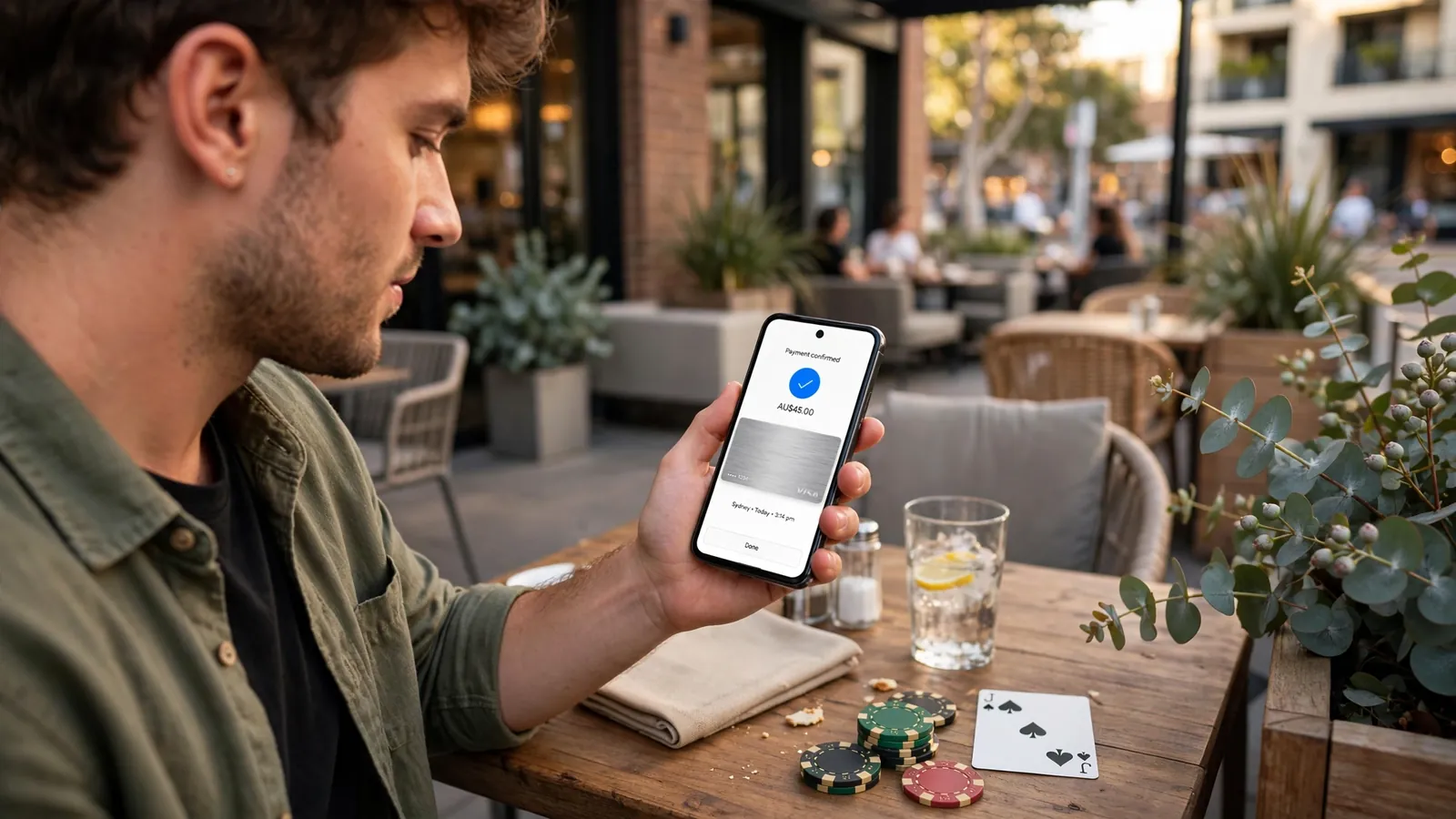
Bank transfers follow the familiar path between financial institutions, but a specialist payment review describes them as potentially involving longer waits and higher fees. The contrast is plain: a transfer can be slower and more expensive, while cryptocurrency may move quickly at low cost. Neither description fixes the terms of every individual transaction; the payment route and the service’s own arrangements still matter.
The comparison also reflects a broader change in how people think about money. A payment once defined by the plastic in a wallet can now pass through a bank, a digital wallet or a decentralised network. Speed has become a selling point; certainty, less so. Different rails, different frictions.
Using an Amex Gift Card for a Deposit
An American Express gift card is a prepaid product, not a credit line. In a casino cashier that accepts Amex, it may be available as a way to fund a deposit. Its role ends there: the gift card can be used for deposits, not for receiving withdrawals.
That distinction matters because the word “card” can make different payment arrangements seem interchangeable. A gift card carries a prepaid balance; it does not turn into a conventional credit card simply because the cashier presents it alongside card options. Nor does its acceptance for a deposit establish that it can be used for every part of an account’s financial activity.
The narrow condition is acceptance. If a casino does not accept American Express, an Amex gift card does not create an exception. Where Amex is accepted, the gift card may be used for deposits only. It should therefore be understood as a one-way funding option rather than a general-purpose account payment method.
The practical consequence is a separation between money going in and money coming out. A gift card can serve the first purpose at an accepting cashier, but not the second. That makes it different from the ordinary card-funded transaction people may have in mind when they look for an online casino using a credit card. The label is similar; the function is not.
Prepaid, and limited.
Which online casinos accept American Express for deposits?
Jackpot City Casino, Spin Palace, Ruby Fortune, Ignition Casino, Joe Fortune and PlayAmo are among the sites reported to support Amex deposits for Australian players. Availability can vary by casino, and some sites do not accept Amex.
How long do Amex casino deposits take to process?
Amex deposits are processed instantly.
Can I withdraw winnings directly to my American Express card?
Some casinos allow Amex withdrawals, but not all do, and you generally need to have deposited with Amex first. Withdrawals can take up to five days to clear, and a fee may apply.
Are there any fees associated with using American Express at online casinos?
Amex deposits typically have no fee, but a casino may add a 1.5% surcharge. Amex card transactions can also incur a 3% currency-conversion fee, and withdrawals may carry an additional fee.
Can you use an American Express gift card at an online casino?
Yes, an Amex gift card can be used for deposits at casinos that accept American Express, but not for withdrawals.
Written by the editors at Cuntspin Casino.