Bitcoin Casinos in Australia: What to Know
 Available in AU
Bitcoin affects how funds are transferred, but not an offshore casino’s location or regulatory status in Australia.

Table of Contents
- What “Online Bitcoin Casino” Means in Australia
- How to Compare Bitcoin Casinos Without a Names List
- Live-Dealer Play and the Australian Legal Boundary
- Bitcoin Casino Bonuses: Read the Conditions Before the Offer
- What Australian Law Says About Casinos Accepting Bitcoin
- Starting Play: From Wallet Transfer to Casino Balance
- Casino Games and the Limits of Online Play
- Bitcoin as a Casino Payment: Fees, Volatility and Alternatives
- Bitcoin Deposits and the Wait for Confirmation
- Bitcoin Slots: The Game Does Not Change the Rules
What “Online Bitcoin Casino” Means in Australia
An online Bitcoin casino is not an Australian-licensed casino with a different cashier. It is an offshore gambling service that accepts cryptocurrency and operates outside Australia’s domestic regulatory framework. Australia does not issue a domestic licence for online casino games, so a website using Bitcoin does not become locally licensed simply because its payment method is digital.
That distinction can disappear in the smooth geography of a website. Its pages may load in English, prices may be displayed in familiar currencies, and its games may be available on a phone. Yet the operator remains offshore, and there is no Australian online-casino licence behind the screen. A “Bitcoin casino in Australia” is therefore best understood as a service accessible from Australia, not a casino established or licensed here.
Bitcoin changes the route by which money is sent; it does not change the operator’s location or regulatory status. The same is true of other cryptocurrencies. Nor does a mobile version create a separate legal category: a mobile Bitcoin casino is still an offshore gambling service when accessed on a phone. The device makes the experience portable. It does not bring the operator under Australian oversight.
If you’re looking for an Australian-facing casino that accepts Bitcoin, check that BTC deposits are currently supported before signing up. The details below highlight the limited operator information available for each option.
License: Curacao · Payout speed: crypto 30-60 minutes, fiat 1-5 days · Min. deposit: A$10 Wild Tokyo lists a Curacao licence, with crypto payouts stated at 30–60 minutes and fiat payouts at 1–5 days. The minimum deposit is A$10.
License: Curacao Golden Pokies lists a Curacao licence. No other operator details were provided.
License: international iGaming licence – jurisdiction not named in the source · Payout speed: PayID 1-24 hours · Min. deposit: A$30 (PayID from A$10) House of Pokies lists an international iGaming licence, though the jurisdiction is not named. PayID payouts are stated at 1–24 hours; the minimum deposit is A$30, or A$10 with PayID.
License: Curacao eGaming (Dama N.V.) JeetCity Casino lists a Curacao eGaming licence held by Dama N.V. No other operator details were provided.
License: Curacao Gaming Control Board JustCasino lists a Curacao Gaming Control Board licence. No other operator details were provided.
License: Curacao Gaming Control Board OGL/2023/176/0095 (Hollycorn N.V.) Rollero Casino lists Curacao Gaming Control Board licence OGL/2023/176/0095, held by Hollycorn N.V. No other operator details were provided.
License: Curacao (operating since 2017) · Min. deposit: A$20 Uptown Pokies lists a Curacao licence and has been operating since 2017. Its minimum deposit is A$20.
License: Curacao Gaming Authority (Jumpman Gaming Ltd) DragonSlots Casino lists a Curacao Gaming Authority licence held by Jumpman Gaming Ltd. No other operator details were provided.
License: Curacao Gaming Control Board OGL/2023/176/0095 (Hollycorn N.V.) Neospin lists Curacao Gaming Control Board licence OGL/2023/176/0095, held by Hollycorn N.V. No other operator details were provided.
Payout speed: crypto under 1 hour, PayID 1-3 business days · Min. deposit: A$20 (A$30 to qualify for the bonus) Ricky Casino lists crypto payouts in under an hour and PayID payouts in 1–3 business days. The minimum deposit is A$20, or A$30 to qualify for the bonus.
This is the useful starting point for interpreting labels such as “online Bitcoin casino” or “casino online with Bitcoin”. They describe a payment option and a website’s intended audience, not an Australian licence. A site may present itself as international, crypto-focused or available to Australian customers. Those descriptions do not establish that it is authorised to provide online casino services in Australia. The national framework has no domestic licence for that activity.
The Australian Communications and Media Authority, or ACMA, has a different role from a licensing body for online casinos. It focuses on unlicensed offshore gambling sites and can take action that includes banning operators from Australia and blocking their websites. Several operators have been banned and their sites blocked. The measure is not merely a warning label at the edge of a page; it can affect whether the service is reachable through ordinary internet access.
Site blocking is part of how Australia enforces its approach to offshore gambling. It also shapes what “available” means. A site’s existence, or its appearance in a link or advertisement, does not mean it can be accessed reliably, that it is accepted by Australian authorities, or that it is regulated here. The internet gives a service a borderless storefront. The regulator supplies the border.
That boundary matters even when a site offers different formats—desktop pages, mobile access, a live table or a bitcoin pokie. The interface and the payment method can vary, but neither turns an offshore service into a locally licensed one. The phrase “live Bitcoin casino” may sound like a special product category; in this context it still points to an offshore operator. The game format does not redraw the map.

There is a social history in this arrangement. Gambling has long been governed through distinctions about who may offer it, where it may be offered and which institutions are allowed to profit from it. Online services unsettle those distinctions by making a foreign operator appear close at hand. Cryptocurrency adds another layer of distance: value can move without the familiar bank counter, while the company receiving it may sit beyond the national framework. The screen makes the arrangement feel intimate. The jurisdiction does not.
For that reason, the word “casino” in a site’s branding should not be treated as evidence of Australian status. Nor should an offshore licence, if a service claims to hold one, be confused with a licence issued in Australia. The relevant point here is narrower: crypto casinos are not licensed in Australia, and ACMA’s enforcement includes blocking unlicensed offshore gambling sites. A site that remains visible somewhere online has not thereby acquired local approval.
Blocking also is not an invitation to look for a workaround. It is a regulatory action, not a technical puzzle. Using a VPN to bypass geographic restrictions can breach a platform’s terms and may expose an account to closure or disputed winnings. The existence of a mobile site or an alternative web address does not make an operator locally authorised.
People who have registered with BetStop or a state-based self-exclusion program also need to account for the limits of those systems: self-exclusion must be requested directly at each offshore platform. A national or state scheme does not automatically create an account restriction at a company outside its reach. That is one more reminder that offshore access and domestic oversight are not the same thing.
VPN Risks
Using a VPN to bypass geographic restrictions can breach a platform’s terms and may expose an account to closure or disputed winnings.
The phrase “online Bitcoin casino Australia” may suggest a local product assembled for local players. In practice, it describes an offshore service encountered from Australia, subject to a framework in which ACMA blocks unlicensed sites rather than issuing them domestic casino licences. Bitcoin is the payment label. Offshore is the operating reality.
How to Compare Bitcoin Casinos Without a Names List
A “best” Bitcoin casino is not a useful category until the claims behind it have been tested. A polished page, a familiar coin logo and a promise of quick payouts do not establish who operates the service, what rules apply or whether a withdrawal can be made in the same asset used for a deposit. Comparison is less about finding a winner than separating verifiable details from sales language.
Start with the operator’s stated licensing jurisdiction. An offshore licence, where one is claimed, is not an Australian licence and does not make online casino games lawful to offer to people in Australia. Australia does not issue a domestic licence for online casino games, and the Interactive Gambling Act places the prohibition on operators providing these services to Australian residents. ACMA blocks unlicensed offshore gambling sites. A licence claim should therefore be read as information about the operator’s claimed oversight abroad, not as a sign that the service is approved in Australia or protected by Australian casino regulation.
The wording matters. A site can use “licensed” prominently while leaving the issuing authority, legal entity or licence details obscure. Those are not minor omissions: without them, the claim cannot be assessed. Equally, a foreign licence should not be mistaken for permission to serve Australians. A label is not a local authorisation.

Payout handling deserves more attention than a headline speed claim. A withdrawal has at least two distinct stages: the casino’s own review and processing, then the transfer across the Bitcoin network. An operator may control the first stage; it cannot turn the second into a fixed promise. A specialist review has reported casino-side processing adding 12–48 hours before a Bitcoin payout is sent, while another specialist review has described funds reaching a personal wallet within an hour after processing. These are reports, not dependable service standards. A comparison should look for clear withdrawal rules and for a distinction between approval time and blockchain delivery, rather than treating a single quoted timeframe as a guarantee.
The chosen coin must also work in both directions. A site may display Bitcoin among its deposit options without making clear whether Bitcoin withdrawals are supported, whether a different asset is required for cashing out, or whether account conditions apply. That distinction can change the practical value of the payment option. Withdrawal support should be stated plainly before any funds are sent; the deposit symbol alone settles nothing.
Promotions need the same scepticism. A large bonus headline says little about what can actually be withdrawn. The relevant terms include wagering requirements, games excluded from qualifying play, maximum cashout limits and payment methods excluded from an offer. A Bitcoin deposit may be treated differently from another payment method, or may make a promotion unavailable. Those conditions belong beside the offer itself, not hidden behind a general claim of “generous” bonuses. The headline is the easy part.
Do
- Check for the specific issuing authority and legal entity of a licence
- Distinguish between casino processing time and blockchain delivery
- Review wagering requirements and maximum cashout limits
Don’t
- Rely on a “licensed” label without verifying the details
- Treat a single quoted payout timeframe as a guarantee
- Assume a deposit symbol alone confirms withdrawal support
The same discipline applies to claims about games, newness and breadth. A site calling itself the latest option or presenting an extensive games catalogue has not, by that description alone, established the operator’s identity, payout process or Australian status. Nor does using Bitcoin alter the legal position of the underlying online casino service. In Australia, the legal boundary concerns the operator’s provision of casino-style games to people in the country, not the currency used to fund an account.
A useful comparison, then, is a set of questions rather than a league table: who says the service is licensed, where; how does it describe the two stages of a payout; can withdrawals be made in the deposited coin; and what conditions qualify or disqualify an offer? If the answers are vague, the uncertainty is itself part of the comparison.
Live-Dealer Play and the Australian Legal Boundary
A live-dealer table can look less like software and more like a room: a camera shows a dealer handling cards or a roulette wheel, while players follow the action through a screen. That sense of presence is part of the format’s appeal. It is not, however, a change in the legal character of the service.
Under the Interactive Gambling Act 2001, providing online casino-style games to Australian residents is prohibited. The Act names games such as blackjack, roulette, poker and slots; presenting a table through a live video stream does not turn those games into a different category. The dealer may be physically elsewhere, and the table may appear more immediate than a digital animation, but the service is still delivered online.

That distinction matters because live play is sometimes described as if it were a loophole: a real person, a real deck, therefore somehow a different rule. The law does not hinge on whether the cards are dealt by a person or generated by software. Its concern is the provision of the online casino game to people in Australia. The format changes the atmosphere, not the operator’s obligation.
Bitcoin does not alter that boundary either. A site may describe itself as a live casino accepting Bitcoin, or make the payment method central to its identity, but cryptocurrency is only the means of moving value. It does not recast the underlying activity. A Bitcoin transfer cannot make an online casino game permissible to offer to Australian residents when the law prohibits that provision.
There is a cultural reason the live format carries such persuasive force. Casinos have long sold more than the outcome of a game: they sell the feeling of being at a table, among other people, inside a ritual with its own pace and gestures. Streaming reproduces some of that theatre at a distance. The dealer’s greeting and the visible shuffle can make a platform feel less abstract. But atmosphere is not a legal classification. A convincing set is still a set.
For Australian players, the relevant question is therefore not whether a live table feels more authentic than a virtual one. It is whether an operator is providing a prohibited online casino service to people in Australia. The legal boundary attaches to the service and the operator, not to the visual style of the game or the currency used to fund an account.
Legal Boundary
Under the Interactive Gambling Act 2001, providing online casino-style games to Australian residents is prohibited, regardless of whether the dealer is live or the payment is made in Bitcoin.
This also explains why labels such as “live,” “real dealer” or “Bitcoin table” should not be mistaken for assurances about Australian legality. They describe presentation or payment, not permission to offer the game locally. Nor does a polished broadcast, a friendly host or a familiar table layout establish that a service sits within Australia’s regulatory framework.
The practical effect is a sharp divide between the theatrical promise and the legal position. Live-dealer play may imitate the social cues of a casino floor, but the Interactive Gambling Act treats online casino-style games as prohibited when offered to Australian residents. The stream is vivid; the boundary remains plain.
The operator bears the legal responsibility for providing the service. A change from digital dealing to live video does not shift that responsibility onto the camera, the dealer or the payment network. In this market, the table’s appearance cannot do the work of a licence. A small distinction, with a large consequence.
Bitcoin Casino Bonuses: Read the Conditions Before the Offer
A Bitcoin casino bonus can look generous while being difficult to turn into withdrawable funds. The headline describes the attraction; the terms describe the bargain. For anyone comparing claims about a deposit bonus or a no-deposit offer, the important question is not its label but what must happen before any resulting balance can be withdrawn.
Wagering requirements are one part of that bargain. They set conditions for converting bonus funds, or winnings associated with them, into cash that can be withdrawn. The wording matters: the requirement may apply to the bonus, to the deposit as well, or to a combination of funds. Without reading the clause that defines the calculation, a large-looking offer says little about the work involved. A no-deposit label does not remove conditions; it only describes how the promotion is presented.
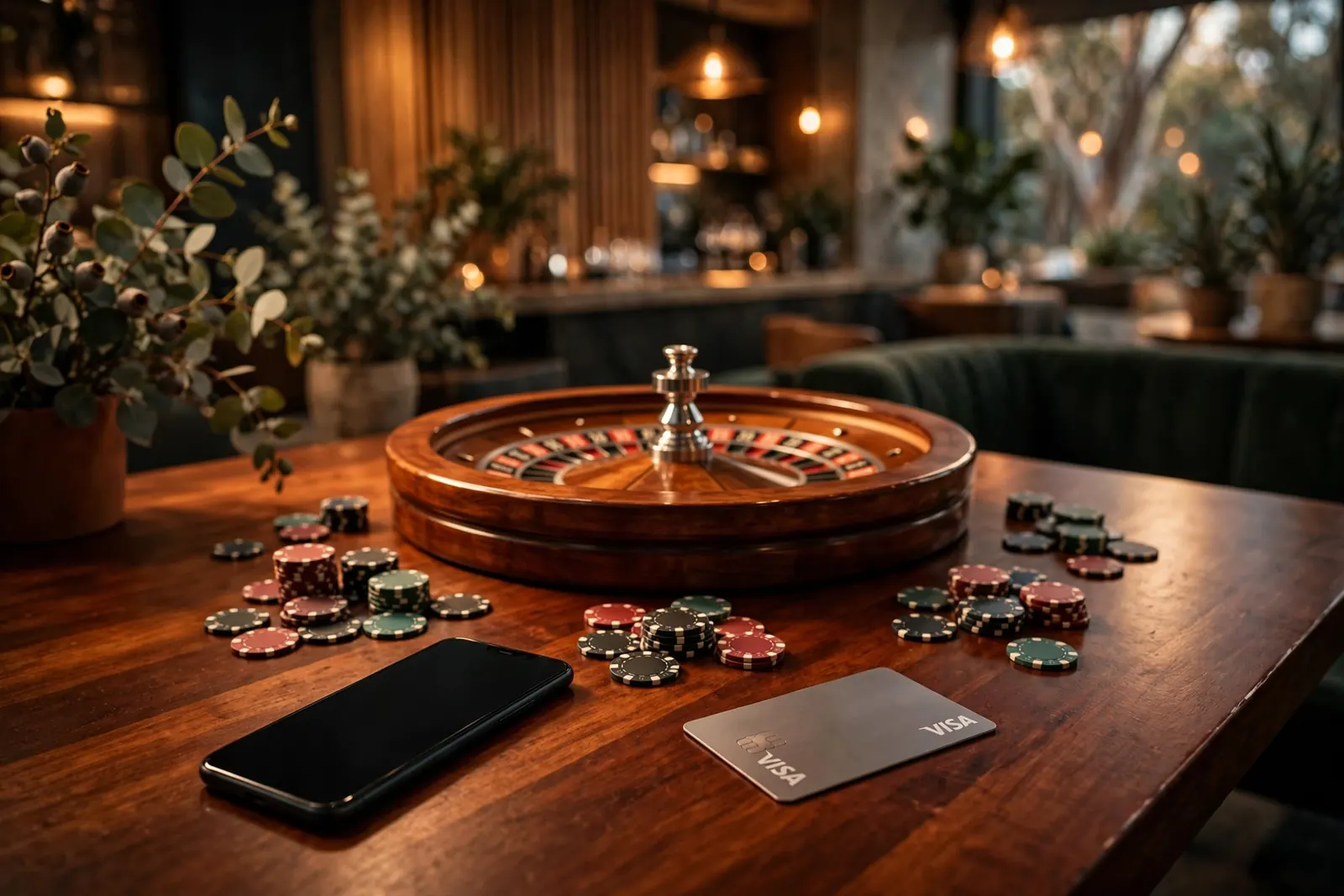
Game restrictions can narrow the route further. Promotional terms may exclude some games or count play on different games in different ways. That matters when an offer is advertised alongside online slots or video slots: the presence of those games on a site does not establish that they qualify for bonus progress. Nor does a broad phrase such as “casino games” settle the point. The terms need to say which play counts and which does not.
Then there is the maximum cashout. A promotion may cap the amount that can be withdrawn from bonus-linked play, even if the displayed balance is higher. The cap can change the practical value of a bonus more than its headline does. A balance is not the same thing as a payable amount.
Payment exclusions deserve the same attention. Some promotional conditions may exclude a payment method, including cryptocurrency, or attach different eligibility rules to deposits made with it. A Bitcoin deposit does not automatically qualify for a Bitcoin casino deposit bonus. The method used, the timing of the deposit and the wording of the offer can all matter. A bonus that cannot be claimed with the chosen payment method has no practical value to that depositor.
These clauses should be read together rather than as separate fine print. A wagering condition may look manageable until game restrictions reduce eligible play; a cashout cap may then limit what can be withdrawn, while a payment exclusion may prevent the promotion from applying at all. “Free” is a marketing adjective, not a description of the terms.
Attention: A Bitcoin deposit does not automatically qualify for a bonus, as some promotional conditions may exclude specific payment methods.
Promotions also do not change the legal position of online casino games in Australia. The Interactive Gambling Act 2001 prohibits operators from providing real-money online casino-style games to people in Australia; a bonus, whether attached to Bitcoin or another payment method, does not create an exception. Offshore services are not domestically licensed. Players registered with BetStop or a state-based self-exclusion program must also self-exclude directly with each offshore platform.
The social purpose of a promotion is plain enough: it turns a deposit into an invitation to keep playing. Its real value, however, sits in the clauses that qualify that invitation. Read closely. Dry work, but consequential.
What Australian Law Says About Casinos Accepting Bitcoin
Bitcoin does not create a separate legal category for online gambling in Australia. The Interactive Gambling Act 2001 is framed around the service being offered and the people it is offered to, not the payment rail used to move funds. It does not name Bitcoin or cryptocurrency. A site accepting BTC is therefore not outside the law simply because its cashier uses a blockchain rather than a bank.
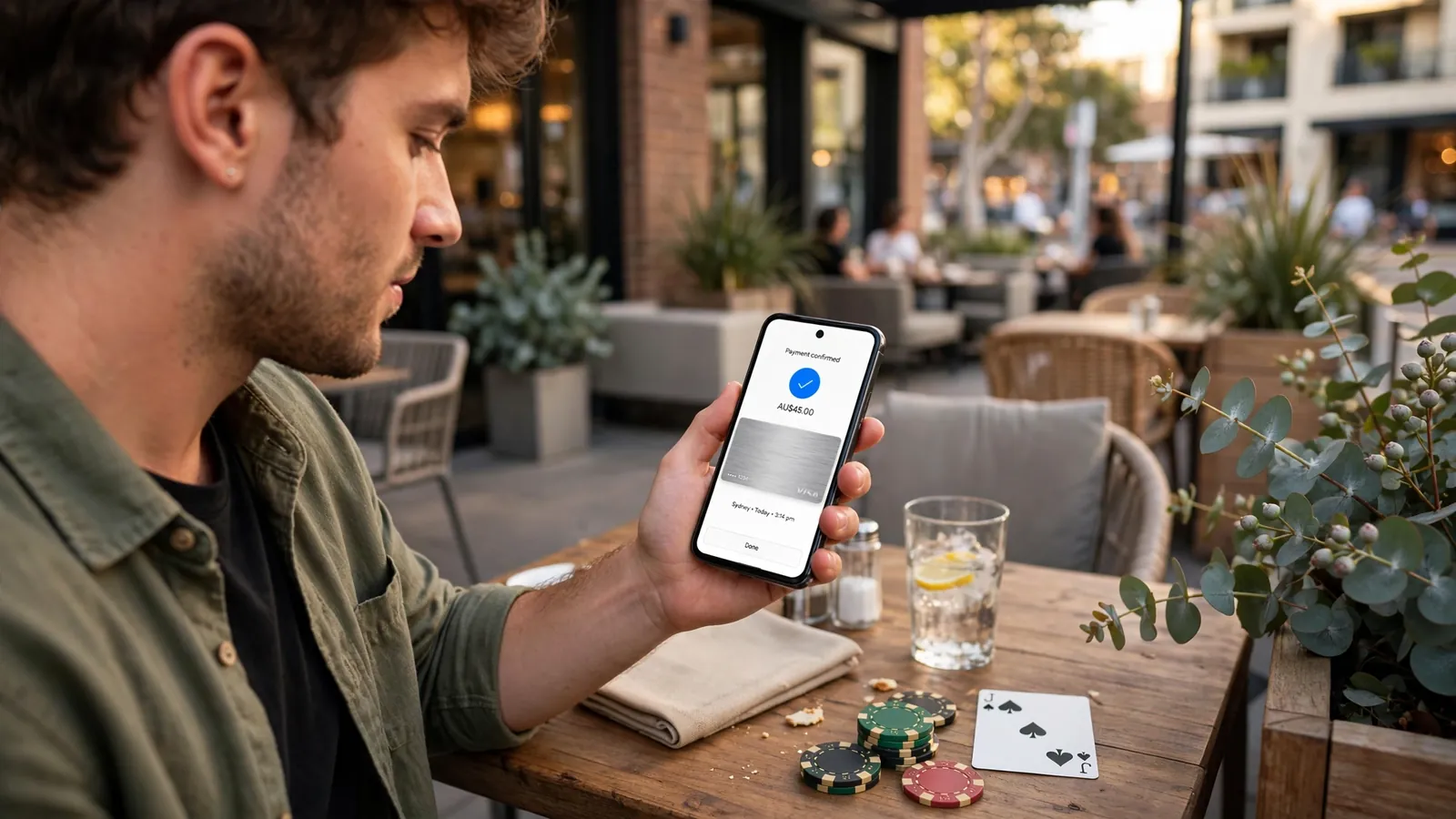
The central restriction falls on operators. The Act makes it illegal to provide certain real-money online casino services to people in Australia. That means a casino site that accepts Bitcoin cannot treat the coin as a legal workaround: the relevant issue is whether the operator is offering a prohibited service to Australian residents. A mobile site or an online casino with a BTC balance remains an online gambling service; the format of the payment does not change that.
This distinction matters because offshore licensing and Australian permission are not the same thing. A licence issued elsewhere may govern an operator in that jurisdiction, but it does not amount to an Australian licence or make the service locally regulated. Australia does not license online casino games for domestic provision. An offshore casino’s use of Bitcoin, or its claim to hold a foreign licence, should not be read as approval to serve people in Australia.

The player’s position is different from the operator’s. Australian law does not specifically criminalise an individual merely for using an offshore crypto gambling site, and the prohibition described by the Act is directed at the entity providing the service. That is not an endorsement, nor does it turn offshore play into a locally licensed activity. It is a distinction in whom the law targets.
The separation is easy to miss. A search for a casino that accepts Bitcoin can make payment method, licence and legal status look like one question. They are not. Bitcoin answers how a transaction may be made; it says nothing by itself about whether an operator may offer casino play to someone in Australia. Likewise, a foreign licence is not a domestic authorisation.
The law’s silence on cryptocurrency should not be mistaken for a special exemption. Legislators did not need to list every possible payment instrument to regulate the underlying service. The same boundary applies whether a casino takes BTC or another form of payment: responsibility for offering prohibited online casino gambling rests with the operator, while the player’s individual legal position is distinct. Different roles, different exposure.
Starting Play: From Wallet Transfer to Casino Balance
The route from a Bitcoin wallet to an offshore casino balance is a sequence of instructions, not a single payment. A specialist review describes the usual arrangement as sending funds from a personal wallet to an address displayed by the site. The account is credited only according to the site’s own deposit process; the blockchain records the transfer, but it does not decide whether the casino accepts it or how quickly the balance appears.
Wallet Transfer
Send cryptocurrency from a personal wallet to the specific address displayed by the site.
The transaction is broadcast to the blockchain and awaits the required number of confirmations.
The offshore casino credits the account balance according to its own internal deposit process.
Some specialist reviews also describe sites that may allow play after a transaction is detected, before it has received full confirmation. That is an operator-specific feature, not a reliable promise of immediate access. A displayed balance may depend on the site’s rules, and a pending transaction is not the same as a completed transfer.
The small details carry the larger risk. The destination address must match exactly, and the selected network must be one the site supports. A transfer sent to the wrong address or over an unsupported network can be irretrievable: blockchain payments cannot simply be recalled like a mistaken card payment. The transaction record may help establish what was sent and where, but it cannot compel a recipient to return funds.
Withdrawal is a separate step. A payout request is made to a wallet address, and identity documents must be provided before withdrawals can be processed. That verification can come after a deposit has already been accepted, so an account that appears ready for play is not necessarily ready to release funds. The withdrawal coin and network also need checking before any deposit is made; a site’s acceptance of Bitcoin for deposits does not, by itself, establish that it supports Bitcoin withdrawals.
The value of the balance can move while it sits. Bitcoin’s price may rise or fall between purchase, deposit and withdrawal, changing what the same amount represents in Australian dollars. A win displayed in BTC is not insulated from that movement. The wallet may show a successful transfer while the converted value tells a different story.

There is also a boundary beyond the payment screen. Australian law prohibits operators from providing real-money online casino games to people in Australia; using Bitcoin does not alter that rule. Those registered with BetStop or a state-based self-exclusion program must self-exclude directly at each offshore platform as well. A wallet is not a back door.
Casino Games and the Limits of Online Play
A casino game does not acquire a different legal character when its stake arrives as Bitcoin. The relevant distinction in Australia is not between a bank transfer and a blockchain transaction, but between ordinary online services and real-money casino-style play offered to people in the country.
The Interactive Gambling Act 2001 prohibits operators from providing online casino games to people in Australia. Its reach includes familiar table games such as poker, blackjack and roulette, as well as slots. The rule concerns the service being offered; changing the payment rail does not turn a prohibited game into a permitted one. A Bitcoin casino game remains an online casino game.
That point can be obscured by the language of crypto gambling. A site may present its balance in BTC, describe a game as a Bitcoin game, or make cryptocurrency the route in and out. Those labels describe the payment arrangement, not an exemption from the law. “Bitcoin casino games” is a convenient phrase for a category of websites and products, but it does not describe a separate legal category.
Legal Reality
Bitcoin is a payment method, not a legal loophole; it does not change the prohibited status of online casino games in Australia.
The distinction matters because games are often discussed as though their format settles the question. Poker is not outside the restriction because it involves skill; roulette is not different because its wheel is digital; blackjack does not become an ordinary software product when the stake is denominated in cryptocurrency. The law looks to the provision of online casino-style gambling to people in Australia, not to the novelty of the interface or currency.
Nor does a Bitcoin payment make the operator locally licensed. Australia does not issue a domestic licence for online casino games, and the Act bars operators from offering those games to Australians under an Australian licence. A payment method cannot supply a regulatory permission that the market does not provide.
This is the boundary that gives searches for casino games with Bitcoin their plain answer: the coin may change how value is transferred, but it does not change the status of the underlying game. The distinction is less glamorous than a new payment technology. It is also the important one.

In public language, “play casino games with Bitcoin” can sound like a question about convenience. In Australian law, the prior question is what is being offered and to whom. The same framework applies whether the account displays dollars or BTC, and whether the game is reached through a browser or an app. The technology changes; the legal boundary does not.
A digital token is not a legal disguise.
Bitcoin as a Casino Payment: Fees, Volatility and Alternatives
Bitcoin’s appeal as a casino payment is often described in terms of movement across a network rather than through a bank. That distinction does not make a transfer cost-free or predictable. A transaction can wait for confirmation while network activity and the fee attached to it influence when it is processed. The casino’s payment arrangements matter too, so the speed of a blockchain transfer should not be confused with the time a site takes to handle a payment.

See which traditional payment options and cryptocurrencies appear in searches for Australian online casinos, from…

Learn why Neteller availability does not establish legality: Australia’s Interactive Gambling Act 2001 prohibits operators…

A specialist review has reported that a Bitcoin confirmation may take between 10 and 60 minutes, depending on congestion and the fee paid. That is a snapshot from a source, not a standing promise about every transfer. Network conditions change, and a figure on a review page cannot guarantee how long a particular transaction will remain pending. Patience is part of the payment method.
Fees are less visible than the amount being sent, but they affect the amount that arrives in practical terms. Bitcoin network fees fluctuate; one specialist review reported that they can reach AUD 10–20 per transaction during peak periods. This should be read as a report of possible peak costs, not a normal charge or a ceiling. A small transfer can be disproportionately affected by a fee, while a larger one still faces the same uncertainty about congestion.
There is also the value of the coin itself. Bitcoin’s price can move between the moment it is acquired, sent and later exchanged or spent. A casino balance denominated in crypto therefore does not hold a stable value in Australian dollars. A win may be worth less after a price fall; a deposit may represent a different AUD amount by the time it is used. The currency’s volatility travels with the payment.
Other coins have different network characteristics, rather than a universal advantage. Specialist reviews have described Bitcoin transfers as potentially slower to confirm than Litecoin or Ethereum, while also noting that Ethereum fees can rise above Bitcoin’s during busy periods. Those comparisons are conditional, not a reliable forecast for the next transaction. Fee levels and confirmation times depend on changing network activity.
Confirmation may take 10–60 minutes; network fees can reach AUD 10–20 during peak periods.
Specialist reviews describe these as potentially faster to confirm than Bitcoin.
Fees on the Ethereum network can sometimes rise above those of Bitcoin during busy periods.
Payment choice is therefore a trade-off among timing, cost and exposure to price movement. A different coin may alter the network fee or confirmation experience, but it does not provide stronger consumer protection simply by being another cryptocurrency. Nor does the label “crypto casino” make the underlying service locally regulated. The payment rail changes; the risks do not disappear.
Bitcoin Deposits and the Wait for Confirmation
A Bitcoin deposit does not become a casino balance at the moment it leaves a wallet. For an offshore service that accepts Bitcoin, the transfer is first broadcast to the blockchain; the casino may credit the account only after the transaction receives the confirmations its system requires. A specialist review describes one to three confirmations as a possible threshold, but that is not a fixed rule across operators. The site’s own payment terms determine what it recognises.
That delay belongs to the deposit side of the transaction. A withdrawal follows a separate path: the casino must process and approve the request before sending Bitcoin to the nominated wallet. Blockchain confirmation of an incoming deposit says nothing about how quickly the casino will handle an outgoing payment.

The small details matter because a crypto transfer cannot simply be recalled. The destination address must be checked carefully before funds are sent, and the selected network must match the casino’s instructions. An address for one network is not interchangeable with an address for another. A mismatch or typing error can mean permanent loss.
Withdrawal support deserves the same attention before any deposit is made. A casino may accept Bitcoin for deposits without supporting it as the coin for withdrawals, or may impose separate conditions. Identity documents may also be required before a withdrawal is processed.
The phrase “no-deposit” in searches for Bitcoin casino offers can suggest that a balance appears without a transfer. That is a promotion, not a feature of blockchain confirmation, and any offer depends on its stated terms. It does not change the legal position: Australian law prohibits operators from offering real-money online casino games to people in Australia. Offshore crypto payment does not make the service locally licensed.

A balance is not yet a payout.
Bitcoin Slots: The Game Does Not Change the Rules
Bitcoin may change how a balance is described or transferred; it does not change what the game is. A slot played with BTC remains an online casino-style game, not a separate legal category created by its payment method. Calling the product Bitcoin slots, or presenting it as a crypto feature, cannot alter the rules attached to the underlying game.
Under the Interactive Gambling Act 2001, providing online casino-style games, including slots, to people in Australia is prohibited. The law does not need to name Bitcoin for that restriction to apply. Its focus is the service being offered, rather than whether a player’s balance is shown in dollars or cryptocurrency.
That distinction matters when a site describes itself as a licensed Bitcoin casino. A foreign licence, where one exists, is not an Australian licence and does not authorise the provision of online slots to Australian residents. Australia does not issue a domestic licence for online casino games. A payment label is not a legal workaround.

Nor does a site’s availability establish that it is lawful to offer its games in Australia. The Australian Communications and Media Authority blocks unlicensed offshore gambling sites. Using a VPN to get around location restrictions can breach a platform’s terms and may put an account or winnings at risk; it does not change the legal status of the service.
The same boundary applies whether a site offers conventional slots or titles styled as BTC slots. The coin may be different. The game is not.
For people registered with BetStop or a state-based self-exclusion program, any decision to stop gambling also needs to be applied directly at each offshore platform. A domestic exclusion does not automatically close an account abroad. That administrative gap is part of the wider problem: digital borders can be easier to cross than the protections designed around them.
Is it legal for Australian players to use Bitcoin at online casinos?
Australian players are not specifically prohibited from using Bitcoin at offshore casinos. The Interactive Gambling Act primarily targets operators offering online casino games to Australian residents, and crypto casinos are not licensed in Australia.
Are Bitcoin and crypto casinos legal in Australia?
Australia does not issue domestic licences for online casino games, and crypto casinos operate outside the Australian regulatory framework. The Interactive Gambling Act targets operators offering these games to Australian residents; ACMA can block unlicensed offshore sites.
What types of cryptocurrencies can I use at these casinos?
Bitcoin, Litecoin and Ethereum are among the cryptocurrencies accepted at crypto casinos. Litecoin generally has lower network fees, while Ethereum fees can rise during busy periods and Bitcoin confirmation times can vary with network congestion.
Can I win real money at crypto casinos?
Winnings can be requested as a cryptocurrency payout to your wallet. Recreational gambling winnings are generally not taxed in Australia, but a later profit from selling Bitcoin may be subject to capital gains tax.
What things should I check before playing?
Check who operates the site, what licensing jurisdiction it claims, and the rules for withdrawals, including whether payouts are made in the same cryptocurrency you deposited. An offshore licence is not an Australian licence.
Prepared by the Cuntspin Casino editorial staff.