Pay by phone casinos in Australia: how payments work
 Available in AU
A mobile screen can start a bank transfer, but the account charged—and the casino’s approval—depend on the payment route.

Table of Contents
- When a Casino Deposit Appears on a Mobile Bill
- What “Accepts Pay by Phone” Can Mean in Practice
- PayID, Not a Phone-Bill Charge
- Casino Approval Is Still Part of the Payout
- Bonus Claims Need More Than “No Wagering”
- BetStop Searches and the Limits of Payment Information
- Slots, Deposits and the Other Payment Routes
- Mobile Banking Moves Money; It Does Not Name the Games
- Credit Cards, Bank Wires and the Meaning of “Pay by Phone”
- Free Spins Do Not Verify a Payment Offer
When a Casino Deposit Appears on a Mobile Bill
A charge on a mobile bill and a payment made on a mobile phone are different arrangements. In the first, the cost is added to a telecommunications account and appears with the phone service charges. In the second, the phone is simply the screen used to make a payment through a bank. The phrase “pay by phone” can blur that distinction, though the two routes involve different accounts and different payment steps.
For PayID, the banking app is the point of action. A player selects PayID as the deposit method, enters an amount and confirms the transfer in the app. The phone may be in the player’s hand throughout, but the money comes from a bank account. It is not thereby charged to a mobile account. A handset is a device, not a funding source.
The distinction matters especially in a market where the language of convenience can make an unfamiliar payment sound more ordinary than it is. A bill-funded mobile purchase belongs to the relationship between a customer and a phone provider. A PayID transfer belongs to the banking system. Both may be initiated on a mobile screen; only one is a phone-bill charge.
Paying by phone can be a convenient way to fund an online casino account, but payment options and terms can vary. Use this list as a starting point and check the available methods and conditions before depositing.
License: Curacao · Payout speed: crypto 30-60 minutes, fiat 1-5 days · Min. deposit: A$10 Wild Tokyo lists a minimum deposit of A$10. Its stated payout times are 30–60 minutes for crypto and 1–5 days for fiat.
License: Curacao Golden Pokies is listed with a Curacao licence. That is the licensing detail available for this operator.
License: international iGaming licence – jurisdiction not named in the source · Payout speed: PayID 1-24 hours · Min. deposit: A$30 (PayID from A$10) House of Pokies lists PayID payouts in 1–24 hours and a A$30 minimum deposit, reduced to A$10 for PayID. Its source describes its licence as an international iGaming licence without naming the jurisdiction.
License: Curacao eGaming (Dama N.V.) JeetCity Casino is listed as licensed by Curacao eGaming (Dama N.V.). This provides a specific licensing detail for readers to consider.
License: Curacao Gaming Control Board JustCasino is listed with a Curacao Gaming Control Board licence. The available information here is limited to its licensing.
License: Curacao Gaming Control Board OGL/2023/176/0095 (Hollycorn N.V.) Rollero Casino is listed with Curacao Gaming Control Board licence OGL/2023/176/0095, held by Hollycorn N.V. This gives readers a specific licence reference to check.
License: Curacao (operating since 2017) · Min. deposit: A$20 Uptown Pokies is listed as operating since 2017 and holding a Curacao licence. Its stated minimum deposit is A$20.
License: Curacao Gaming Authority (Jumpman Gaming Ltd) DragonSlots Casino is listed as licensed by the Curacao Gaming Authority, with Jumpman Gaming Ltd named in connection with the licence.
License: Curacao Gaming Control Board OGL/2023/176/0095 (Hollycorn N.V.) Neospin is listed with Curacao Gaming Control Board licence OGL/2023/176/0095, held by Hollycorn N.V. The licence reference is the specific detail available here.
Payout speed: crypto under 1 hour, PayID 1-3 business days · Min. deposit: A$20 (A$30 to qualify for the bonus) Ricky Casino lists crypto payouts in under 1 hour and PayID payouts in 1–3 business days. Its minimum deposit is A$20, or A$30 to qualify for the bonus.
What the amounts describe
PayID deposits at casinos are commonly listed with minimums in the AUD 10–20 range. Some bank-transfer deposits may be accepted from AUD 5. These are deposit amounts, not charges attached to a phone plan, and the difference between the two payment routes should not be erased by the shared use of a mobile device.
That lower bank-transfer figure also needs its own context. A minimum deposit is a threshold set for a particular payment route; it does not establish that the same threshold applies to PayID, or that either route is billed through a telephone account. “From AUD 5” describes a bank-transfer entry point, not a general promise about mobile payments.
The terminology can make all this sound like a small technicality. It is not. A phone bill is settled with a telecommunications provider, while a PayID payment is authorised through a bank. The timing, account relationship and record of the transaction all differ. Calling both “paying by phone” makes the device seem more important than the route by which the money moves.
There is a broader reason to keep the language exact. In Australia, the Interactive Gambling Act 2001 prohibits operators from providing real-money online casino games to people located in the country. That includes online pokies and other casino-style games. Describing a payment mechanism does not alter that legal position, nor turn an apparent payment option into an authorised casino service.
A mobile interface can be familiar while the service behind it remains subject to a different set of rules. The everyday habit of tapping through a banking app should not be confused with permission for an operator to offer real-money casino games to Australian residents. Familiar technology has a way of making the unfamiliar look settled. It is not.
So when a deposit is described as made “by phone”, the useful distinction is whether the payment is added to a phone account or confirmed in a banking app. PayID belongs to the latter category. Its stated deposit thresholds are bank-payment details, not evidence of phone-bill funding. The wording may be compact; the transaction is not the same.
That separation also helps prevent a misleading impression about how a payment appears in personal records. A bank-confirmed PayID transfer is a bank transaction. A phone-bill purchase would be recorded through a mobile provider. The device used to initiate an action does not determine which account is charged.
In an era when a screen can serve as wallet, ticket desk and bank counter, “mobile” describes where an action happens, not necessarily what pays for it. That small distinction carries the whole meaning here. A bill is not a banking app.
What “Accepts Pay by Phone” Can Mean in Practice
The phrase “pay by phone” can describe two different things. One is a payment made on a phone; the other is a charge collected through a mobile account. For an Australian player looking at a PayID deposit, the relevant action is the first: the payment is initiated in a banking app. The phone is the place where the bank transfer is confirmed, not evidence that a casino payment will be added to a phone account.
Attention: A page describing a casino that accepts pay by phone deposits may be referring to PayID through mobile banking rather than a mobile carrier charge.
That distinction matters because a payment label can sound more specific than it is. A page describing an online casino that accepts pay by phone deposits may be referring to PayID through mobile banking. The words do not, by themselves, establish that a mobile carrier is involved, or that a deposit will be credited automatically. The practical question is what happens after the bank payment is made.
With PayID, the player selects that method in the casino’s cashier, enters a deposit amount and confirms the transfer in the banking app. The transfer can reach the casino within seconds, with reported arrival times typically falling between three and fifteen seconds. That describes the movement of money. It does not settle whether the casino account has matched the incoming payment to the right player.
The matching step depends on the payment reference. A casino may require the player’s ID or username there so its system can connect the transfer to the relevant account. If that detail is omitted or entered incorrectly, the money may arrive while the deposit remains pending. A support team may then need to process it manually. The bank can have completed its part, yet the account balance can still be waiting for a human to identify the sender.
This is the point at which “fast” becomes an incomplete description. There are two events: funds reaching the casino and funds appearing as an available balance. They can happen close together, but they are not the same event. A deposit flow that relies on a reference is only as clear as the information attached to the transfer. Small administrative details have a way of becoming the main plot.

Before confirming a PayID transfer, the recipient name should be checked against the details shown for the payment. The required player ID or username should be included in the reference, and the reference should be checked before the transfer is sent. These steps do not promise instant credit; they reduce the chance that an arriving payment cannot be matched automatically. If it is left pending, manual support processing may be needed.
The amount available for a PayID transaction is not set by the phone or by a universal PayID ceiling. Transaction limits are determined by the player’s bank, and they differ between banks. So a casino deposit screen and a banking app may not present the same practical boundary: the bank’s own limit governs what can be sent from that account. A payment method’s name tells little about the account-specific conditions behind it.
There is also a legal frame that changes how this terminology should be read in Australia. The Interactive Gambling Act 2001 prohibits operators from providing real-money online casino games, including slots, poker and table games, to people physically located in the country. A description of an online casino payment flow should not be mistaken for an endorsement or a guarantee that such a service is lawfully available to Australians. The mechanics of a bank payment do not alter the status of the service receiving it.
Legal Prohibition
Under the Interactive Gambling Act 2001, operators are prohibited from providing real-money online casino games to people physically located in Australia.
That leaves a narrower, more useful meaning for searches about casinos that accept pay by phone. In a PayID context, “by phone” can mean that a banking app is used to authorise the deposit. It does not mean that the phone itself proves acceptance, determines the bank’s transfer limit, or ensures the casino account is credited without a correctly completed reference. The app sends the money; the reference helps explain where it belongs.
For anyone assessing a payment description, the useful details are therefore concrete: whether PayID is named, which recipient is displayed, what reference is required, and whether the payment is shown as completed in the banking app. Those details clarify the deposit path without dressing it up as a phone-bill feature. A quick transfer is one thing. A correctly credited deposit is another.
PayID, Not a Phone-Bill Charge
“Pay by phone” can describe two very different things. One adds a purchase to a mobile account and collects the cost through a phone bill. The other uses a phone as the place where a bank payment is authorised. PayID belongs to the second category. A mobile number may serve as the identifier attached to a bank account, but that does not turn a transfer into a charge billed by a telecommunications provider.
That distinction matters because the words suggest a familiar commercial arrangement: select a service, confirm a purchase and see the amount appear on the next bill. PayID does not work that way. It is a payment service provided through Australia’s New Payments Platform, or NPP. The identifier helps direct money between accounts; it is not itself a source of credit, a mobile subscription or a promise that a payment can be collected from a phone account.

The identifier can be a mobile number or an email address. Its practical appeal is plain enough: a short, recognisable detail can stand in for the longer account information traditionally needed to send money. The Australian banking system built PayID into a wider arrangement for sending and receiving payments, with the NPP carrying the transfer. The visible identifier is the label; the underlying movement of money still takes place between bank accounts.
That is why a phone can appear in the process without the phone company appearing in the payment. A number may identify where a payment should go, while the bank remains the institution handling the transaction. The device is a window onto banking, not a till attached to the monthly mobile bill. The difference is less glamorous than the phrase “pay by phone”, but much more useful.
The NPP is designed for real-time settlement, and PayID transactions move through it in real time. In ordinary payment language, that means the network is built to pass funds promptly rather than relying on the slower rhythm of conventional transfers. The settlement rail and the identifier do separate jobs: PayID supplies a convenient way to address a payment, while the NPP provides the infrastructure that moves it. A mobile number is not the network, any more than a street address is the road.
PayID uses a mobile number or email as an identifier to direct money between bank accounts via the New Payments Platform (NPP), but it is not a source of credit or a phone-bill charge.
In casino-related wording, this terminology needs particular care. A reference to PayID can describe a banking payment option; it does not establish that a phone-bill casino exists, nor does it change what the payment method is. The phrase “casino pay by phone” can blur those categories, making a bank transfer sound like a carrier-billed purchase. The blur is linguistic, not financial.
There is also a legal boundary that cannot be dissolved by a payment label. Under Australia’s Interactive Gambling Act 2001, operators may not provide real-money online casino games to people located in Australia. PayID’s role as a general payment service does not authorise such an offering or make an otherwise prohibited service lawful. A payment rail is infrastructure, not permission.
The term “pay by phone” therefore needs translating before it can be trusted as a description. If it means a mobile number used as a PayID, the phone is functioning as an identifier within the banking system. If it means a charge placed on a phone bill, that is a different payment model. The two may share a handset and a few words, but not the same route for money. No billing magic.
Casino Approval Is Still Part of the Payout
A payment network can move money quickly without deciding when a casino releases it. PayID transfers settle through the New Payments Platform, but a withdrawal has another stage: the operator must receive, review and approve the request. A delay at that point is not evidence that the payment rail has slowed.

A specialist review of offshore operators reported that the highest-rated PayID casinos it assessed accepted withdrawal requests within zero to six hours. It also put review and approval for verified accounts at two to six hours. Those are separate parts of the operator-side process, and the reported windows come from that review—not a service standard applying to every site. Nor does approval mean the money has already reached a bank account. It means the casino has authorised the transfer; the receiving stage is still to come.
That distinction is easy to lose in the language of instant payments. PayID’s speed concerns settlement through the network once a transfer is released. It cannot compel a casino to examine a request, resolve an account query or approve a payout. In a specialist review, internal processing was identified as the key bottleneck for PayID withdrawals, rather than the network itself. The machinery can be fast. The institution using it sets another clock.
Account checks matter to that clock. KYC verification is generally required before a first withdrawal, and completing it ahead of a payout request can reduce the chance of a paperwork hold. A request may therefore sit while the operator checks identity or account details, even where the payment method itself is capable of real-time settlement. Verification is not a synonym for payment processing; it is a gate the operator may place before it.
Do
- Complete KYC verification before requesting a payout
- Check if the operator has approved the request
Don’t
- Assume network speed equals instant casino approval
- Confuse verification with payment processing
There is also a legal fact that payment descriptions cannot soften. Under Australia’s Interactive Gambling Act 2001, operators may not provide real-money online casino games, including pokies, to people physically in Australia. A page describing an offshore site as a “best” place to play would blur that boundary and make a payment feature sound like an endorsement. It is not. A fast transfer does not make the underlying service lawful.
For the same reason, reported withdrawal timings should be read as observations about an operator review, not as a promise that a payout will arrive in a given window. The timing can depend on whether the account is verified and whether the casino has completed its own checks; after approval, the payment still has to travel. A claim about a quick PayID cashout can describe only one part of that sequence.
The useful distinction is plain: network settlement and casino approval are different events. A phone may be involved in authorising a bank payment, but it does not make the casino’s review disappear. Instant, then pending.
Bonus Claims Need More Than “No Wagering”
“No wagering” sounds like a clean promise: a bonus that does not have to be played through before winnings can be withdrawn. But the phrase on its own says little about the rest of an offer. It does not establish whether a promotion exists, who can use it, what games qualify, or whether a cash-out is available on the stated terms.
The same caution applies to a supposed no-deposit bonus. The label suggests that no initial deposit is needed to receive a promotion; it does not, by itself, explain what happens afterwards. A headline can be brief. Conditions rarely are.

For anyone assessing a bonus claim, the relevant terms include wagering requirements, maximum bet limits, game weighting, time limits and maximum cash-out conditions. “No wagering” addresses only one of those questions. It should not be read as “no conditions”, still less as proof that an offer is open to people in Australia. A promotional phrase is not a payment method, either: it cannot establish that a phone number, a phone-bill charge or a mobile banking payment is accepted for a deposit.
That distinction matters because “pay by phone” can describe very different things. A payment started on a phone is not necessarily charged to a mobile account. Nor does a bonus described beside a payment method prove that the two are available together. A promotion and a deposit route are separate claims, each requiring clear terms.
The Australian setting changes the meaning of the sales language. Under the Interactive Gambling Act 2001, operators may not provide real-money online casino games, including pokies, to people physically in Australia; advertising those services to Australian audiences is also prohibited. A page presenting a “no-deposit” or “no-wagering” casino offer should therefore not be treated as an invitation to play. A Dutch label, or wording aimed at another country, does not make an offer an Australian one.
The sensible reading of “pay by phone, no wagering” is not that a verified package has been established. It is a combination of phrases that needs separating: what the payment actually does, what the promotion actually says, and whether the service may lawfully be offered to someone in Australia. A claim about one does not settle the others.
Common bonus conditions
Terms may include wagering requirements, maximum bet limits, game weighting, time limits, and maximum cash-out conditions.
There is little romance in small print. It is where the promise is made precise—or where its limits become visible.
BetStop Searches and the Limits of Payment Information
A description such as “not on BetStop” says little about how a payment works, and it does not establish that a casino is available to people in Australia. BetStop-related wording, phone-bill charging, and payment brands such as Boku are separate matters. One label cannot settle the others.
The legal position is clearer than the marketing language. Under the Interactive Gambling Act 2001, operators are prohibited from providing real-money online casino games—including pokies, poker and table games—to people physically in Australia. A claim about an operator’s BetStop status does not change that rule. Nor does a payment option make a prohibited service lawful.
That distinction matters because “pay by phone” can suggest several different arrangements. It may mean a payment started on a mobile device, a charge added to a telephone account, or simply wording attached to a casino offer. Those are not interchangeable. A phone-bill description, even when paired with claims about real-money play, bingo, pokies or a no-deposit offer, is not proof that a charge can be made or that the service is accessible in Australia. Payment language is not a legal status report.
The same restraint applies to claims about casinos said to be outside BetStop. Without reliable, current information about a particular operator, its status should not be inferred from a label or an advertisement. More importantly, that label does not answer the separate question of whether real-money online casino services may be provided to people in Australia. They may not.

Payment information has a narrower use: it can describe how a transaction is initiated, credited or returned. It cannot verify an operator’s regulatory position, make a bonus genuine, or establish that a particular games catalogue is available. A deposit method is not a certificate of legitimacy. Dry, but necessary.
Withdrawals also involve checks beyond the payment route. A specialist review reports that identity checks are generally requested before a first withdrawal; completing KYC verification ahead of that point may reduce paperwork delays. That is a procedural detail, not an endorsement of an operator or a promise that a payout will be approved. The account holder’s identity still has to be established before winnings are released.
In short, BetStop wording and phone-bill wording answer different questions, and neither settles the legal one. Payment descriptions should be read as descriptions of payment—not as evidence that a real-money casino service can lawfully be offered to people in Australia.
Slots, Deposits and the Other Payment Routes
A search for pokies alongside a payment method can make the games and the transaction appear to be one package. They are separate questions. A deposit route says how money may move; it does not identify which games are offered, establish that a bonus is available, or make a service lawful in Australia. The Interactive Gambling Act 2001 prohibits operators from providing real-money online casino games, including slots, to people in Australia.
Withdrawals may arrive within minutes or hours once approved by the casino.
Reported withdrawal ranges are typically one to five business days.
Reported withdrawal ranges are typically one to five business days.
Payment information is still useful as a description of how different routes behave. Visa and Mastercard are widely listed for deposits, according to specialist casino reviews. That does not mean the same card can carry a withdrawal back: card cashouts may be slower, or unavailable altogether, depending on the payment processor. A deposit option is not a promise of a matching exit.
The delay is often found after the game account has been credited, at the point winnings are requested. A specialist review reports that, once a withdrawal has been approved, PayID and some e-wallet payments may arrive within minutes or hours. For bank transfers and card withdrawals, the reported range is one to five business days. Those are transfer estimates, not a clock that starts when a withdrawal form is submitted. The casino’s own review comes first.
That distinction matters in searches for casino sites, phone-based deposits and bonuses. A payment route cannot verify a promotion’s terms, and a games page cannot establish that a withdrawal method is available. The mechanics should be checked separately: deposit acceptance, withdrawal support, and any conditions attached to a bonus are not interchangeable details.
Nor does a mobile device change the legal character of the service. A phone can display a banking app or a casino page; it does not turn prohibited online casino gambling into a permitted product. The screen is only the screen.
For anyone comparing payment descriptions, the practical point is modest: cards may be easier to use for deposits than for withdrawals, while the time after approval depends on the method. “Fast” without saying which stage is being timed is not much of a promise.

Mobile Banking Moves Money; It Does Not Name the Games
A phone can be the place where a payment is approved without being the payment method itself. With PayID, the movement of money runs through the New Payments Platform, while the banking app is the interface used to release it. That distinction matters when a search for mobile pokies or phone-based casino payments seems to promise more than it actually describes.
Nor does a quick transfer settle the whole transaction. Once released, a PayID payment can clear through the network within minutes. A withdrawal, however, may still be waiting for the casino’s own review before it is sent. A specialist review identifies that internal processing as a possible chief source of delay: the payment rail can be ready while the account remains under examination. Speed is not a single event.
The word “mobile” also does not identify the games available, or establish that a particular service is lawful or accessible in Australia. Searches may mix up banking by phone, charges added to a phone account, and games advertised as playable on a handset. These are separate claims. A payment method says how money moves; it does not name a game, verify an offer, or turn an offshore casino into an authorised local service.
That boundary is not merely technical. Under Australia’s Interactive Gambling Act 2001, operators cannot provide real-money online casino games, including pokies, to people physically in Australia. A mobile screen changes the size of the window, not the legal character of what is displayed.
Payment Distinction
A phone is a channel for authorising bank payments, not a catalogue of games or a guarantee of legal service availability in Australia.
The practical meaning of a fast PayID transfer is therefore narrow: funds may travel promptly after release, while any later payout can depend on a separate operator review. The phone is a channel, not a catalogue. And a payment label is not evidence about the games attached to it.
Credit Cards, Bank Wires and the Meaning of “Pay by Phone”
“Pay by phone” can describe two different things: a charge added to a mobile account, or a payment arranged on a phone using a bank or card service. A credit card is not a phone-bill payment, even when the transaction begins on a handset. The wording can blur the distinction; the money does not.
That distinction matters in Australia. The Interactive Gambling Act 2001 prohibits operators from providing real-money online casino games to people in the country, and online gambling services must not accept credit-card payments. A search for a casino credit payment therefore does not establish that such a method is lawful or available to Australians. Nor does the mention of a mobile-billing provider establish that a casino charge can be placed on a phone account.
Bank wires belong to another category altogether. They require the recipient’s banking details rather than a mobile number or phone-bill account. To arrange one, the payer needs the casino business name, its account number and bank name; international transfers may also call for SWIFT, BIC or IBAN codes. Those details make a wire traceable and formal, but they do not turn it into a phone-bill charge.
The practical contrast is time and cost. A bank-wire deposit may take as long as seven business days to appear in an account. Banks may also charge more for these transfers than for other non-banking transactions. The delay is not the same as a mobile carrier waiting to add a charge to a bill: the wire moves through banking channels, with its own handling and fees.
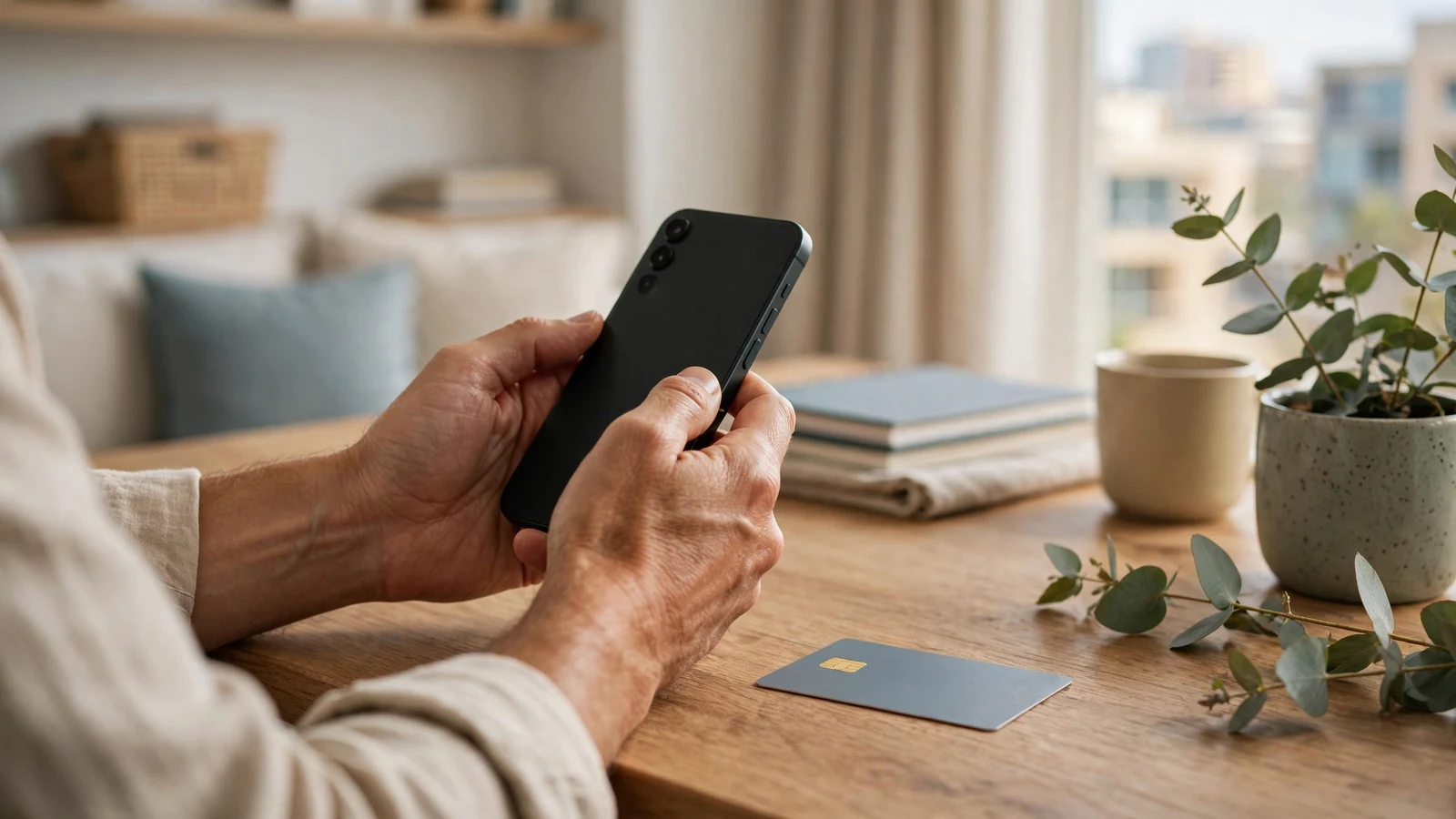
Phone-based wording can make a payment sound as though it belongs to the telephone company. Often it only describes the device used to initiate a transaction. A phone can be the counter on which a payment is arranged; it is not necessarily the party billing it. In Australia, that distinction should not be mistaken for an invitation to use an online casino service that operators are prohibited from providing.
Free Spins Do Not Verify a Payment Offer
Free spins and “credit slots” belong to the language of promotions, not payment evidence. A page using those labels has not, by the wording alone, established that an offer exists, that it is available in Australia, or that a phone-bill payment is involved. “Credit” may sound like a balance waiting to be spent; the phrase itself proves nothing about how funds move or whether a promotion can be claimed.
That distinction matters in Australia. Real-money online casino games, including pokies, are prohibited for operators to provide to people in the country under the Interactive Gambling Act 2001. Advertising those services to Australian audiences is also prohibited. Promotional language should not be mistaken for confirmation that a lawful local casino offer is available.
Nor does a free-spin label settle the terms. Bonus conditions can include wagering requirements, maximum bets, restrictions on which games count, expiry periods and limits on cash-out. Each condition changes what the promotion means in practice. A headline is not a substitute for the detail.
The same caution applies to searches for casino credit slots paid for by phone. A phone used to access a banking app is not the same thing as a charge placed on a mobile account, and a promotional phrase does not establish either arrangement. Payment method and bonus claim are separate questions.
The wording may attract attention; it does not verify an offer. A small distinction.
What are the minimum and maximum deposit limits at PayID casinos?
PayID casino deposits commonly start at AUD 10–20, while some bank transfers accept as little as AUD 5. PayID transaction limits are set by your bank; most major Australian banks allow AUD 1,000–5,000 per transaction and daily limits of AUD 10,000–20,000.
Which banks support PayID?
Most major Australian banks support PayID. The specific transaction limits vary by bank.
How long do PayID deposits take?
Funds typically reach the casino within 3–15 seconds. If the required player ID or username is missing from the payment reference, crediting the casino account may take longer and require manual processing.
Can you withdraw casino winnings using PayID?
Yes, PayID can be used for casino withdrawals. Typical minimum withdrawals are AUD 20–50, with maximums of AUD 5,000–10,000 per transaction.
How long do withdrawals take?
For verified accounts, top-rated PayID casinos typically review and approve requests within 2–6 hours. After approval, PayID withdrawals may arrive within minutes to hours; bank transfers and card withdrawals often take one to five business days.
Published by the Cuntspin Casino team.