Solana casino comparison Australia: rules and costs
 Available in AU
Australian rules apply to the offshore gambling service, while wallet transfers, bonus terms and casino processing create separate practical and financial risks.

Table of Contents
- The Australian Rules Behind an Offshore Solana Casino
- Getting SOL from an Australian Exchange to a Casino Wallet
- What a Solana Casino Comparison Can—and Cannot—Verify
- Solana Slots and the Price of a Bonus
- NFT Casinos: A Feature the Evidence Does Not Establish
- SOL, USDC and the Cost of Moving Value
- Dice Games Without a Verified Menu
- Casino Games, Wagering Rules and Unequal Contributions
- SOL as a Casino Token: Tax and Value at Cash-Out
- Withdrawals: Fast Networks, Slower Casino Processes
The Australian Rules Behind an Offshore Solana Casino
SOL is not prohibited property in Australia. People may buy it, hold it and transfer it. The legal difficulty begins when the asset is used to access an offshore online casino: the Interactive Gambling Act 2001 draws a line around the service, not around the token. Overseas operators are barred from supplying online casino games to people in Australia, even when their websites accept SOL and present themselves as accessible from anywhere.
That distinction can make the arrangement look deceptively ordinary. A digital asset can move lawfully between wallets while the gambling service receiving it remains prohibited from serving Australian residents. The payment rail does not rewrite the law governing the business at the other end.
The Act’s principal target is the operator. Australian players are not directly penalised merely for using an offshore casino, a distinction that can be mistaken for approval. It is not. The absence of direct player penalties does not make participation legally safe, nor does it create a local route for resolving a dispute. A service can be prohibited from operating here while still being reachable online for a time.

Enforcement is part of that picture. The Australian Communications and Media Authority (ACMA) can seek to block unlicensed offshore gambling websites, and its public Gambling Prohibition Register records more than 200 sites as of 2026. Blocking is an effort to restrict access, not a guarantee that every prohibited service disappears from the internet. The practical reach of a website and its legal status are separate matters.
There is also no settled Australian licensing scheme specifically for crypto-gambling operators, according to a specialist market review describing the position at mid-2026. That absence should not be confused with a permissive gap in which an offshore casino gains local authority by accepting SOL. The broader prohibition on overseas operators providing online casino services to Australians remains the central rule.
For players, the sharper consequence is the lack of protection when something goes wrong. If an offshore operator freezes an account or refuses to release winnings, Australian law does not provide the player with the protections available in a locally regulated consumer relationship. A complaint may be difficult to pursue across borders, and ACMA’s role in enforcing gambling restrictions is not the same as a service for recovering an individual’s funds.

This is why the phrase “legal grey zone” needs care. It describes the position of using cryptocurrency in connection with an offshore casino; it does not mean the casino is authorised to serve Australia. Nor does the fact that individual players are not directly penalised turn a prohibited service into a lawful one. The regulatory burden falls principally on the operator, while much of the practical risk falls on the customer.
A comparison of Solana casinos can therefore say nothing that changes this starting point. Differences between websites do not supply Australian legal approval, and an overseas licence does not override the restriction on serving people in Australia. Where an operator is outside local oversight, a dispute over access or funds may have no effective Australian remedy.
The token may be lawful. The service is another matter.
Getting SOL from an Australian Exchange to a Casino Wallet
The route from Australian dollars to a Solana casino account generally passes through an exchange. Most such casinos do not take AUD directly by bank transfer or credit card, so the usual sequence is to fund an Australian exchange, buy SOL, and send it to the wallet address provided by the offshore platform. It is a small chain of separate services, each with its own account rules and points where a mistake can become costly.

Swyftx, CoinSpot and Coinbase AU support AUD deposits through PayID or bank transfer. The exchange is the point where ordinary money becomes a crypto asset; the casino wallet is where SOL is then credited for use on the platform. A casino may describe the destination as a deposit address or wallet address. The important distinction is that buying SOL and depositing SOL are separate actions: an exchange balance is not yet a casino balance.
From AUD balance to SOL transfer
An exchange account must first be opened and funded. On-ramp services that convert between SOL and AUD are subject to KYC/AML requirements, so account access can involve identity and transaction checks. These controls belong to the regulated exchange and conversion service, not to the Solana network itself. The network can move an asset; it does not establish who owns an account or whether an exchange will approve a transaction.
Funding a Wallet
Open and fund an account with an Australian exchange like Swyftx, CoinSpot, or Coinbase AU using PayID or bank transfer.
Convert your AUD balance into SOL, completing any required KYC/AML identity and transaction checks.
Copy the casino’s nominated Solana address and initiate the transfer from the exchange, ensuring the network matches the destination instructions.
After purchasing SOL, the transfer is initiated from the exchange to the casino’s nominated Solana address. The address needs to be copied carefully and the selected network must match the destination’s instructions. A crypto transfer is not like correcting a bank detail after a payment has gone astray: SOL transfers are irreversible, and funds sent to the wrong address can be lost permanently. Careful checking is not ceremony. It is the only useful pause in a process designed to be quick.
The amount that arrives is governed by the casino’s deposit rules, rather than by the exchange’s purchase screen. A specialist review has reported minimum SOL deposits in the range of 0.01 to 0.1 SOL, corresponding to approximately AUD$2.80–$28 at April 2026 prices. That is a reported range, not a promise that every platform accepts those amounts. The AUD equivalent also shifts with SOL’s market price, so a threshold expressed in SOL does not stay fixed in Australian dollars.
Before sending funds, the deposit page should be checked for the accepted asset, network, address and minimum. A platform that displays a SOL address is not necessarily asking for an address on another network, and a token with a similar name is not a substitute for SOL. If the deposit instructions are unclear, sending a test amount is not a universal safeguard: it still risks loss, and it does not change the platform’s terms. The conditions should be understood before any transfer is made.

The account is not the same as the law
The practical route should not be mistaken for a lawful local casino service. The Interactive Gambling Act 2001 prohibits offshore operators from providing online casino games to Australian residents. The law targets the operator rather than directly penalising an individual player, but that distinction does not make an offshore casino legally safe to use. Nor does an absence of known prosecutions establish protection.
If an offshore platform freezes an account or withholds funds, Australian law offers no legal protection for the player in that dispute, and Australian authorities provide no recourse comparable to a local consumer remedy. ACMA blocks unlicensed gambling websites, so a platform’s accessibility at one moment says little about its standing or future availability. Using a VPN to get around a block can also expose funds to seizure or loss under an operator’s own controls. Convenience is not cover.
This matters at the funding stage because a transfer gives the platform control over whether the deposit is credited and how the account is handled. Read the deposit and cash-out terms before depositing, not after a balance has grown. Larger withdrawals or bonus cashouts may prompt KYC checks requiring identification, so the existence of a casino wallet does not mean every later account action will be frictionless. That issue is separate from the exchange’s own KYC/AML checks, which apply when converting AUD and SOL.
A casino described as a Solana casino is therefore not a direct extension of an Australian exchange. It is an offshore service reached through a crypto transfer, with the exchange, wallet address and operator each forming a different link in the chain. The movement of SOL can be simple; the protections around the destination are not.
What a Solana Casino Comparison Can—and Cannot—Verify
When comparing Solana casino options in Australia for 2026, check the licensing details and any available payment information before choosing. This overview highlights the facts provided for each operator.
License: Curacao · Payout speed: crypto 30-60 minutes, fiat 1-5 days · Min. deposit: A$10 Wild Tokyo lists a Curacao licence and an A$10 minimum deposit. Its stated payout times are 30–60 minutes for crypto and 1–5 days for fiat.
License: Curacao Golden Pokies is listed with a Curacao licence. No payment or deposit details are provided here.
License: international iGaming licence – jurisdiction not named in the source · Payout speed: PayID 1-24 hours · Min. deposit: A$30 (PayID from A$10) House of Pokies lists an international iGaming licence, though the source does not name the jurisdiction. Its minimum deposit is A$30, or A$10 via PayID, with PayID payouts stated at 1–24 hours.
License: Curacao eGaming (Dama N.V.) JeetCity Casino is listed under a Curacao eGaming licence held by Dama N.V.
License: Curacao Gaming Control Board JustCasino is listed with a Curacao Gaming Control Board licence.
License: Curacao Gaming Control Board OGL/2023/176/0095 (Hollycorn N.V.) Rollero Casino lists a Curacao Gaming Control Board OGL/2023/176/0095 licence, held by Hollycorn N.V.
License: Curacao (operating since 2017) · Min. deposit: A$20 Uptown Pokies is listed as operating under a Curacao licence since 2017. Its minimum deposit is A$20.
License: Curacao Gaming Authority (Jumpman Gaming Ltd) DragonSlots Casino is listed with a Curacao Gaming Authority licence held by Jumpman Gaming Ltd.
License: Curacao Gaming Control Board OGL/2023/176/0095 (Hollycorn N.V.) Neospin lists a Curacao Gaming Control Board OGL/2023/176/0095 licence, held by Hollycorn N.V.
Payout speed: crypto under 1 hour, PayID 1-3 business days · Min. deposit: A$20 (A$30 to qualify for the bonus) Ricky Casino lists crypto payouts under one hour and PayID payouts in 1–3 business days. Its minimum deposit is A$20, or A$30 to qualify for the bonus.
A comparison of Solana casinos is only as useful as the distinctions it makes. A polished page can place bonuses, payment options and game claims in tidy columns; that presentation does not establish that an offshore operator is dependable, or that its terms will be applied fairly. For Australian residents, there is a more basic limit: the Interactive Gambling Act 2001 prohibits offshore operators from providing online casino games to people in Australia. A ranking is not a legal endorsement, and using an offshore site is not legally safe simply because a player has not been prosecuted.
Licensing disclosures are a starting point, not a conclusion. A comparison can report the licence an operator claims to hold, the issuing jurisdiction and whether the information is easy to locate. It cannot turn a foreign licence into Australian authorisation, nor prove that a regulator will secure a player’s funds in a dispute. Offshore operators offer limited consumer protection; if an account is frozen, winnings are withheld or a platform closes, Australian authorities provide no route to recover the money. The distinction matters more than the badge in the footer.
No Legal Protection
Offshore operators are prohibited from serving Australians under the Interactive Gambling Act 2001, meaning Australian authorities provide no recourse for recovering funds or resolving disputes.
Bonus value also needs more than a headline figure. A meaningful assessment considers the playthrough attached to bonus funds, which games count and by how much, how long the offer remains available, and whether a maximum cashout limits what can be withdrawn. A specialist review that calculates effective bonus value using those factors can make its method visible; a promotional figure on its own cannot. Terms that leave one of those conditions obscure should be treated as an unresolved cost, not as a generous offer.
That calculation is not a prediction of profit. Wagering rules describe what must be played through, not what will remain afterwards. Nor does a large advertised bonus necessarily carry more practical value than a smaller one: restrictive game contributions, short time limits or a cashout cap can reduce what the offer is worth. The comparison should show the conditions beside the claim rather than letting the claim stand in for them. Fine print is still print.
Withdrawal terms deserve equal scrutiny, even when a page gives prominence to the speed of the Solana network. Casino processing and blockchain confirmation are separate stages. Processing can range from 5–15 minutes where an operator automates requests to as long as 72 hours where review is manual. A displayed estimate is not a guarantee, and the comparison should distinguish the operator’s stated queue from the network transfer itself. Fees and approval conditions also belong beside any speed claim.
The cash-out rules need to be read before a deposit, not after a win. Larger withdrawals or bonus cashouts may prompt KYC checks requiring identity documents, so a site’s policy should explain when checks may occur and what happens while an account is under review. A comparison can record whether those conditions are disclosed; it cannot promise that a particular request will pass without delay. SOL transfers are irreversible: funds sent to the wrong address can be lost permanently. A VPN can also lead to account seizure and loss of funds, rather than providing a reliable way around restrictions.
Do
- Check the operator’s stated withdrawal queue
- Verify if KYC documents are required for cash-outs
- Confirm the specific network and address for transfers
Don’t
- Assume a fast blockchain means fast casino processing
- Use a VPN to bypass blocks, risking account seizure
- Send funds without checking the minimum deposit limit
Game information calls for another distinction: a published figure is not the same thing as independent verification. RTP claims should be traceable to a game or provider and presented with enough context to identify what they describe. A fairness tool, including a provably fair mechanism if one is claimed, should come with an explanation of how a result can be checked. Merely displaying the phrase “provably fair” does not demonstrate that the process works as described. A comparison can assess the clarity and checkability of disclosures; it should not imply that every game or outcome has been independently audited unless that work has actually been done.
The same restraint applies to claims about security and reputation. A comparison can note published policies, terms and evidence of testing. It cannot infer that a site is safe because its interface looks professional, its transactions appear on-chain or its promotional material uses the language of transparency. Blockchain records show transfers, not the fairness of a casino’s internal account decisions.
The useful comparison, then, is not a simple contest for the title of best Solana casino. It is a record of what can be checked, what remains an operator’s assertion and what the terms leave uncertain. No table can remove the legal and consumer-protection risks facing Australians who use offshore casino services. A neat column is not a safeguard.
Solana Slots and the Price of a Bonus
A slot machine turns chance into a small, repeatable ceremony: stake, spin, wait for symbols to settle. Its appeal is partly that the rules appear simple. A bonus complicates that simplicity. The advertised spins or extra funds are not necessarily money that can be withdrawn; their value depends on what must happen before they become cashable.


With a bonus, winnings credited from bonus funds must be wagered with real money before withdrawal. That condition changes the meaning of a win. A balance can rise on screen while remaining subject to rules that stand between it and a withdrawal. The relevant question is not only what the promotion adds, but what play is required to release any resulting funds.
Free spins deserve particular scrutiny because the prize and its conditions can be separated. Winnings may be credited as bonus funds, then carry a distinct wagering requirement. A specialist review has cited a 50x requirement as one such example; that figure describes a reported case, not a general rule for Solana casino sites. The terms attached to a specific offer determine whether spin winnings are withdrawable, how they must be played, and whether other restrictions apply.
The contribution rate matters as much as the multiplier. Slots typically count at 100% toward wagering requirements, while blackjack and roulette may count at only 10–20%. A slot wager can therefore advance the stated requirement faster than the same stake on those table games. That does not make the bonus generous by itself: the size of the required play, the eligible games and the offer’s other conditions still shape its practical value.
This is where a slot’s apparent simplicity becomes a kind of accounting. A promotion may present play as a gift, but the wagering rule assigns work to that gift. A free spin is not necessarily free money; it can be an entry into a sequence of required bets. The distinction is easy to miss when attention is fixed on the animation and the headline offer. The small print does the quieter arithmetic.
For anyone assessing a slot promotion, the terms should be read as a whole before play begins: whether bonus winnings require real-money wagering, which games count, and whether free-spin winnings have a separate condition. A percentage contribution is not a promise of profit, nor does full contribution remove the risk of losing the stake. It only describes how eligible wagers are counted toward a requirement.
Contribution Rates
Slots typically contribute 100% toward wagering requirements, whereas table games like blackjack and roulette may only count for 10–20%.
Slots can make wagering progress more legible than games with lower contributions, but legibility is not value. The bonus remains conditional, and the spin remains a wager. The machinery is bright; the accounting is not.
NFT Casinos: A Feature the Evidence Does Not Establish
The phrase “NFT casino” can suggest a casino built around non-fungible tokens: perhaps a token serves as a membership pass, represents a digital collectible, or unlocks some form of access. Those are possible uses of NFTs in digital services, not proof that any casino accepts them, issues them or gives them a role in play. The distinction matters. A label can travel further than the feature it appears to describe.
For a casino with Solana support, the presence of a Solana wallet or SOL payments would not, by itself, establish NFT functionality. A wallet may be capable of holding tokens without a gambling platform recognising them. Nor does the word “NFT” explain what a token would do: whether it is merely collectible, connected to an account, transferable, or relevant to casino activity. Each of those claims would need separate, specific evidence.
That leaves a narrow but useful conclusion: NFT functionality should not be assumed from a casino’s association with Solana. Without a clearly described feature, there is no sound basis for saying that an operator offers NFT deposits, NFT-based membership, token-gated games, collectible rewards or any other utility. A speculative list would make the subject look more settled than it is.
There is also a difference between owning a digital token and having a dependable right attached to it. A token may be visible in a wallet while the service it was meant to connect with changes or disappears. The image, token record and practical benefit are not the same thing. In a gambling context, that gap would raise ordinary questions about access and control, but no answer can be supplied simply by calling something an NFT casino.
The phrase “Solana NFT casino” therefore describes an idea, not a verified category of casino feature. It may be used loosely to combine two familiar crypto terms, even when the actual service does not explain how they relate. Clear product language would need to say what the token does, who issues it, and whether its use is optional or necessary. Without that clarity, the label is more atmosphere than information.
In Australia, adding an NFT would not change the legal status of an offshore online casino. The Interactive Gambling Act 2001 prohibits overseas operators from providing online casino games to people in Australia. A token does not turn a prohibited service into a permitted one, and a blockchain transaction does not create consumer protection where Australian authorities cannot provide recourse against an offshore operator.
The cautious reading is the least theatrical one: Solana support does not establish NFT support, and an NFT label does not establish a meaningful casino function. Until a feature is plainly described and substantiated, it should be treated as a claim to investigate, not a benefit to count. No token can fill in the details by itself.
NFT Casinos
Solana support does not automatically establish NFT functionality; such labels should be treated as claims to investigate rather than verified benefits.
SOL, USDC and the Cost of Moving Value
SOL and USDC on Solana are not interchangeable simply because they can travel across the same network. SOL is the network’s native asset; USDC is a dollar-denominated token. A specialist review reports that some Solana casinos accept USDC on Solana for deposits and play as well as SOL. That is an operator-specific possibility, not a feature to assume across the market.
The distinction matters because the asset can change in value while it is held. A balance measured in SOL moves with SOL’s market price: a winning amount can be worth less in Australian dollars by the time it is exchanged or otherwise valued. USDC is designed to track the US dollar, so its denomination may make the balance easier to read in dollar terms, but it does not make gambling risk-free or remove the possibility of loss. Nor does using a stablecoin make an offshore casino legally safe for Australians.
The network itself is inexpensive by ordinary payment standards. The average Solana transaction fee is $0.00025 USD, effectively near-zero for an individual transfer. That figure describes the network fee, not the full cost of moving money through a gambling account. Exchange conversion, a casino’s own conditions and the eventual conversion back to another asset can still affect what remains. Cheap transmission is not cheap risk.
A transfer also has no undo button. SOL sent to the wrong address can be permanently lost, and blockchain transfers are irreversible. Address accuracy and the selected network therefore matter more than the small fee. A balance appearing quickly does not establish that the receiving account is secure, that a casino will honour a withdrawal, or that a mistaken transfer can be recovered.

The legal setting remains material: under the Interactive Gambling Act 2001, offshore operators are prohibited from providing online casino games to Australian residents. Using crypto does not change that position. Offshore platforms offer limited consumer protection, and Australian authorities cannot provide the same recourse if funds are withheld or a service closes. A VPN may also lead to account seizure and loss of funds.
KYC checks can arise on larger withdrawals or bonus cashouts, so the asset arriving in a wallet is only one part of the process. SOL’s price may also move between deposit and withdrawal, reducing the value of winnings. Cash-out terms belong before the deposit, not after it. Fast rails do not make a slow decision wise.
Dice Games Without a Verified Menu
Dice have a long life in gambling because their appeal seems to lie in simplicity: a small set of possible outcomes, a stake, and a result. Digital versions retain the image of that compact transaction, but the appearance of simplicity says little about the rules beneath it. A dice game can involve choices about outcomes and payouts; without the specific rules, those choices cannot be meaningfully assessed.
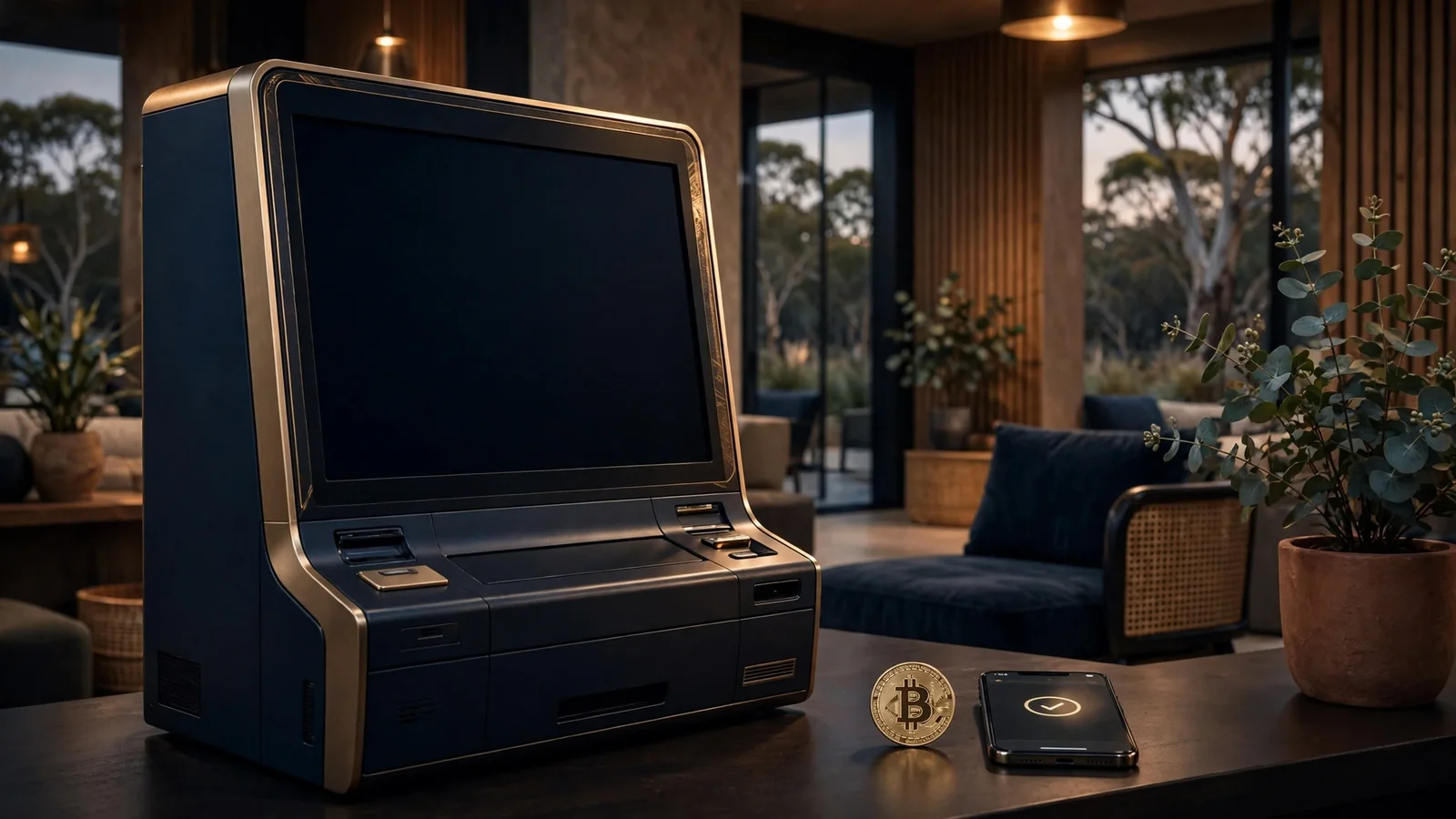
That distinction matters when considering a Solana casino. The presence of SOL as a payment option does not establish what games an operator offers, how a dice title works, or whether its results can be independently checked. A familiar label is not a substitute for published game rules, disclosed return information or a clear account of how results are generated. Nor does a crypto payment method turn a game into a different kind of gambling.
In Australia, the legal setting is more decisive than the game’s format. The Interactive Gambling Act 2001 prohibits overseas operators from providing online casino games to people in Australia. That prohibition covers casino-style games, not merely a particular payment method or game category. An offshore site’s availability on the internet does not make its service lawful for Australian residents, and the absence of direct penalties for individual players is not the same as legal safety.
Irreversible Transfers
Attention SOL transfers are irreversible; funds sent to the wrong address can be lost permanently as the network cannot arbitrate casino disputes.
The practical risks sit alongside that boundary. Offshore operators offer limited consumer protection, and Australian authorities cannot provide a remedy if an account is frozen or winnings are withheld. Using a VPN may lead to an account being seized and funds being lost; it does not change the legal position. SOL transfers are irreversible, so a transfer to the wrong address can mean permanent loss. The network cannot arbitrate a dispute with a casino.
A dice label also cannot establish fairness. Meaningful scrutiny would require information about the rules, the result mechanism and any fairness-checking tools, rather than a badge or a claim on a page. If those details are unclear, the game’s apparent transparency is only theatrical. Dice have always made chance look tidy.
Where an offshore platform presents itself as a place to play dice with SOL, its cash-out terms still matter before any deposit is made. SOL’s market value can change between a deposit and a withdrawal, reducing the value of any balance or winnings. Speed of a blockchain transfer does not settle whether an operator will process a withdrawal, or whether it will require KYC checks. A clean-looking game window cannot resolve those questions.
Casino Games, Wagering Rules and Unequal Contributions
A bonus is not simply a sum waiting to be collected. Its conditions assign different weights to different kinds of play, so the game that appears most entertaining may do little to move the wagering requirement along. The distinction is less about the table or screen than about the operator’s accounting.

Slots are commonly credited in full towards wagering, while blackjack and roulette may count for only a fraction: the stated contribution range for those table games is 10–20%. A bet on a slot can therefore clear more of a bonus requirement than an equal bet on a table game. The table may look busy; the counter may barely stir.
That difference matters because a requirement attaches to eligible wagering, not merely to time spent playing. If a promotion’s terms say that only the bonus amount must be wagered, the qualifying amount is narrower than a rule calculated on bonus plus deposit. A specialist review has reported a 35x requirement on the bonus alone; that is a particular reported offer, not a standing rule for Solana casino games generally. Terms can vary, and the wording determines what counts.
Game contribution can make the headline multiple misleading. A player choosing a game that contributes less needs more total betting for the same credited progress than someone playing a fully contributing game. Even where a promotion looks generous, reduced contribution, expiry conditions and limits on cashing out can change its practical value. The apparent size of a bonus is only the opening line of its arithmetic.
This also complicates comparisons between games. Blackjack and roulette are familiar table formats, but their lower contribution rates can make them inefficient for clearing a bonus. Slots may count fully, yet that does not make their expected return higher or erase the risk of losing the balance. Wagering progress is an accounting measure, not a promise of profit.
Bonus Arithmetic
- Headline bonus figures often hide restrictive wagering requirements
- Game contribution rates significantly impact the speed of clearing a bonus
- Maximum cashout limits can restrict the actual value of a win
- Expiry conditions and fine print determine the practical utility of a promotion
The sensible unit of comparison is therefore not the advertised bonus in isolation. It is the amount that must be wagered, which games qualify, how much each contributes, and what happens if the conditions are not completed. A clear promotion should make those rules legible before play begins. Fine print is still arithmetic.
SOL as a Casino Token: Tax and Value at Cash-Out
SOL does not stop being an asset when it enters a gambling account. That distinction matters in Australia, where recreational gambling winnings are generally not taxable, but cryptocurrency is treated differently for tax purposes. The Australian Taxation Office regards cryptocurrency as an asset subject to capital gains tax (CGT), and profits from gambling with SOL may therefore have CGT consequences.
These rules can make a crypto gambling result less simple than a balance displayed in a wallet. A win measured in SOL may have one value when it is received and another when that SOL is later sold or otherwise disposed of. The relevant question is not only whether a gambling session ended in profit, but also what happened to the asset and how its value changed. A token is both a way of measuring a result and property with a value that can move.
That is the peculiar accounting burden of a casino token. A recreational win may sit outside ordinary income tax treatment, while a gain involving the crypto asset can still fall within the CGT framework. The ATO’s treatment does not turn every gambling win into taxable income; it means that the asset used to gamble cannot simply be treated as tax-invisible.
Losses are a separate difficulty. A specialist tax commentary describes the ability to offset gambling losses against gains as limited to people regarded as professional gamblers, a classification with a high threshold. Recreational players cannot assume that losing sessions will cancel gains for tax purposes. In practice, the two sides of a gambling ledger may not receive symmetrical treatment.
This makes records important: transaction history, the SOL amounts involved, and the value of the asset at relevant points can help establish what happened. A casino balance alone may not tell the full story, particularly if SOL was held before play or retained afterward. Tax treatment depends on the circumstances, so personal advice from a qualified tax professional is more reliable than a general rule applied to every player.
The label “casino token” can suggest that SOL is merely a chip. It is not. The gambling account may count it as a balance; the tax system treats cryptocurrency as an asset. Those are different ledgers, and a winning screen does not reconcile them.
Withdrawals: Fast Networks, Slower Casino Processes
Solana can settle a transfer far faster than a casino can approve a withdrawal. A specialist review puts network confirmation at about 400 milliseconds, with balances updating immediately. That describes the chain, not the operator’s queue: the casino may still need to review a request, check account details or release funds manually.
Reported processing windows range from 5–15 minutes for automated handling to as long as 72 hours where staff review withdrawals. A specialist review also reports native SOL withdrawals taking 30–60 seconds on capable platforms, but that timing begins only after the casino has sent the transaction. Congestion and internal processing can add delay; the network cannot hurry a request that has not been approved. Some operators may also apply their own withdrawal fee. The fee schedule matters as much as the clock.

Larger withdrawals or bonus cash-outs may prompt KYC checks, including a request for identification. That can hold up payment even when the account balance appears ready to leave. Cash-out terms should therefore be read before any deposit, with attention to processing rules, fees and verification conditions. Finding a condition after a win is a particularly expensive way to meet it.
SOL’s market price can also move between deposit and withdrawal, reducing the value of winnings in Australian dollars. A quick transfer does not preserve purchasing power. Nor does it reverse a mistake: SOL transfers are irreversible, and funds sent to the wrong address may be lost permanently.
The casino’s withdrawal process is the uncertain part. A fast chain is no substitute for clear terms or a reliable operator.
How fast are Solana casino withdrawals?
A fast withdrawal should take under 10 minutes on the Solana network, and native SOL transfers typically take 30–60 seconds once processed. Casino processing can take 5–15 minutes with automated operators or up to 72 hours when handled manually.
How fast are SOL deposits and withdrawals at online casinos?
Solana transactions confirm in about 400 milliseconds, and balances update immediately. Withdrawals typically take 30–60 seconds on the network, but casino processing can extend the total time to 5–15 minutes for automated operators or up to 72 hours for manual processes.
Is online gambling legal in Australia?
The Interactive Gambling Act 2001 prohibits overseas operators from providing online casino services to Australian residents. Australian players are not directly penalised for using offshore casinos, but that does not make those services authorised or give players local protection if a dispute arises.
How does ACMA protect Australian online gamblers?
ACMA enforces gambling restrictions by blocking unlicensed offshore gambling websites and maintains a public register listing more than 200 sites as of 2026. It does not provide a service for recovering an individual player’s funds from a casino.
How do I play at Solana online casinos from Australia?
Fund an Australian exchange using PayID or bank transfer, buy SOL, then send it to the casino’s nominated Solana address. Check the accepted asset, network, address and minimum deposit carefully: SOL transfers are irreversible, and exchanges may require identity and transaction checks.
How do Solana casino deposits and withdrawals work?
Most Solana casinos do not accept AUD directly, so deposits usually involve buying SOL on an Australian exchange and transferring it to the casino’s Solana address; some sites also accept USDC on Solana. Withdrawals are sent as crypto, with native SOL transfers typically taking 30–60 seconds on the network, although casino processing can take longer and some casinos charge a fee.
Created by the ”Cuntspin Casino” editorial team.