









Lightning Link Online Pokies in Australia: What to Know
 Available in AU
Lightning Link is a series made for physical gambling venues, and its name does not establish that the original is offered online for real money.
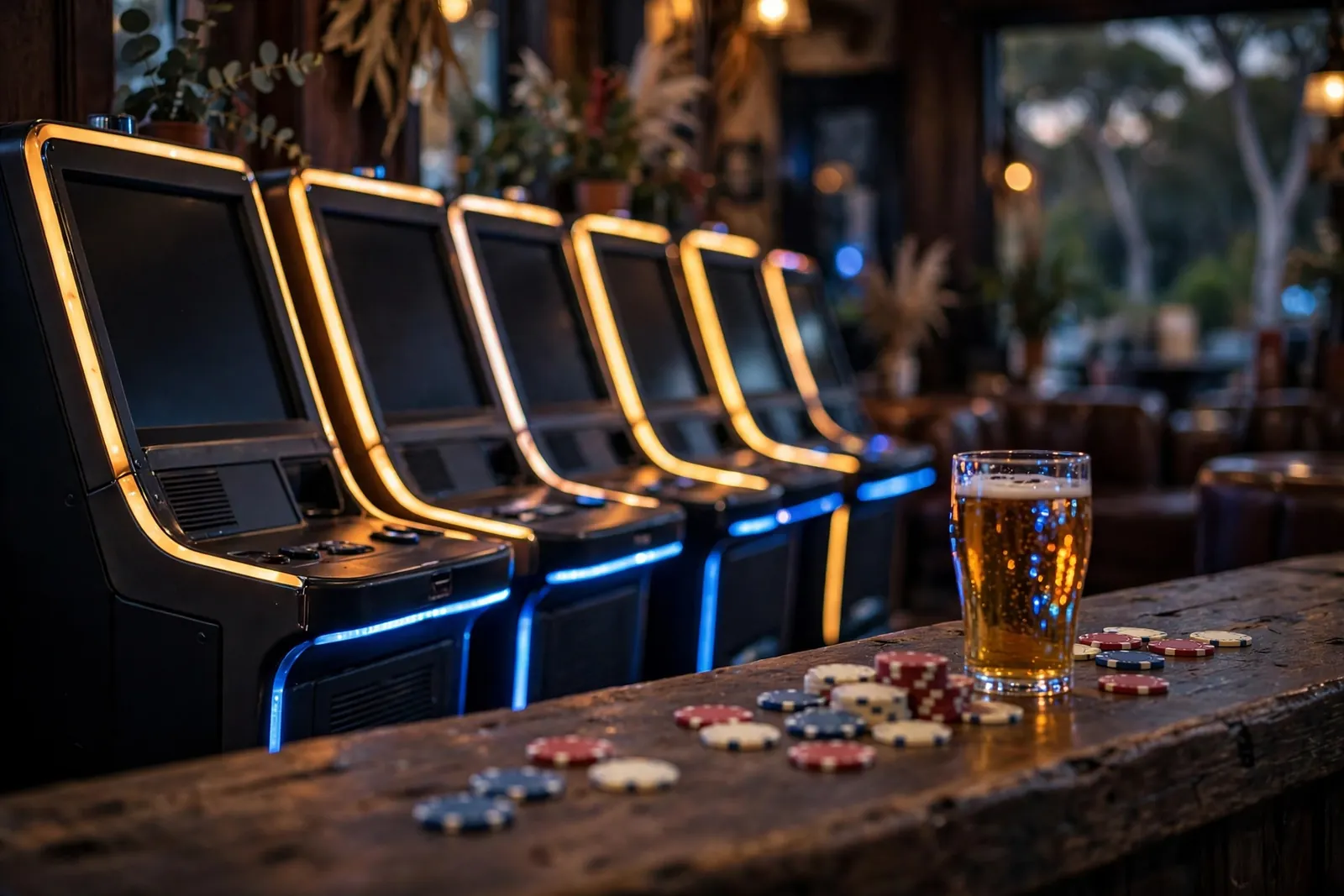
Table of Contents
- A Lightning Link Game, Made for the Venue Floor
- Free Play Means Virtual Currency, Not Prizes
- Where Lightning Link Is Available in Australia
- What the Machine Does Between Spins
- Real-Money Play and the Australian Legal Boundary
- Apps, Platforms and the Limits of Online Access
- Jackpots, Maximum Bets and the Limits of Prediction
- Bet Sizes and the Hold and Spin Sequence
- Downloads and the Venue-Based Original
- Variants, Paytables and Bonus Features
A Lightning Link Game, Made for the Venue Floor
Lightning Link is a game series created by Aristocrat, an Australian developer. Its identity belongs to the venue floor: a named family of electronic games designed for physical gambling venues, rather than a single title whose rules and presentation are identical everywhere. That distinction matters when the name appears in searches for an online casino game. The familiar label can suggest one fixed product, but a series contains variations, and the setting in which a particular version is offered is part of what it is.
In Australia, “pokies” is the ordinary word for venue machines of this kind. Lightning Link has become a recognisable name within that landscape, and the phrase can be used loosely to mean the series as a whole, a particular cabinet game, or one of its themed versions. Those meanings are not interchangeable. A mention of Lightning Link online, for instance, does not establish that the original venue game is available as a real-money online product to Australian players. The name alone cannot tell that story.

The series reflects a familiar design choice in commercial games: hold on to a central identity while changing the decorative world around it. A set of variants can share a family name and still differ in their presentation, paytables and bonus features. The resulting experience is not defined by branding alone. A title that looks like a close relative may make different choices about how its features are arranged or what its paytable specifies. Names carry the family resemblance; the details do the separating.
A specialist review identifies Happy Lantern, Magic Pearl, Sahara Gold and High Stakes among the commonly encountered Lightning Link variants. These names point to distinct themes rather than to four separate providers. Their paytables and bonus features differ, so “Lightning Link” is not a complete description of what any one version offers. A venue listing or game screen needs to identify the particular title before its details can be understood. The family name is only the beginning.
That is one reason the phrase “Lightning Link casino game” can be misleading when treated as a singular object. It may refer to the broader Aristocrat series, one of its named variants, or a game with related features made for a different setting. Online catalogues can also use familiar mechanics or visual conventions without providing the original venue product. The distinction is useful, not pedantic: names travel readily between screens and floors, while the actual product and its availability do not necessarily travel with them.
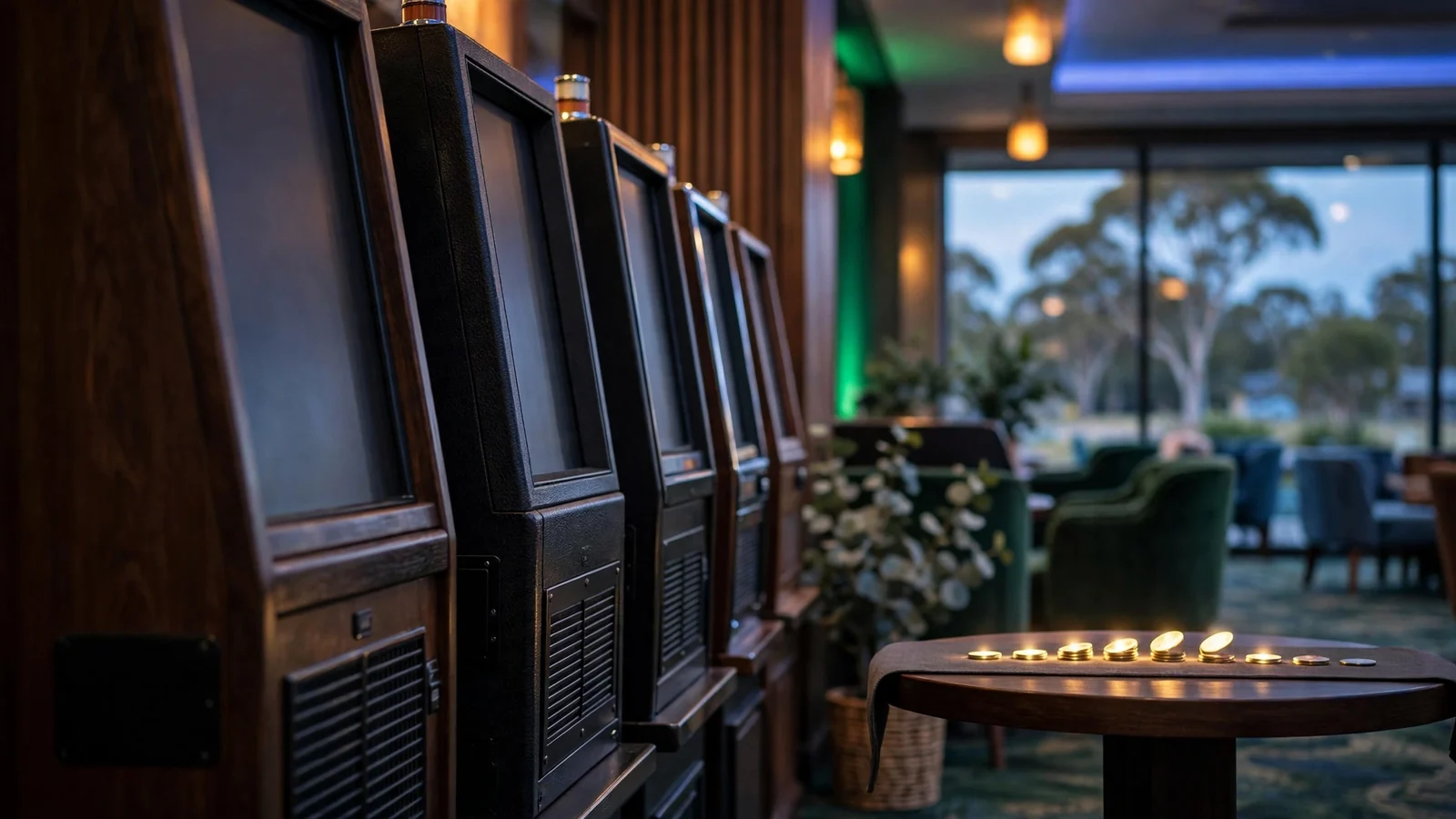
The venue origin also shapes how the game is encountered. A machine is part of a public, physical environment, where its cabinet, screen and surrounding room frame the experience. Online language often strips that setting away and compresses the product into a title, thumbnail or category label. The result can make a venue-designed game sound like a standard web offering. It is not safe to infer that from the wording of a listing. In this case, the series is known as an Aristocrat product made for land-based venues, and the online wording used around it does not change that context.
There is a small cultural history in the way such products are named. A series name supplies continuity, while each variant supplies a fresh setting and a reason to distinguish one version from another. That approach is common in entertainment: recognisable branding lowers the effort needed to identify a family, and themed titles give each member its own character. In a gambling venue, however, those surface differences sit alongside material differences in game configuration. A familiar name is not a substitute for checking which version is actually present.
The title therefore has two layers. Lightning Link denotes the Aristocrat series; Happy Lantern, Magic Pearl, Sahara Gold and High Stakes name variants associated with it. Their differences in paytables and bonus features make the individual title relevant, even when the shared branding is what first catches attention. The series is best understood as a venue-based product family, not as a guarantee that every version appears in every format or on every platform.
Lightning Link is a venue-based series; its name does not guarantee that a real-money online version is available in Australia.
This article is affiliate-linked and may contain sponsored recommendations. That disclosure does not change the nature of the game described here: Lightning Link is a venue-based series, not an invitation to assume that a real-money online version is available in Australia. Real-money gambling content is for adults aged 18 and over. The boundary between a familiar name and a particular product is worth keeping clear. Names travel. Products have limits.
Free Play Means Virtual Currency, Not Prizes
“Free play” describes a way of interacting with a game, not a route to cash. On social-casino platforms, pokies-style games use virtual currency, and that currency cannot be exchanged for real money or turned into a prize. The distinction is the point: without a real-money prize, this kind of play is not treated as gambling under Australia’s Interactive Gambling Act.
That can make the screen look more consequential than the activity is. A balance may rise or fall; symbols may line up; a feature may arrive with the familiar ceremony of lights and sound. But a display of virtual currency is not a bank balance, and a simulated win is not money owed. The theatre can borrow the grammar of gambling while leaving out its financial outcome.
The word “free” is therefore easy to misread. It refers to the absence of a real-money stake in the social-casino format, not to a promise that play has value beyond entertainment. Virtual credits have no cash equivalent merely because they are counted, displayed or depleted. Nor does a large on-screen balance alter their nature. A number can look persuasive without being spendable.
This is why searches for free Lightning Link play need a careful interpretation. They may describe an interest in seeing a familiar style of game without staking money, but the wording alone does not establish that an official Lightning Link version is available on a social platform. A free-to-play label also does not establish a connection to Aristocrat or to the venue-based game. Those are separate questions of product and access, not consequences of the word “free.”
The category itself is clearer than any particular listing: social-casino platforms can provide pokies-style play using virtual currency, with no real-money award. Their legal treatment under the IGA rests on that absence of a cash prize. It is not a claim that virtual play and gambling are identical, nor a claim that every product using casino imagery belongs to the same category. The boundary is drawn by what the player can win.
There is a small social history in the distinction. Gambling has long made uncertainty legible through counters, reels, tables and balances; digital play keeps those signs while sometimes removing the exchange of money. The result can feel recognisable even when its stakes are not. Familiarity is not proof of equivalence. A simulated balance remains a piece of the interface.
Free play can still occupy attention and time, and its design may preserve the pace and visual language of a gambling game. That observation does not turn virtual currency into a prize, but it helps explain why the distinction matters. The activity may resemble gambling in appearance while lacking the feature that makes it gambling under the stated IGA treatment: the possibility of winning real money. The resemblance is visible; the legal and financial outcome is different.
Social-casino platforms provide pokies-style play using virtual currency with no real-money awards, which distinguishes them from gambling under the IGA.
For someone looking for Lightning Link without a real-money stake, the honest description is limited. Social platforms offer pokies-style games for virtual currency, but that general fact should not be stretched into a claim that a particular Lightning Link title is present, officially supplied or available in a particular form. A search result or familiar title is not proof of an authorised product. Nor should “free” be read as an assurance of prizes in another form.
The useful distinction is between play that uses virtual credits and gambling that offers real-money returns. Social-casino play belongs to the first category when credits cannot be converted into money and no real-money prize can be won. Its apparent wins remain within the game. No payout follows.
This section is affiliate-linked and may contain sponsored recommendations. That disclosure does not change what free play means, and it does not turn virtual currency into a real-money prize. Players must be at least 18 to access real-money gambling content.
Where Lightning Link Is Available in Australia
If you’re looking for a place to play Lightning Link online in Australia in 2026, use this list as a starting point and check the details that matter to you before signing up. Licensing and the available payment information can help frame that review.
License: Curacao · Payout speed: crypto 30-60 minutes, fiat 1-5 days · Min. deposit: A$10 Wild Tokyo lists a Curacao licence and a minimum deposit of A$10. Its stated payout times are 30–60 minutes for crypto and 1–5 days for fiat.
License: Curacao Golden Pokies lists a Curacao licence. No further operator details are available here.
License: international iGaming licence – jurisdiction not named in the source · Payout speed: PayID 1-24 hours · Min. deposit: A$30 (PayID from A$10) House of Pokies lists an international iGaming licence, though the jurisdiction is not named. PayID payouts are stated as 1–24 hours, and the minimum deposit is A$30, or A$10 with PayID.
License: Curacao eGaming (Dama N.V.) JeetCity Casino lists a Curacao eGaming licence held by Dama N.V.
License: Curacao Gaming Control Board JustCasino lists a Curacao Gaming Control Board licence.
License: Curacao Gaming Control Board OGL/2023/176/0095 (Hollycorn N.V.) Rollero Casino lists Curacao Gaming Control Board licence OGL/2023/176/0095, held by Hollycorn N.V.
License: Curacao (operating since 2017) · Min. deposit: A$20 Uptown Pokies lists a Curacao licence and has been operating since 2017. Its minimum deposit is A$20.
License: Curacao Gaming Authority (Jumpman Gaming Ltd) DragonSlots Casino lists a Curacao Gaming Authority licence held by Jumpman Gaming Ltd.
License: Curacao Gaming Control Board OGL/2023/176/0095 (Hollycorn N.V.) Neospin lists Curacao Gaming Control Board licence OGL/2023/176/0095, held by Hollycorn N.V.
Payout speed: crypto under 1 hour, PayID 1-3 business days · Min. deposit: A$20 (A$30 to qualify for the bonus) Ricky Casino states crypto payouts under 1 hour and PayID payouts in 1–3 business days. Its minimum deposit is A$20, or A$30 to qualify for the bonus.
In Australia, Lightning Link belongs to the venue floor. The Aristocrat game is played on machines in physical venues; it is not offered online for real-money play to Australian players. The distinction matters because a screen showing familiar symbols or a feature with a similar name does not establish that the original game is available online.
That boundary can be obscured by the way digital games borrow familiar structures. Search results, platform catalogues and informal descriptions may group together games with comparable bonus features, even when they come from different developers. “Lightning Link” can therefore be used loosely in conversation to mean either the specific Aristocrat series or a broader style of play. Those are not the same thing.
A specialist review describes several online platforms as offering Hold and Spin-style mechanics from Aristocrat and other developers. That is a statement about resemblance, not proof that Lightning Link itself is supplied for online real-money play in Australia. Similarity in a feature does not make two games identical, and a shared mechanic does not change where the original is available.
For Australian players, the practical distinction is straightforward: the named game is encountered on venue machines, while online titles with comparable mechanics are separate products. A listing that uses familiar terminology may still refer to another game, another provider or a different version. Product names, provider details and the actual format of access matter more than a loose category label.
This is also why “online” can mean several different things in everyday descriptions. It might refer to a game being discussed or demonstrated on a website, a social-casino version using virtual currency, or an online title built around a similar feature. None of those descriptions, by themselves, makes the venue-based Lightning Link available for Australian real-money play. The word is doing too much work.
Legal Boundary
Under the Interactive Gambling Act 2001, operators may not provide online casino-style games, such as pokies, to people in Australia.
The distinction is easy to miss because venue games have long travelled beyond venues in public imagination. Their names appear in conversations, images and online catalogues; the physical machine can become an idea that seems to exist everywhere it is mentioned. But a game’s recognisable identity and its actual distribution are separate matters. In this case, the original remains tied to Australian venues.
The language of “Lightning Link pokies” may consequently point to the game people know from a venue, or it may be shorthand for a related online experience. A careful description should say which. Where an online platform offers only a similar Hold and Spin mechanic, calling it the original Lightning Link would blur a meaningful distinction. That confusion is not just semantic when money is involved.
Real-money gambling content is for adults aged 18 and over. This page is affiliate-linked and may contain sponsored recommendations; that disclosure does not alter the availability described here or turn a similar online product into the Australian venue game.
The broader pattern reflects how entertainment products migrate in culture before they migrate in law or distribution. A feature can be imitated, adapted and recognised across formats, while the specific title remains somewhere else. For Lightning Link in Australia, “somewhere else” is not a hidden online catalogue. It is the venue floor.
What the Machine Does Between Spins
Hold and Spin changes the rhythm of Lightning Link. A specialist game review describes its central action plainly: positions occupied by special symbols stay locked, while the other positions spin independently. The feature is not one uniform sweep across the display. Some places remain fixed; the rest continue moving.
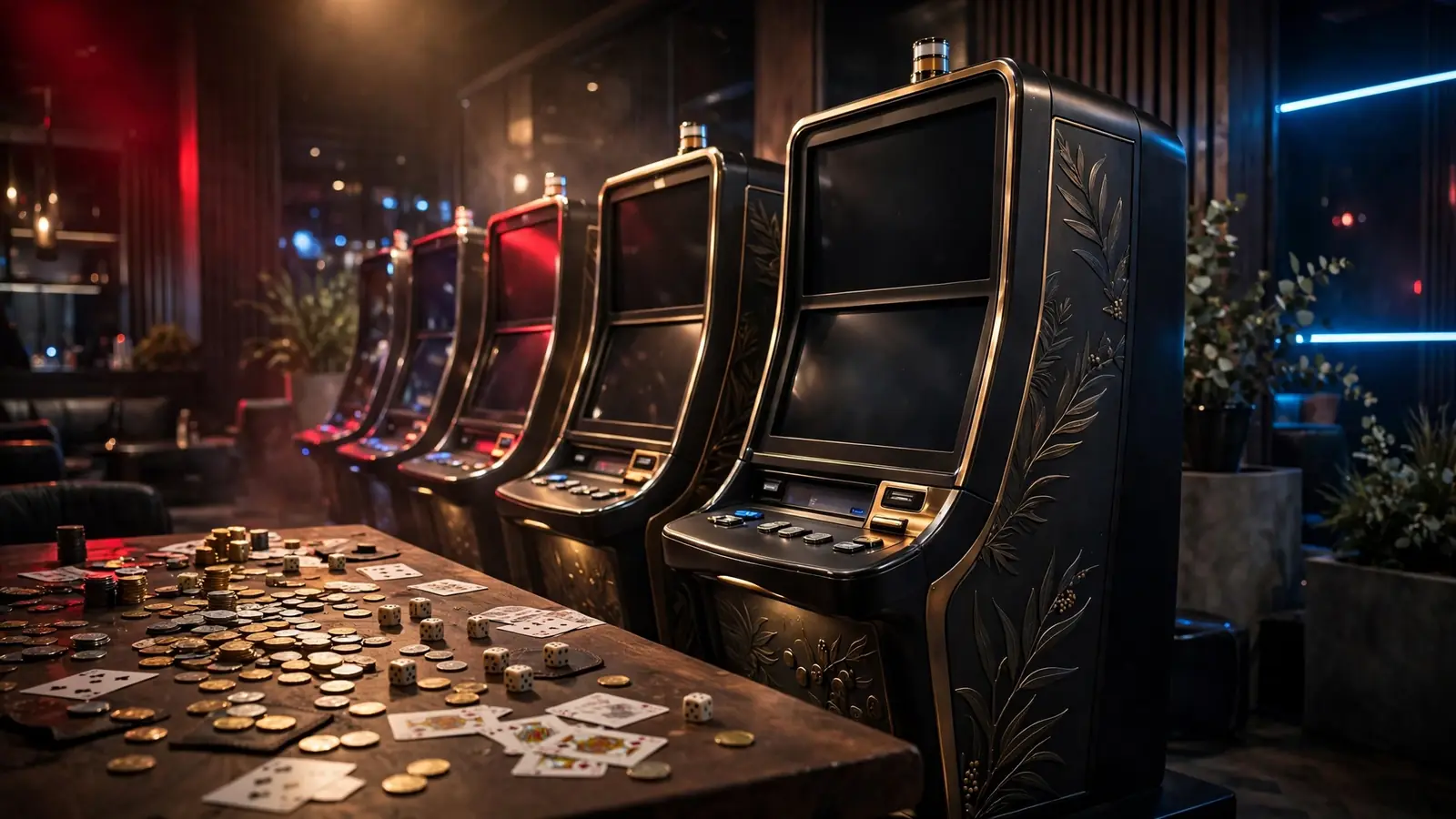

That division is the point. A locked position gives the eye something steady to follow while the open positions change. Instead of watching every part of the screen move together, the player sees a contrast between what has been held and what is still spinning. The title describes the sequence as much as the action: hold, then spin again.
The distinction between a position and a symbol matters. The symbol is what appears in a place on the display; the position is the place itself. During Hold and Spin, the special-symbol positions are held in place. Other positions are not held with them, and their spins proceed independently. In effect, the feature separates the display into fixed and moving parts.
That separation can make a short sequence feel unusually legible. The locked positions preserve a visible state from one moment to the next, while movement elsewhere keeps that state from being the whole story. It is a small piece of theatre built from a simple contrast: stillness beside motion. The screen does not need to change everywhere to hold attention.
The mechanic also gives the word “spin” a narrower meaning than it has in ordinary play. Here, it does not describe every position on the display moving as one. The positions that have locked remain still; the remaining positions spin on their own. That is the feature’s defining distinction, rather than a promise about what any particular spin will show.
This is why the sequence is better understood as a change in how the display behaves than as a separate rule about what must appear next. Locked positions persist through the feature; moving positions continue to produce change. The visual structure is clear even when the eventual result is not. A fixed symbol is not a forecast.
Hold and Spin Sequence
Special symbols occupy positions on the display and stay locked in place.
While special symbols are held, the remaining open positions continue to spin independently.
The feature creates a contrast between the fixed symbols and the moving parts of the screen.
The feature’s name can suggest a neat progression, as if holding something in place naturally leads to a favourable ending. The mechanics support no such conclusion. They describe where movement stops and where it continues, not a method for controlling the result. A player may follow the locked positions as the rest of the display turns, but attention is not influence.
That difference between watching and directing is easy to lose in a game built around motion. A held position looks consequential because it stays visible. Yet its persistence is part of the feature’s design, not evidence that the next independent spin can be read in advance. The machine makes the sequence understandable without making its outcome predictable.
The Hold and Spin feature is therefore defined by a division of labour across the display: special-symbol positions remain locked, and other positions spin independently. There is no need to imagine the entire screen restarting or moving as a single block. The action is selective. Some parts stay; others turn.
In Australia, Lightning Link is a venue-machine game, and this description concerns its Hold and Spin mechanics. The distinction is useful whether someone is watching a sequence unfold or trying to understand what the feature’s name means: held positions stay put, while the remaining positions keep spinning. Stillness is part of the show. It is not a signal.
This page is affiliate-linked and may contain sponsored recommendations. Real-money gambling content is for adults aged 18 and over.

Real-Money Play and the Australian Legal Boundary
Searching for real-money Lightning Link pokies does not change the legal position. Under the Interactive Gambling Act 2001, operators may not provide certain online gambling services to people in Australia. The prohibited category includes online poker and casino-style games, such as pokies. The law draws its boundary around the service being supplied, not around the name attached to it.
That distinction matters. Lightning Link is a recognisable game title, but an online offer of real-money play does not become lawful simply by using that title or a familiar interface. Nor does a search for an online version establish that one is available for lawful real-money play in Australia. The legal question concerns the service and where it is provided.
The Act is directed at operators who provide prohibited services, rather than at individual players. There are no known cases of Australian players being prosecuted for gambling on offshore sites. That does not make such services legal to offer in Australia, or remove the practical barriers created by enforcement. Players must be at least 18 to access real-money gambling content.
The division reflects a particular policy choice: responsibility is placed on the businesses supplying gambling, while the state also restricts routes through which that supply reaches the public. A player may not be the target of the Act’s operator-focused rules, but an online casino offer remains outside the permitted Australian market. No fine print turns the boundary into a doorway.
Legal Compliance
- Online casino-style games are prohibited for supply to people in Australia under the IGA.
- ACMA enforces these laws by requesting ISPs to block illegal gambling and affiliate sites.
- Accessing real-money gambling content is restricted to adults aged 18 and over.
ACMA’s role
The Australian Communications and Media Authority (ACMA) oversees compliance with federal interactive gambling laws and enforces the Interactive Gambling Act. Where a website provides a prohibited service, or advertises one in Australia, ACMA can ask internet service providers to block access. The measure works at the level of access: the regulator identifies sites for blocking, and providers are asked to restrict their availability.
ACMA reports that enforcement action has led to more than 1,455 illegal gambling and affiliate websites being blocked since November 2019. Figures for services that have withdrawn from the Australian market since enforcement began in 2017 are not consistent across reports. One account puts the total above 210; another says more than 190. The disagreement is worth stating plainly, rather than choosing the larger figure and presenting it as settled.
A block is not a declaration that every site elsewhere has disappeared. It is an enforcement tool used within Australia, alongside action against prohibited services. For anyone considering a real-money online offer, a foreign-facing website or an offshore licence does not override the Australian rule.
This page contains affiliate links and may include sponsored recommendations. That disclosure does not endorse or promote real-money online casino services in Australia; the legal position described above applies regardless of any commercial relationship.
Apps, Platforms and the Limits of Online Access
Lightning Link was built for venue machines, not as an Australian real-money mobile game. Its familiar name may appear in searches for an app, but that does not make the venue version available to play for money on a phone. In Australia, Lightning Link is played on venue machines; it is not offered online for real-money play to Australian players.
Online games can borrow the Hold and Spin format without being Lightning Link. A specialist review describes platforms offering similar mechanics from Aristocrat and other developers, but those are separate games, with their own names and features. A resemblance in the way symbols behave is not evidence that a venue title has been transferred to an app.
The distinction matters because a game’s presentation can travel more easily than its identity. Familiar symbols, a similar bonus sequence or the phrase “Hold and Spin” may suggest continuity, while the product itself belongs to another platform or developer. The mechanics are shared; the title is not.
That also puts “tips” in their proper place. General advice about understanding a game’s rules cannot establish that an app is the official Lightning Link, nor turn a similar online game into the venue original. For Happy Lantern, the same distinction applies: its name belongs to a Lightning Link variant, but a mobile listing or a game with comparable features should not be assumed to be that venue machine.
Australian law draws a further boundary around real-money online casino-style games. The Interactive Gambling Act prohibits operators from providing these services to people in Australia. Anyone accessing real-money gambling content must be at least 18. Those limits are not altered by a platform’s use of an app, browser or familiar game terminology.
This page is affiliate-linked and may contain sponsored recommendations. That disclosure does not change the difference between a venue game and online titles with comparable mechanics. The distinction is less flashy than the interface. It is more useful.
Do
- Recognise Lightning Link as a venue-based product.
- Distinguish between shared mechanics and official titles.
Don’t
- Assume a mobile app is the official venue version.
- Infer that a similar online game is the original Aristocrat product.
Jackpots, Maximum Bets and the Limits of Prediction
The Major and Grand jackpots give Lightning Link a second clock to watch: not the sequence of symbols on a screen, but a total that can rise as players wager on linked machines. A specialist game review describes these jackpots as accumulating over time through play across the linked network. That account explains why a displayed total may change even while a particular machine sits idle. It does not make the next result easier to forecast.
The distinction matters. A growing jackpot is a record of accumulated wagering, not a signal that a win is due. Past play does not reveal when a jackpot will be awarded, and no pattern of previous spins can turn uncertainty into a reliable method. Asking how to win on Lightning Link therefore has no dependable answer: the jackpot is an outcome, not a target that can be timed.
There is also a condition that can alter eligibility. A specialist game review notes that a jackpot may require the maximum bet. The precise terms can depend on the machine and its displayed rules, so the headline total alone does not establish that every wager qualifies. Maximum betting changes the cost of a spin; it does not make a jackpot predictable or guarantee access to it. The distinction is less glamorous than the number on the display, but more useful.

In Australia, Lightning Link is a venue-based game rather than an online real-money option. Jackpot descriptions attached to online versions or similar-looking games should not be confused with the conditions of an Aristocrat venue machine. A familiar name or feature does not, by itself, establish that the same jackpot structure applies elsewhere.
The broader appeal is easy to understand: a total that grows in public turns individual play into a shared spectacle. Yet the collective scale can obscure the individual wager. A jackpot may be visible to everyone; the conditions governing eligibility remain specific to the machine and its rules.
This page is affiliate-linked and may contain sponsored recommendations. Real-money gambling content is for adults aged 18 and over. The display can count upward. It cannot count down to a prediction.
Bet Sizes and the Hold and Spin Sequence
A specialist review places the minimum stake for Lightning Link between $0.20 and $1.00 per spin, with the amount varying by version and setting. That range describes reported configurations, not a universal price: the amount shown on a particular machine is the relevant one. A small starting stake does not change the structure of the feature, and it says nothing about the likelihood of a return.
The sequence is straightforward to describe. A spin may bring special symbols into view; when Hold and Spin begins, those positions stay fixed while the other positions spin independently. The feature therefore separates the screen into two parts: symbols already held, and spaces still in motion. It is a mechanical distinction, not a method for influencing an outcome.
The original Lightning Link format found in physical gambling venues.
Platforms offering pokies-style play using virtual currency with no cash prizes.
Separate products from various developers that use comparable Hold and Spin mechanics.
The distinction matters because the phrase “play online” can make unlike things sound interchangeable. Lightning Link is not offered for real-money online play to Australians; its original format is found on venue machines. Social-casino versions, where available, use virtual currency rather than cash prizes. Online services offering similar mechanics are not the same product.
Australia’s rules also draw a firm line around real-money casino-style services. The Interactive Gambling Act prohibits operators from providing such online games to people in Australia. Anyone accessing real-money gambling content must be at least 18. A stake figure should not be mistaken for an invitation to seek an online version.
The machine gives a sequence. It does not give control.
This page is affiliate-linked and may contain sponsored recommendations; that disclosure does not alter the legal status of online gambling services in Australia.
Downloads and the Venue-Based Original
A download may sound like the simplest way to bring Lightning Link onto a phone or computer. In Australia, however, the original game is played on machines in venues; it is not offered online for real-money play to Australian players. Installing a file cannot turn that venue-based product into an Australian online gambling option.
That distinction matters because names used in app stores and download pages can blur very different products. A title that resembles Lightning Link, or a file presented as a version for a personal device, does not establish that it is the Aristocrat game or that it provides authorised access to the venue machine. The familiar name is not proof of the product behind it.
The machine belongs to a physical setting: a venue supplies the equipment, and play takes place there. A download shifts the apparent setting to a private screen, but it does not change the game’s availability in Australia. Nor does a page labelled “Lightning Link” make real-money online play available.

This is a point about access, not an invitation to seek out alternatives. A file’s presence online does not make it a route to Australian real-money play. The original remains on the venue floor.
This page is affiliate-linked and may contain sponsored recommendations. That disclosure does not alter the distinction between a venue machine and an online download. Anyone accessing real-money gambling content must be at least 18 years old. The boundary is plain, even when a product name is not.
A download label can promise less than it appears to—and sometimes merely borrow the recognition attached to a venue game. In this case, the practical answer is straightforward: Australians encounter Lightning Link on venue machines, not as a real-money download.
Variants, Paytables and Bonus Features
A specialist review identifies Happy Lantern, Magic Pearl, Sahara Gold and High Stakes among the commonly discussed Lightning Link variants. The names mark distinct versions of the series, not separate promises of a particular result. Their differences lie in the paytables and bonus features: details that shape how each version presents its play, rather than changing the fact that outcomes are uncertain.
A paytable sets out the relationship between symbols and payouts. Bonus features add another layer to that structure, but their presence or design does not make one version a reliable choice over another. Nor does a title alone explain the rules: the relevant paytable and feature descriptions belong to the individual game. Familiar names can travel farther than the details attached to them.
The variety also reflects a longstanding habit of venue gaming: a recognisable game format is adapted into themed editions, each with its own presentation and feature mix. Here, the practical distinction is not simply lanterns against pearls, or desert imagery against high-stakes language. It is the version-specific combination of paytable and bonus features.
In Australia, Lightning Link remains a venue-based game; this comparison is about its named variants, not a route to online real-money play. This affiliate-linked page may contain sponsored recommendations. Real-money gambling content is for people aged 18 and over.
Is it legal to play online pokies in Australia?
Australian law prohibits operators from providing certain online gambling services, including casino-style games, to residents. The law targets providers rather than players, and there are no known cases of Australian players being prosecuted for gambling on offshore sites.
Can I play Lightning Link for free online?
You can play pokies-style games on social-casino platforms using virtual currency, but those credits cannot be exchanged for money or prizes. Lightning Link itself is a venue-based game series, so its name appearing online does not mean the original game is available there.
What is the minimum bet for Lightning Link online pokies?
Lightning Link is not offered for real-money online play to Australian players, so there is no applicable online minimum bet. Similar online games may have minimum bets ranging from $0.20 to $1.00 per spin.
Are Aristocrat online pokies the same as the pub machines?
No. Lightning Link is designed for venue machines, while online games may offer similar Hold and Spin mechanics without being the same product.
Published by the Cuntspin Casino team.