Keno Online Casinos in Australia: Legal Context
 Available in AU
Australia’s rules distinguish access to offshore casino services from local licensing, while keno, pokies and free play remain separate categories.

Table of Contents
- Keno Online in Australia: The Legal Boundary Comes First
- Real-Money Play and the Offshore Risk
- Reading a Casino Site Without Mistaking Payment Access for Oversight
- Keno as a Casino Game: Keep the Categories Straight
- When Keno Search Terms Drift into Pokies
- Free-Play Language and the Real-Money Divide
- Strategy Claims, Randomness and Return Settings
- Canadian Keno Searches and Australian Payment Realities
- What the Phrase “Keno Casino” Can—and Cannot—Promise
- Bonus Mathematics, Bitcoin Searches and the Fine Print
Keno Online in Australia: The Legal Boundary Comes First
Online casino keno sits inside a market whose central fact is easy to blur: Australia has no domestic licence for an online casino. The phrase may sound like a description of a familiar game moved onto a screen, but the legal setting is not simply a digital version of a local venue. For real-money casino services, the boundary is drawn around what operators may provide to people in Australia.
The Interactive Gambling Act 2001 is the framework behind that boundary. It makes it illegal for companies to provide real-money online casino games to people physically located in Australia, and no Australian online casino licences have been issued. So there is no locally licensed online casino offering keno as part of its real-money catalogue. That is not a small-print distinction between competing brands. It is the structure of the market.
The distinction matters because a familiar name can make a service seem more local than it is. A site may use Australian currency, describe its games in terms understood here, or present an interface that feels like an ordinary consumer service. None of those features changes the underlying legal status. The relevant question is not whether a game is called keno, whether its presentation resembles a venue game, or whether it appears beside other casino titles. It is whether a company is providing a real-money online casino service to people in Australia.
Choosing an online casino for keno means checking the available operator information before deciding where to play. This list provides a concise reference to the licensing and payment details supplied for each operator.
License: Curacao · Payout speed: crypto 30-60 minutes, fiat 1-5 days · Min. deposit: A$10 Wild Tokyo lists a Curacao licence and a A$10 minimum deposit. Its stated payout times are 30–60 minutes for crypto and 1–5 days for fiat.
License: Curacao Golden Pokies is listed with a Curacao licence. No other operator details are provided here.
License: international iGaming licence – jurisdiction not named in the source · Payout speed: PayID 1-24 hours · Min. deposit: A$30 (PayID from A$10) House of Pokies lists an international iGaming licence, though the jurisdiction is not named. PayID payouts are stated as 1–24 hours; the minimum deposit is A$30, or A$10 via PayID.
License: Curacao eGaming (Dama N.V.) JeetCity Casino is listed with a Curacao eGaming licence held by Dama N.V. No other operator details are provided here.
License: Curacao Gaming Control Board JustCasino is listed with a Curacao Gaming Control Board licence. The information provided does not include further details.
License: Curacao Gaming Control Board OGL/2023/176/0095 (Hollycorn N.V.) Rollero Casino lists a Curacao Gaming Control Board OGL/2023/176/0095 licence, held by Hollycorn N.V. No other operator details are provided here.
License: Curacao (operating since 2017) · Min. deposit: A$20 Uptown Pokies is listed as operating since 2017 under a Curacao licence. Its minimum deposit is A$20.
License: Curacao Gaming Authority (Jumpman Gaming Ltd) DragonSlots Casino lists a Curacao Gaming Authority licence held by Jumpman Gaming Ltd. No other operator details are provided here.
License: Curacao Gaming Control Board OGL/2023/176/0095 (Hollycorn N.V.) Neospin lists a Curacao Gaming Control Board OGL/2023/176/0095 licence, held by Hollycorn N.V. No other operator details are provided here.
Payout speed: crypto under 1 hour, PayID 1-3 business days · Min. deposit: A$20 (A$30 to qualify for the bonus) Ricky Casino lists crypto payouts as taking under 1 hour and PayID payouts as taking 1–3 business days. Its minimum deposit is A$20, or A$30 to qualify for the bonus.
This is why phrases such as “online keno casino” do not point to a domestic category of licensed operators. They describe a type of service, not a recognised Australian licence class. The wording can be neat; the legal fit is not. Australia has not created a local online casino regime in which operators obtain permission, meet domestic conditions and then offer casino keno under that permission. There is no such licence to check.
The regulator’s role
The Australian Communications and Media Authority, or ACMA, is the primary domestic regulator responsible for enforcing the Interactive Gambling Act. Its work is not merely to publish a rule and leave the online market to interpret it. ACMA blocks access to illegal offshore gambling sites, and internet service providers are required to comply with its blocklist.
That enforcement mechanism gives the legal boundary a practical form. A service may be visible from abroad, discussed on forums or reachable through changing internet routes, yet still fall on the prohibited side of Australia’s rules. Access and legality are not synonyms. Nor does the ability to load a page amount to approval by an Australian regulator.
The blocklist also reveals something about the limits of border control in a connected market. A regulator can direct access restrictions and require local providers to implement them; it cannot make the internet behave like a single national shopfront. Sites and addresses may change. That technical restlessness does not turn the underlying rule into a temporary preference. The law concerns the service being offered to Australians, while ACMA’s enforcement includes measures intended to impede access to illegal services.
There is a social history in this arrangement. Gambling in Australia has long been shaped by public rules about where it may occur and who may provide it. Online services unsettle that geography: a business can sit elsewhere while its customers are here. The law answers by regulating the operator’s provision of the service, rather than pretending that a distant website has become a local venue simply because it can be opened on a local screen. Distance complicates enforcement. It does not supply a licence.
What the boundary means for keno
For anyone looking for the best keno online casino in Australia, the first useful distinction is therefore not between one site’s game selection and another’s. It is between a licensed domestic casino—which does not exist—and offshore casino services that remain subject to Australian restrictions when offered to people here. A polished page, local terminology or a prominent keno label cannot fill that licensing gap.
This section of the market is often discussed as though the missing element were merely a reliable directory. But a directory cannot create a domestic regulatory category that has not been established. “Casino keno online” may be a clear description of a game format, yet it does not confer permission on the company operating it. The word casino carries legal weight as well as commercial appeal.
Australia has no domestic licence for an online casino, and the Interactive Gambling Act 2001 makes it illegal for companies to provide real-money online casino games to people physically located in Australia.
ACMA’s role is consequently central to understanding the Australian setting, not a footnote to a list of websites. The regulator enforces the Act and uses blocking measures against illegal offshore gambling sites; internet service providers must follow the blocklist. That is the domestic framework in which online casino keno has to be understood. No Australian online casino licence exists behind the label, and the screen does not alter the law.
Real-Money Play and the Offshore Risk
The legal distinction is easy to blur. Australia prohibits operators from supplying real-money online casino services to people in the country, but the law’s focus is on the provider, not the individual player. An Australian who uses an offshore casino that accepts them does not, on that account, face a fine or criminal prosecution. That does not make the service lawful for the operator to provide.
This difference matters when “real-money keno” is treated as if it were simply another way to pass an evening. A game may be available on a site that takes Australian customers; its availability says nothing about whether the operator is permitted to serve the country. Nor does it bring the site under Australian supervision. The player’s position is therefore unusual: personal legal liability is not the central risk, yet the protections associated with a domestic legal remedy are absent.
The sharpest consequence appears when a withdrawal is refused. If an offshore casino withholds winnings, an Australian player has no legal recourse in Australia against that casino. A dispute may be argued through the operator’s own procedures, but those procedures are not a substitute for an Australian court or regulator able to compel payment. The difference between a complaint being heard and a remedy being enforceable is substantial. A screen can display a balance; it cannot, by itself, make that balance recoverable.

That is the practical meaning behind the phrase online casino keno for real money. It describes play involving cash, but the phrase cannot promise that a displayed win will reach a bank account, or that a dispute will be resolved under Australian law. The issue is not whether a game looks familiar or whether a site presents itself as polished. It is where responsibility can be enforced when the relationship turns sour. Offshore, the answer may be nowhere in Australia.
Identity checks add another point of friction. A specialist review of offshore casinos reports that operators commonly ask for verification before the first withdrawal. The requested material can include a photograph of an identity document and proof of address; some may also request a selfie showing the player holding the document. These checks are not a decorative formality. They connect the account to a real person and a stated residence, and may become a condition of receiving funds.
That timing can surprise anyone who has treated registration as the whole process. An account may be opened and used before the first cash-out brings the verification demand into view. Documents may then need to be supplied and accepted before the operator proceeds. For an Australian customer, this is a practical vulnerability as well as an administrative one: personal information is being handed to an offshore business, while any later disagreement over a withdrawal lacks an Australian legal remedy.
No Legal Recourse
If an offshore casino withholds winnings, an Australian player has no legal recourse in Australia against that casino to compel payment.
The distinction between a player’s legal position and the operator’s obligations should not be mistaken for reassurance. It means the individual is not the target of the prohibition; it does not mean that the service is locally regulated, that winnings are secured, or that a complaint can be enforced at home. Offshore sites may accept Australian customers, but acceptance is a business decision, not a grant of protection.
Keno makes the boundary sound gentler than it is. The word belongs to a familiar style of numbered game; the real-money setting belongs to a different legal and financial relationship. Free entertainment and cash wagering are not interchangeable, and a site’s own rules cannot create Australian recourse where none exists. Even careful attention to the operator’s terms cannot change the basic imbalance: the operator holds the account, sets its procedures and may control access to a withdrawal.
For anyone considering real-money keno on an offshore casino, the decisive question is not merely whether play is possible. It is what happens if the account is challenged, documents are rejected, or winnings are withheld. Australian players are not prosecuted simply for playing, but they are also not backed by an Australian remedy against an offshore casino. A narrow distinction. A wide consequence.
Reading a Casino Site Without Mistaking Payment Access for Oversight
A casino page can load, display keno games and offer a deposit route without acquiring any authority from those appearances. In Australia, the existence of a working website is not evidence that its real-money casino service is locally licensed. No Australian-licensed online casino exists. That distinction matters more than the polish of a lobby or the confidence of a payment badge.

Payment access is especially easy to overread. PayID is part of the New Payments Platform (NPP), where an email address, mobile number or ABN can act as the transfer alias instead of bank-account details. The NPP is supported by all major banks and protects transfers with end-to-end encryption. Those features describe the payment network, not the gambling business receiving the money. A secure transfer can still lead to an unlicensed service; encryption is not a regulator.
Using PayID for real-money casino play also requires linking it to a bank account first. That may make the transfer route legible and familiar, but it does not certify the site’s games, its handling of funds or the accuracy of anything it says about returns. The same goes for a page advertising a bitcoin casino with keno: a payment label identifies a proposed way to move value, not a standard of supervision.
Even access to PayID may be uneven. A specialist review reports that some Australian banks, including members of the Big Four, sometimes block PayID transfers to gambling merchants they recognise. That is a report about changing bank practice, not a permanent rule for every customer or transaction. A failed transfer says little about whether a site is lawful; a successful one says no more about whether it is trustworthy. Banks can mediate a payment without endorsing its destination.
Attention: Some Australian banks may block PayID transfers to recognized gambling merchants, and card issuers may process deposits as cash advances with fees of 3–5%.
The language around keno can make this distinction harder to see. A site may present itself as one of the online casinos with keno, or package keno alongside other casino-style games. Those descriptions tell something about the site’s menu, not its status in Australia. Calling a product a keno slot game, or describing a session as live keno, does not turn the payment channel into oversight. Nor does a search for the best keno casino site produce a meaningful measure of regulatory protection. A ranking is a piece of publishing; it is not a licence.
A practical reading of a payment page therefore asks narrow questions. Which method is being offered, what information must be linked to use it, and what does the site say about processing or verification? These are operational details, not proof of fairness. Before a first withdrawal, identity and address documents should be verified. That check can establish who is asking for the money, but it does not cure the larger problem of relying on an offshore casino service in a market without local online-casino licensing.
A payment logo is not a seal of approval. It is a route.

This is also why a list labelled “top keno online casinos” can create a false sense of comparison. Sites may differ in their payment options, but that alone cannot establish that one has stronger oversight or more reliable games than another. Even a familiar name attached to a transfer method offers no such assurance. The payment system and the gambling operator remain separate actors, with separate responsibilities.
The Australian setting gives that separation a particular weight. The NPP was built to move money through ordinary banking infrastructure; its broad reach does not make every merchant using it part of a regulated gambling market. The interface can look domestic while the service sits beyond domestic supervision. Modern plumbing, old boundary.
Keno as a Casino Game: Keep the Categories Straight
“Keno” names a kind of game; “casino” describes the setting or service through which it is offered. Put together, the phrase can refer to keno presented inside an online casino, but it does not identify a particular product, provider or set of rules. The distinction matters. A familiar label can make an unfamiliar service sound more definite than it is.

A casino keno game should therefore be understood first as a category, not as a promise of a particular experience. Sites may use similar wording for different presentations, and an app may simply be the way a service is reached. The word “app” says something about access, not about the game itself. Nor does a polished interface resolve what is being offered or how it is governed.
This is where the language tends to blur. “Keno games” may describe games gathered under one heading; “casino games” may describe a broader group of offerings. When both appear together, the phrase can sound like a distinct, standardised product. It need not be. Labels organise a site’s menu, but they do not certify that every item under a heading shares the same rules or status.
There is also a difference between the game category and the legal category of the service. Australia has no domestic online casino licence. The Interactive Gambling Act 2001 prohibits companies from providing real-money online casino services to people in Australia without a domestic licence, and none has been issued. Calling a service a keno game does not, by itself, remove it from that wider setting. A name is not a legal distinction.
The word “online” can add another layer of false reassurance. It describes where the game is accessed, not whether the service has Australian approval. Likewise, the word “casino” does not mean that a familiar physical venue has simply moved its games onto a screen. In Australia, the online real-money market does not inherit legitimacy from the vocabulary of bricks-and-mortar gambling. The categories sound continuous. The law does not make them so.
Keno should also be kept separate from claims about pokies. A statement about how a pokie spin is generated or how its outcomes are determined cannot automatically be carried across to keno. The fact that one game type has a particular technical description does not establish that another uses the same system. That is not pedantry; it is the difference between describing evidence and borrowing authority from a neighbouring game.

The same restraint applies to claims about fairness, returns or strategy. A game’s label supplies none of those details. Nor can the presence of a keno section in an app settle them. A menu can make unlike things look neatly related, especially when every tile has the same bright frame. Neatness is not proof.
So the useful meaning of “online casino keno” is limited: it points to keno presented as part of an online casino service. It does not, without further reliable detail, name a verified game or explain its mechanics. And in Australia, it cannot turn a prohibited real-money online casino service into an authorised one by changing the heading on the screen.
A category, not a guarantee.
When Keno Search Terms Drift into Pokies
Keno and pokies belong to different game categories, but the language used to describe them can blur the line. A phrase about keno machines may point towards a pokie presented with keno-themed imagery or wording, rather than a keno game. The label alone does not settle what is being offered; the underlying product matters.
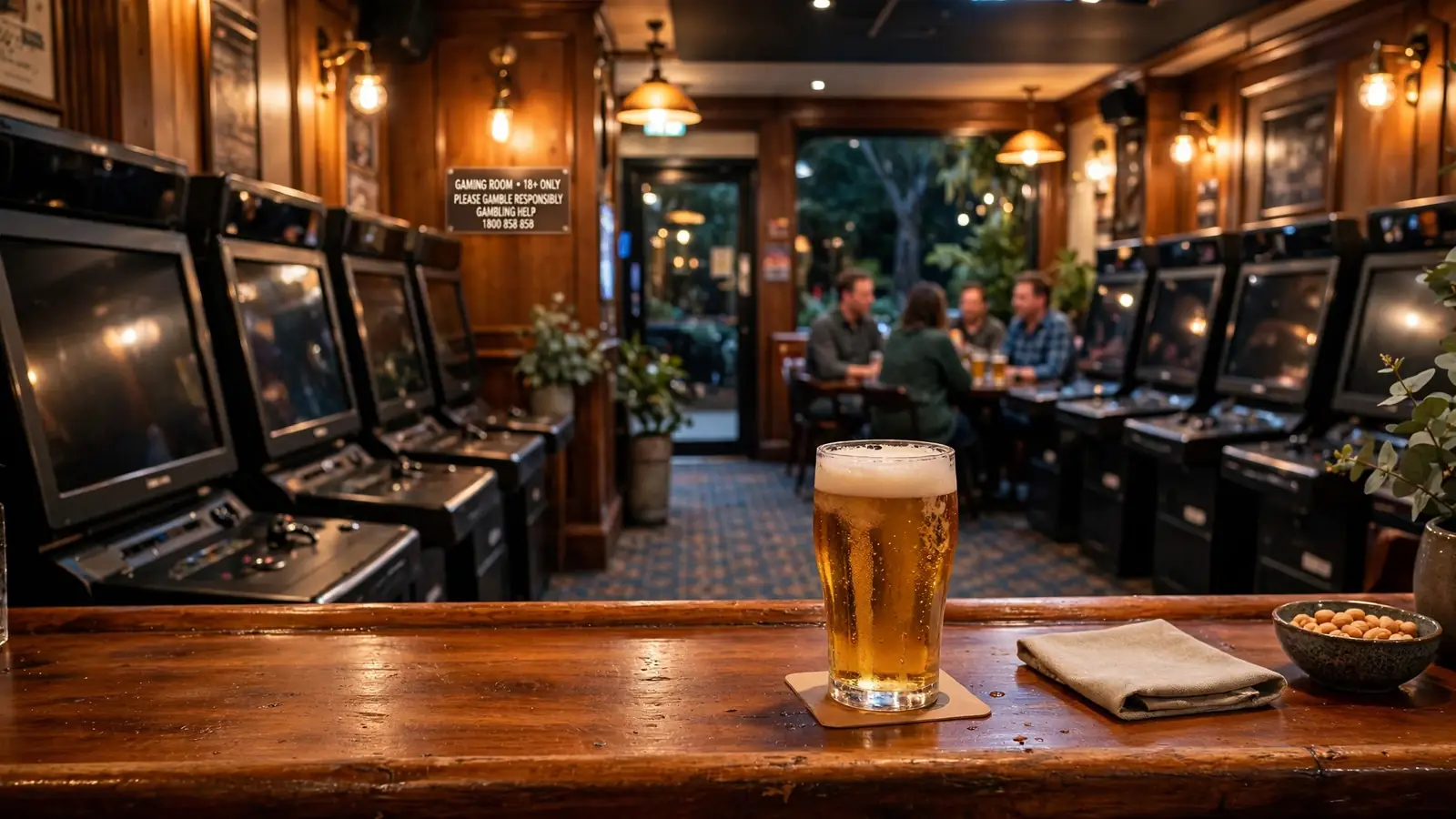
That distinction carries more weight in Australia than a small difference in casino vocabulary might suggest. The Interactive Gambling Act 2001 bars companies from supplying real-money online pokies to Australian residents unless they hold a domestic licence. No domestic licences for that service have been issued. Calling a pokie “keno” would not change the legal character of the offering.
A machine-style display can make the overlap feel natural: familiar symbols, a screen and a sequence of results may all invite the same casual label. Yet resemblance is not classification. “Keno slot machines” can describe two different ideas at once: a keno game shown in a machine-like format, or a pokie borrowing the language of keno. Those are not interchangeable just because both appear on a casino screen.
This matters when a site uses loose wording. A heading that promises keno may sit beside a machine-themed product, while a reference to keno-style play may still lead to a pokie. The useful distinction is not cosmetic. It is whether the real-money service is offering keno or an online pokie, because Australian law treats the latter as a prohibited service when supplied without a domestic licence.
Legal Status of Pokies
The Interactive Gambling Act 2001 prohibits companies from supplying real-money online pokies to Australian residents unless they hold a domestic licence, and no such licences have been issued.
The same caution applies to talk of playing keno on a machine or finding keno-themed machine games. Such expressions describe presentation, not proof that a product belongs to one category rather than another. Nor does adding the word “keno” make an online pokie lawful to offer in Australia.
The terminology is untidy. The boundary is not. For real-money online pokies, the domestic licensing route required by the law does not exist. A familiar game label cannot supply it.
Free-Play Language and the Real-Money Divide
“Free” changes the promise of a game, but it does not settle what service is being offered. A page describing keno-style play without a monetary stake is not, on that wording alone, the same thing as a service taking money for casino play. Nor does the word establish what happens around the game: whether it is purely recreational, linked to an account, or connected to a real-money offering. The label is a beginning, not a legal conclusion.
That distinction matters in Australia because the law draws its boundary around the operator’s service. Under the Interactive Gambling Act 2001, companies cannot provide real-money online casino games to people in Australia without a domestic licence. No such online casino licences have been issued. A free-play description therefore cannot be used to make a real-money casino service lawful by changing its heading.
The language of “free slots” and keno can also blur categories. A familiar game-like screen may look much the same whether it is being used for amusement or for wagering, but appearance is not the relevant test. The monetary arrangement is. If money is staked for a chance to win money, the service has crossed into real-money gambling; calling it a free game does not alter that substance. Conversely, a no-stakes demonstration should not be assumed to involve cash wagering simply because its presentation resembles a casino game.

There is no Australian-licensed online casino. That fact gives the distinction a particular weight: a free-play label does not point towards a locally licensed casino waiting just beyond the demo screen. It can describe a limited mode of play, but it cannot supply a domestic licence or make prohibited real-money casino services available under Australian law.
The same care applies to wording about playing keno online. The phrase may refer to entertainment with no money at risk, or it may be used in connection with a real-money casino service. Those are not interchangeable arrangements. The crucial difference is not whether the page uses “free,” “demo” or “play,” but whether the operator is offering real-money gambling to people in Australia.
A neat label cannot do legal work.
Strategy Claims, Randomness and Return Settings
Strategy has a way of borrowing authority from software. A game is described as mathematical, its settings are given technical names, and a player’s choices can begin to sound more consequential than the evidence allows. For keno, that distinction matters: claims about how a system behaves need to concern the game itself, not merely a nearby casino product.
A specialist review has reported that some providers allow casinos to choose between multiple return-to-player settings for a given pokie. The same pokie could therefore have different stated return percentages at different casinos. That is a claim about selected settings, not proof that every game offers them or that a particular setting is available wherever a game appears. Nor does a percentage, by itself, describe what will happen in an individual session.
Independence means one spin does not provide a reliable signal about the next. A run of outcomes may invite stories about a machine warming up or being due, but those stories do not turn past results into a predictive tool.

That point cannot simply be carried across to keno. A keno game may appear alongside pokies on a casino site, and promotional language may place both under the same broad roof, but proximity is not a description of the underlying software. They cannot, on their own, validate a keno system, a staking routine or a promised edge.
The same caution applies when software claims are dressed up as strategy. A method may prescribe which numbers to choose, how long to play, or when to change a stake; its detail is not evidence that it alters random outcomes. Without game-specific information, confidence in the method outruns what can be established. The distinction is plain, if not especially marketable.
There is a human reason such claims persist. Randomness feels less random when it arrives in a sequence: people search for shape, then mistake the shape they see for leverage. Software language can make that instinct sound scientific. It does not make a pokie setting a keno setting, and it does not make a keno strategy proven.
For anyone assessing a claim, the useful question is not whether it sounds technical, but whether it describes the exact game being discussed and explains what its evidence can support. Otherwise, the terminology is doing the work the evidence has not done.
Canadian Keno Searches and Australian Payment Realities
Canadian wording can travel a long way from the country it names. A page framed around Canadian casino keno may appear relevant to an Australian reader because the game label is familiar, but the country in the description matters: it does not establish that a service is available in Australia or that its payment arrangements apply here.

The same caution applies to phrases describing four-card or multi-card keno. They suggest a particular way of presenting cards, not proof of a specific product, its rules or its availability. Search language is a poor substitute for the terms attached to an actual service. Geography is not decoration.
For Australians, the more immediate distinction may be between the amount shown as a deposit and the amount ultimately charged. A specialist gambling-payment review reports that banks and card issuers may process gambling deposits made with a credit or debit card as cash advances. That treatment can bring a fee of 3–5% and interest from the time of the transaction, rather than the ordinary purchase conditions a cardholder might expect. The card has not changed; the category assigned to the transaction has.
A specialist review also describes Australian banks and card companies as increasingly blocking payments to gambling sites they identify as such. That is a reported trend, not a dependable rule for every institution or transaction. A payment that succeeds today does not guarantee the same result later, and a blocked payment says nothing by itself about the nature or quality of the game.
These details are especially easy to overlook when attention is fixed on a Canadian label or a card-count description. Yet payment terms belong to the Australian financial relationship: the bank, issuer and transaction classification determine what a card deposit costs. The name attached to a keno page cannot settle that question.
There is a small but telling mismatch here. Online language crosses borders effortlessly; banking classifications do not. A Canadian-facing description may explain what a page claims to offer, but it cannot answer how an Australian card issuer will treat a gambling charge. The difference may appear on a statement, not in the game title.

What the Phrase “Keno Casino” Can—and Cannot—Promise
“Keno casino” is a broad label, not a certificate of status. It may describe keno presented within an online casino-style service, but the phrase alone says nothing about who operates that service, what protections apply or whether the games are fairly represented. A familiar category name can make a complicated arrangement sound settled. It is not.
There is no Australian-licensed online casino. That matters because a page using casino language does not thereby belong to a domestic system of licensed online casinos. Nor does a polished presentation, a recognisable game label or the word “Australia” in a site’s marketing change that position. A label can identify the subject; it cannot supply oversight that does not exist.
The plural “keno casinos” can sound like an invitation to compare a ready-made field of providers. Here, it should not be mistaken for an independently established list or endorsement. Naming an operator would imply a level of verification that the phrase itself cannot provide. Search language is generous with categories. Evidence is less so.
The practical boundary is stark. If an offshore casino refuses to pay winnings, Australian players have no legal recourse in Australia. That is not a judgement about every operator’s conduct; it is a limit on what the label promises about protection. Familiar wording is no substitute for an Australian remedy.
So the phrase can point towards a type of online gambling service. It cannot promise an Australian licence, a dependable operator or a means of recovering unpaid winnings. In this market, the distinction between a name and a guarantee is not pedantry. It is the whole point.

Bonus Mathematics, Bitcoin Searches and the Fine Print
A bonus is not simply extra money. Its wagering requirement turns the headline amount into a calculation about how much must be staked before winnings become withdrawable. The figure that matters is the multiplier and, crucially, the amount to which it applies.
A specialist review uses 35x or less as a screening point and describes requirements above 40x as punishing. Those are that review’s judgements, not a rule governing every offer. The arithmetic, however, is plain. At 40x, a $500 bonus requires $20,000 in wagering before any winnings can be withdrawn. The bonus may sound generous; the turnover attached to it is the less decorative part.
The base for the multiplier can change the result. If a 35x requirement applies to a $500 deposit plus a $500 bonus, the calculation is 35 times $1,000: $35,000 in bets. A reader comparing terms needs to establish whether the multiplier applies to the bonus alone or to the combined deposit and bonus. The same printed multiple can describe very different obligations.
That distinction matters especially where the offer is framed around keno. Terms may specify which games contribute to wagering, and the label alone does not explain the calculation. The number beside the offer is only the beginning of the fine print.
Bitcoin wording does not resolve any of this. A payment method says nothing about the wagering base, the withdrawal conditions or the legal status of a real-money online casino service. In Australia, the Interactive Gambling Act 2001 prohibits operators from providing real-money online casino games to people located in the country. A bonus calculation cannot turn a prohibited service into a lawful one.
There is no clean shortcut hidden in the arithmetic. A large multiplier stays large, whether the offer is dressed as keno, a deposit match or a bitcoin promotion.
Are online pokies legal for Australian players?
Australian operators cannot legally offer real-money online pokies without a domestic licence, and none have been issued. The law targets operators, not players, so Australians are not fined or prosecuted simply for using an offshore site that accepts them.
What does “wagering requirement” actually mean?
It is the amount you must bet before bonus winnings can be withdrawn, calculated as a multiple of the bonus or deposit-plus-bonus amount. For example, a $500 bonus with a 40x requirement means $20,000 in bets.
Do PayID deposits qualify for bonuses?
Yes. PayID is treated like any other qualifying deposit method at the recommended sites.
What’s the best strategy for playing pokies?
No strategy can predict or control a spin: each one is an independent random event. Set deposit, loss and session-time limits, and use self-exclusion if needed.
Created by the ”Cuntspin Casino” editorial team.