Best pokies in Perth: hours, venues and legal limits
 Available in AU
Venue hours vary, so current venue information matters; the guide also separates what public facts can establish from what needs checking.
Table of Contents
- When Perth’s Gaming Floors Are Open
- What “Best” Can Mean When Pokies Are Random
- Venues, Machine Counts and the Records Behind Them
- Getting to a Venue from the Airport or CBD
- Crown Perth: What the Available Facts Can—and Cannot—Say
- Online Pokies and Deposits: The Legal Boundary
- Why “24-Hour Pokies” Needs a Venue-Specific Check
- CBD Clubs and the Limits of a Local Search
- Perth in the Australian Gambling Framework
- Cashless Payments and the Meaning of PayID
When Perth’s Gaming Floors Are Open
There is no single opening time for Perth’s pokies venues. Each venue sets and publishes its own hours, so an early start at one address would not establish that gaming floors elsewhere are open at the same time. The sensible distinction is between a city-wide assumption and a check of the particular place: the first is a guess dressed as a timetable; the second is information that can be acted on.
That matters for searches about pokies open now, whether the hour is early morning or late at night. A result that appears to show a venue’s hours may not describe the present moment. Listings can be out of date, and a general trading-hours page may not answer a specific question about access to the gaming floor. The venue’s own current information is the better starting point; where the wording is unclear, contacting the venue is more reliable than treating a search result as a guarantee.
The question “Are Perth pokies open?” therefore has no useful city-wide yes or no. A venue may be open while another is not, and knowing that one place has operated late on a previous occasion does not settle tonight’s schedule. Even a page that says “open” can leave room for uncertainty if it does not make clear which parts of the premises that statement covers. Precision belongs to the venue, not to the postcode.
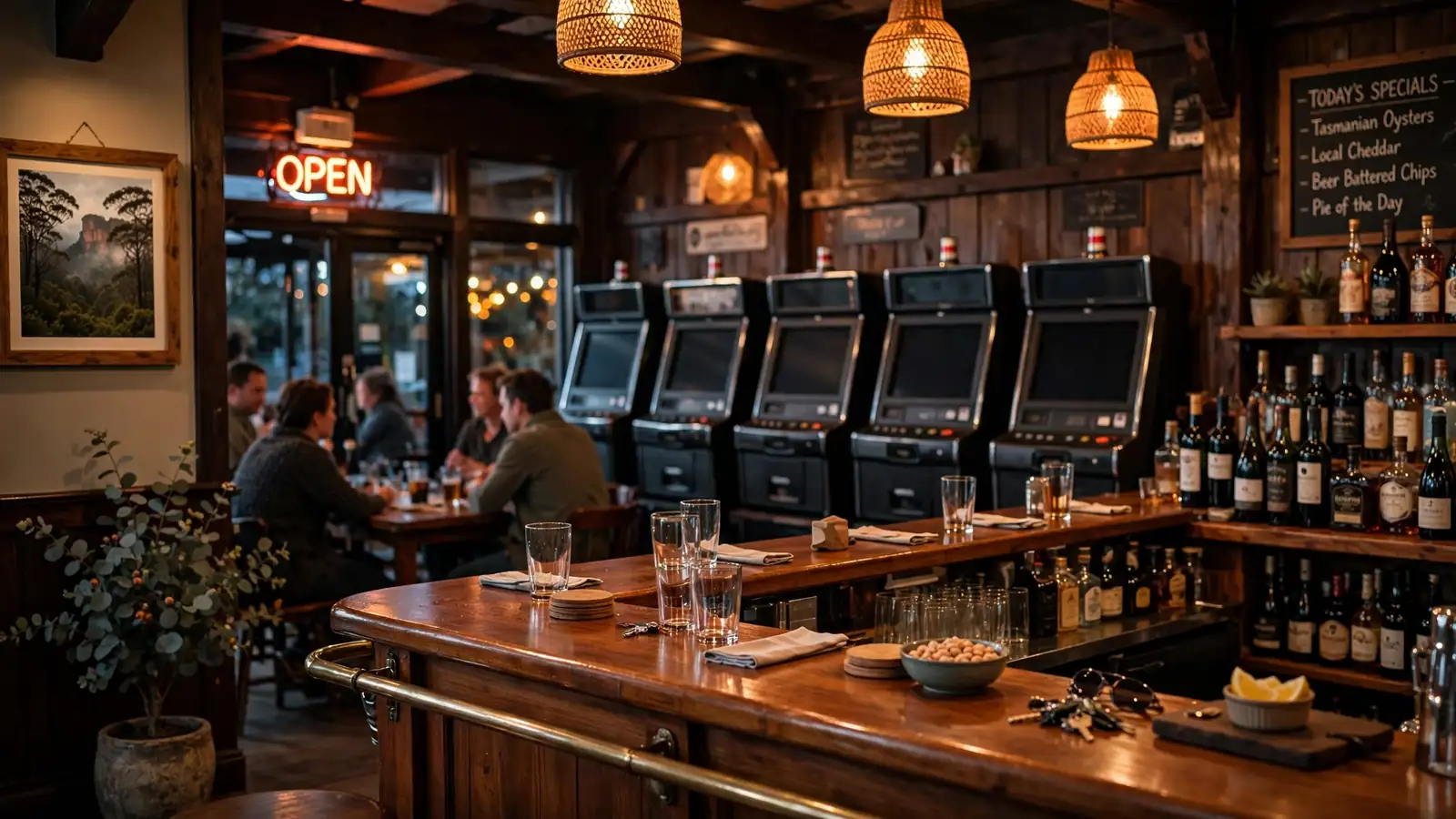
It is tempting to turn the search for a particular opening time into a general rule: early hours must mean one thing across the city, or a late closing must be customary everywhere. But a collection of independent venues does not acquire a shared timetable merely because they sit within the same metropolitan area. Convenience is not regulation, and repetition of an old listing is not confirmation. The modest task is to check the named venue and the time in question.
There is also a difference between opening hours and the conditions under which machines operate. A reported regulatory change addresses staffing during machine operation, not a common schedule for Perth. In a report, regionriverina.com.au says that from 1 July a venue with more than 20 gaming machines is to have a dedicated responsible gambling officer, or RGO, present while those machines are running. This describes a duty attached to operating machines at qualifying venues; it does not say that every venue must open at a particular hour, or that all gaming floors share the same hours.
That distinction is easy to lose when rules are compressed into headlines. A requirement for an RGO to be on duty while machines are operating says something about oversight during those periods. It does not, on its own, establish that a venue is open, that machines are available at every hour the wider premises trade, or that a particular Perth location falls within the rule. The threshold and the operating condition matter. So does the date: the report gives 1 July as the point from which the requirement applies.
RGO Requirement
From 1 July, any venue with more than 20 gaming machines must have a dedicated responsible gambling officer (RGO) present while those machines are operating.
The same care helps with questions about whether pokies are open early or late. A published schedule may answer when a venue says it is open, but it should not be stretched into a promise about every service or every machine. If a venue’s information separates general hours from gaming-floor hours, the distinction is worth keeping. If it does not, there is no virtue in guessing. A direct check can resolve the practical uncertainty without turning one venue’s timetable into a city custom.
Opening times are ordinary details, but they reveal how easily a place is imagined as a single machine. Perth is not one venue with one clock. Its operating hours have to be checked address by address, and the RGO requirement is a separate question about supervision while machines are in use. Keeping those questions apart makes the answer less dramatic and more useful.
No universal late-night schedule follows from the phrase “Perth pokies”. Nor does a search result labelled open now settle the matter if its information is old, broad or ambiguous. The current hours belong to the individual venue. The rule reported by regionriverina.com.au concerns an officer on duty at certain venues while their machines operate. They are different kinds of information, and one cannot substitute for the other.
A clock is not a city policy.
What “Best” Can Mean When Pokies Are Random
Choosing pokies in Perth for 2026 means weighing the details that are actually available before deciding where to play. Use this list as a starting point and check the terms that matter to you.
License: Curacao · Payout speed: crypto 30-60 minutes, fiat 1-5 days · Min. deposit: A$10 Wild Tokyo lists a A$10 minimum deposit and gives separate payout estimates: 30–60 minutes for crypto and 1–5 days for fiat. Its stated licence is Curacao.
License: Curacao Golden Pokies lists a Curacao licence. The available information is limited to that licensing detail.
License: international iGaming licence – jurisdiction not named in the source · Payout speed: PayID 1-24 hours · Min. deposit: A$30 (PayID from A$10) House of Pokies lists PayID payouts of 1–24 hours and a A$30 minimum deposit, with PayID deposits from A$10. Its licence is described as an international iGaming licence, but the jurisdiction is not named.
License: Curacao eGaming (Dama N.V.) JeetCity Casino lists a Curacao eGaming licence held by Dama N.V. That licensing detail is the available point of note.
License: Curacao Gaming Control Board JustCasino lists a Curacao Gaming Control Board licence. The available information is limited to this licensing detail.
License: Curacao Gaming Control Board OGL/2023/176/0095 (Hollycorn N.V.) Rollero Casino lists a Curacao Gaming Control Board OGL/2023/176/0095 licence held by Hollycorn N.V. Its licence reference is the available distinguishing detail.
License: Curacao (operating since 2017) · Min. deposit: A$20 Uptown Pokies lists a A$20 minimum deposit and says it has operated since 2017. Its stated licence is Curacao.
License: Curacao Gaming Authority (Jumpman Gaming Ltd) DragonSlots Casino lists a Curacao Gaming Authority licence held by Jumpman Gaming Ltd. That licensing detail is the available point of note.
License: Curacao Gaming Control Board OGL/2023/176/0095 (Hollycorn N.V.) Neospin lists a Curacao Gaming Control Board OGL/2023/176/0095 licence held by Hollycorn N.V. The available information is limited to its licence details.
Payout speed: crypto under 1 hour, PayID 1-3 business days · Min. deposit: A$20 (A$30 to qualify for the bonus) Ricky Casino lists crypto payouts under 1 hour and PayID payouts in 1–3 business days. Its minimum deposit is A$20, or A$30 to qualify for the bonus.
Calling a pokie “best” can sound like a claim about what it will pay. That is where a comparison becomes misleading. A machine cannot be identified as a reliable winner from its name, its theme or a run of recent results. Each spin is an independent event determined by a Random Number Generator. The previous spin does not make a particular outcome more likely on the next one.
That independence matters because people naturally look for patterns. A machine that has paid out may seem “due” to go quiet; one that has not paid may seem ready to turn. Neither impression changes the random process. A sequence can feel meaningful without carrying a prediction. Randomness is not a promise of balance within a short visit, either: outcomes can vary sharply from one session to another.
The phrase “best paying pokies in Perth” therefore needs careful interpretation. It might refer to a game’s published return-to-player rate, often shortened to RTP, or it might be used loosely to suggest that a particular machine produces frequent or larger wins. Those are not interchangeable claims. RTP describes a theoretical return across extensive play, not the amount a person should expect back during an individual session. It cannot identify which spin will win, or promise that a player will receive that return.
There is another complication: a game’s title alone may not establish its RTP. A specialist review reports that some game providers give casinos a choice of RTP settings for the same pokie. On that account, the same game could have different return percentages at different casinos. A comparison that names a game but leaves its setting unstated may therefore omit the detail that makes an RTP comparison meaningful.
This does not make every comparison useless. It changes what a careful comparison can honestly say. The relevant question is not simply whether a game is popular or described as high-paying, but what the stated measure refers to, where it applies and whether it is tied to the particular version being discussed. Without that context, a percentage can look more definitive than it is.
A Perth-focused list of “best pokies” cannot turn these limits into a ranking of machines that will win. Nor can a label such as “hot” make a random outcome predictable. At most, a comparison can explain the basis for its description and distinguish a theoretical measure from a forecast. The distinction is small on a page and large at a gaming machine.
It also helps to separate preference from performance. A player may favour a game’s pace, visuals or features; that is a statement about taste. It does not establish that the game pays more. Likewise, a memorable win may shape someone’s impression of a pokie, but one person’s experience cannot demonstrate that the machine is more generous. Personal stories are vivid evidence of what happened once, not a measure of what will happen next.
The word “best” can still have a modest use: it can describe a clearly stated comparison, provided the description does not imply certainty. A game may be compared by a disclosed RTP setting, for instance, but that figure remains a theoretical measure rather than a personal outcome forecast. A claim that a machine is “the best” without saying what is being measured asks the adjective to do too much.
Do
- Use disclosed RTP settings for comparisons
- Distinguish theoretical measures from forecasts
- Separate personal taste from machine performance
Don’t
- Treat a machine’s name as a payout guarantee
- Assume a “hot” label makes outcomes predictable
- Use personal win stories as a measure of future results
In Perth, as elsewhere, a machine’s location does not alter the independence of its spins. The same caution applies to claims about pokies in the city centre or elsewhere: geography can identify a place, not a winning pattern. A useful assessment is less dramatic than a promise. It says what is being compared, acknowledges the limits, and leaves chance where it belongs.
No machine owes the next spin anything.
Venues, Machine Counts and the Records Behind Them
A pokie venue is not merely a collection of machines with a name over the door. It is a physical place where people gather, spend time and money, and where the conduct of the business can be subject to formal oversight. That distinction matters when comparing Perth venues: a machine count can describe part of a gaming floor, but it cannot tell whether a venue is welcoming, well managed or suitable for a particular person.
Nor does a larger floor make a venue “best”. Counts are administrative facts, not ratings. They say nothing by themselves about the atmosphere, the games available or what a visit will cost. A comparison based on machine totals alone turns a measure of scale into a judgment of quality. The arithmetic is easier than the conclusion.
There is a more consequential use for counts: they can help define which oversight duties apply. A report by regionriverina.com.au says that, from 1 July, venues with more than 20 gaming machines will be required to keep a gambling incident register. The register is intended to capture occurrences that may indicate gambling harm, including behaviour suggesting that a patron is at risk or already affected. It is a record of incidents, not a scoreboard of venues.
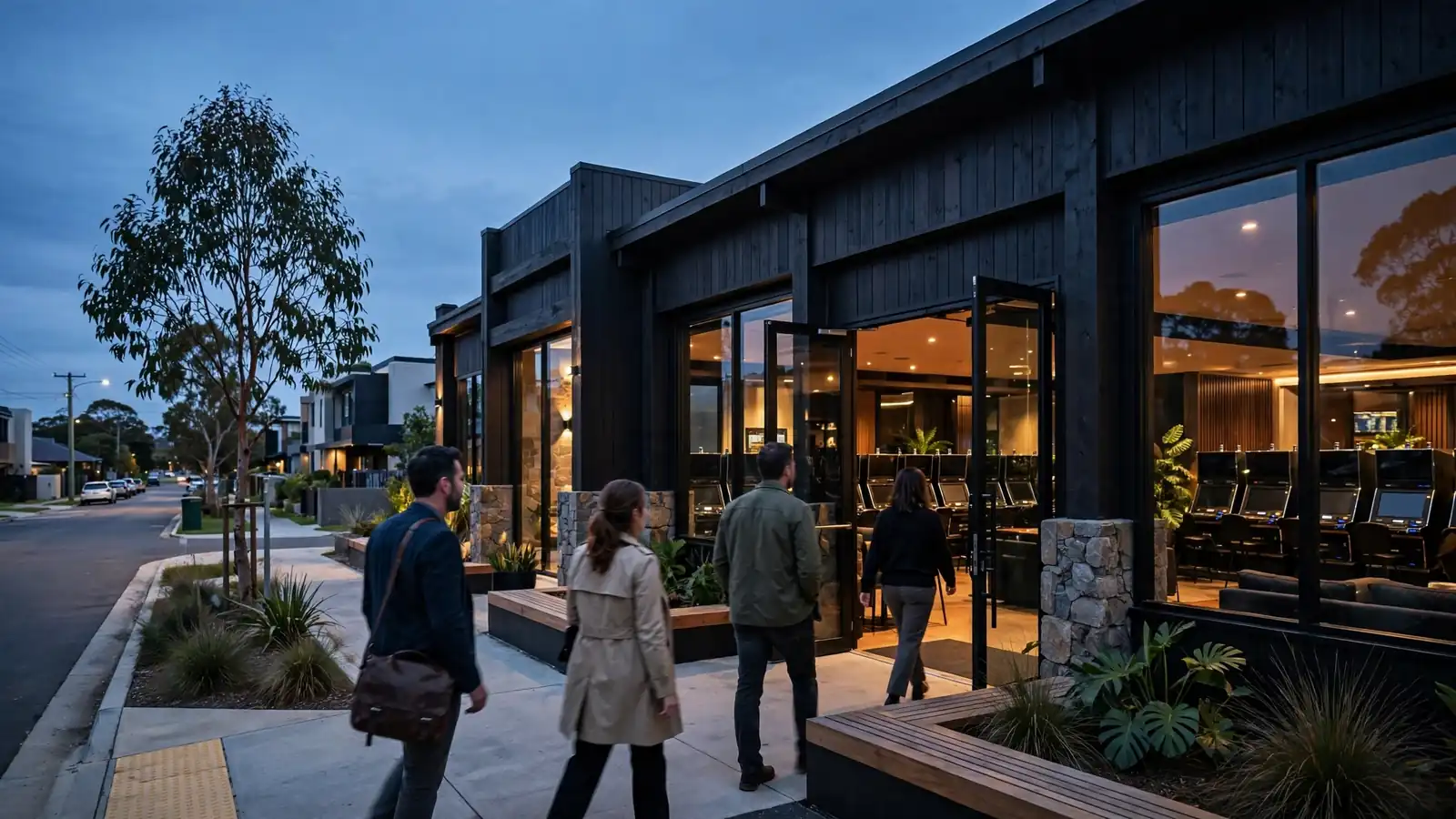
That kind of record changes the emphasis from the machinery to the people around it. A machine can register a transaction; an incident register is concerned with circumstances that may call for attention. It makes the venue’s response part of the story, rather than leaving the whole question of harm with the person experiencing it. The register is not proof that every warning sign will be recognised, or that every entry will lead to a particular outcome. Its significance is narrower: relevant incidents are to be documented.
For anyone trying to understand Perth pokies venues, this is a useful distinction. Public-facing descriptions tend to present a venue through its facilities and scale. A formal register, by contrast, belongs to the less visible work of operating a gaming floor: noticing concerning behaviour and keeping a record when an occurrence may point to harm. It does not establish that a particular Perth venue has a specific number of machines, nor does it provide a basis for ranking one venue above another.
That restraint matters because “best pokies venue in Perth” can sound like a request for a simple verdict. Yet the available measures do not support one. A machine count is not a measure of safety, and a recordkeeping requirement is not a guarantee of good practice. Both are pieces of context, not a verdict on the experience inside any particular building.
A machine count is an administrative fact, not a rating of quality, safety, or atmosphere.
The register also places responsibility within the venue itself. Gambling harm is often described as an individual problem, but the rules governing a gaming floor recognise that behaviour occurs in a setting run by an operator. Keeping records of relevant incidents makes that setting more legible to oversight. It asks the institution to retain information about what happens, rather than treating each episode as isolated and forgettable.
For Perth, the practical takeaway is modest but important: venue comparisons should distinguish observable features from claims about quality. Counts may describe scale; reporting duties describe accountability. Neither can establish which place is “best” for every visitor. The paperwork has a human subject.
Getting to a Venue from the Airport or CBD
A search for a place to play near Perth Airport is really a question about geography: which venue, at what address, and how that address fits into the journey. The words “near the airport” can describe a broad area rather than a building on airport grounds. A result appearing beside an airport-related search does not establish that pokies are inside a terminal, or that a venue is within a convenient walk of one.
The same care applies to searches around the CBD or Perth Central. A map pin can make a location look self-explanatory, but the label may refer to a district, a transport point or a business whose name includes a familiar place. The practical starting point is the venue’s own address, checked against a current map and the transport information for the intended arrival point. That is less dramatic than a shortcut. It is also more dependable.


Airport journeys have their own small complications: arrival and departure points may differ, and a trip can involve more than one leg. A plan made from the airport’s general name alone may not match the actual terminal or pickup location. For a venue elsewhere in Perth, checking the complete address before leaving helps distinguish a destination from a search result that merely sits nearby on a map.
The CBD is not a single point either. “Near the CBD” can mean different things depending on the starting street, the destination and whether the journey is on foot or by transport. A result described as central may still require a separate trip. Without a confirmed venue address and live travel information, claims about a particular route, distance or travel time would be guesswork.
Some location wording needs an extra check. Perth in Western Australia can be confused with other places bearing the same name, including Perth in Victoria. Searches that combine Perth with Parkes can also be unclear: a place name may identify a destination, a business or something else entirely. Adding “Western Australia” and checking the map’s full address can reduce the risk of planning for the wrong place. Search wording is not an address.
“Near me” is even more dependent on context. Location services may be imprecise or disabled, and a map can show businesses beyond the immediate area. The result list is a starting point, not proof of proximity or of what a business offers. Confirming the venue’s identity and address directly avoids turning a convenient-looking pin into an unnecessary detour.
Confirming Your Venue
- Check the venue’s complete physical address
- Verify the address against a current map
- Confirm current transport information for the arrival point
- Ensure the location is in Western Australia (not Victoria)
There is a difference between planning a trip and assuming that a venue belongs to the airport or the CBD simply because it appears in a nearby search. The physical address settles the first question; current transport information settles the next. Neither can be replaced by a broad location label.
Australian gambling law sets the minimum age at eighteen for gambling, including online pokies. For a visit to a physical venue, that age rule is a basic part of the journey’s context, not a reason to infer anything about a particular location. An address can tell where a place is. It cannot, by itself, tell what is available there.
Crown Perth: What the Available Facts Can—and Cannot—Say
Crown Perth is a name that invites a catalogue: which pokies are on the floor, what the rooms are like, how late they stay open and what a machine might pay. But a venue’s name is not a description of its current gaming offer.
That distinction matters because searches for pokies at Crown Perth often combine several separate questions. A person may want to know whether a particular game is present, whether the venue has a dedicated pokies room, or what the largest cash payout could be. Those are not interchangeable facts. A general description of Crown Perth cannot answer them, and a number attached to a payout claim would need clear terms: which machine, which prize, under what conditions, and whether the figure concerns a possible top award or money actually paid out.
“Best pokies room” is even less stable as a description. It may refer to atmosphere, layout, machine choice, accessibility or simply a preference formed during one visit. A grand label is still a label.
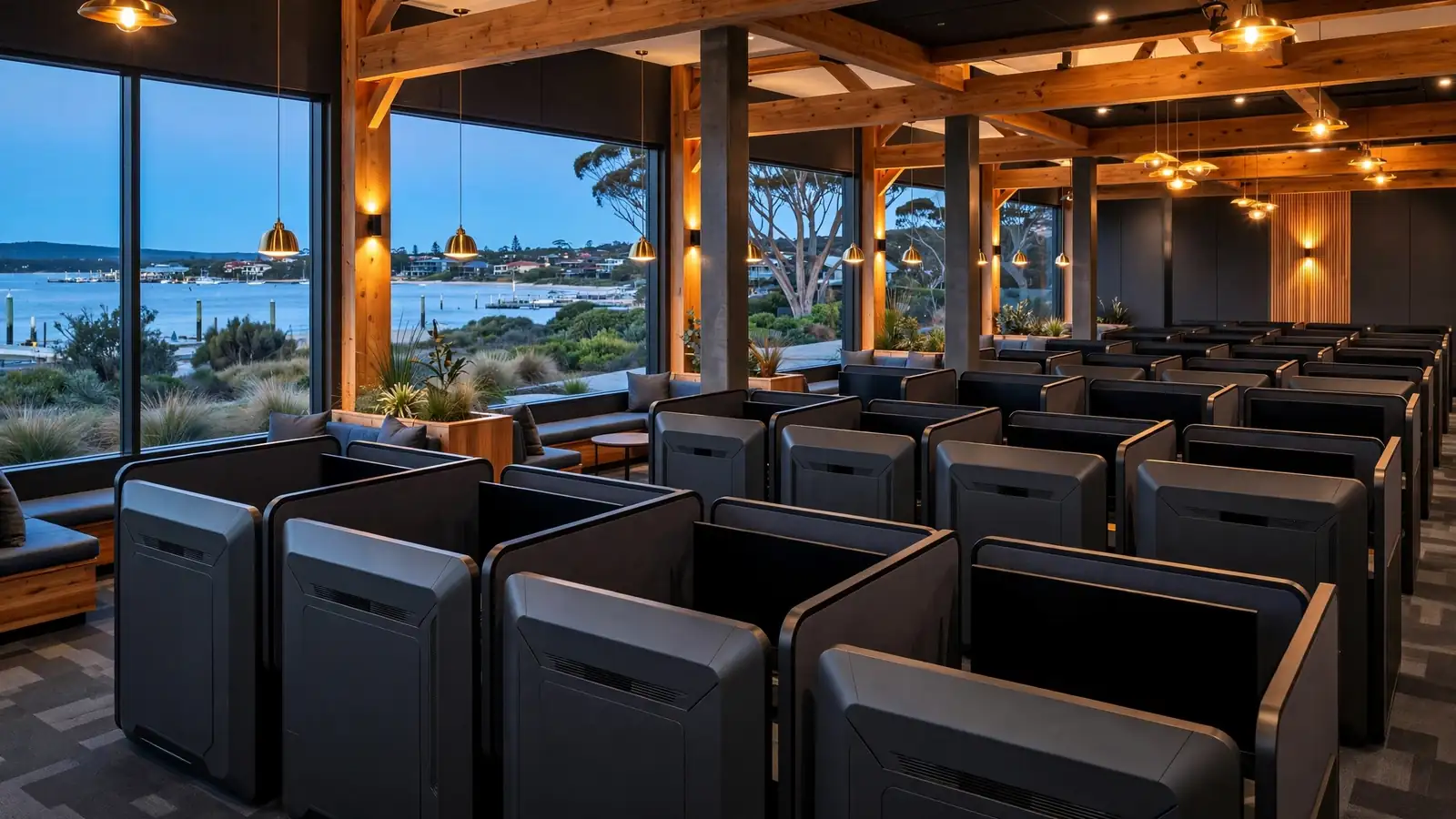
The same care applies to claims about individual games. A list of familiar pokie titles can make a page look concrete while saying nothing dependable about what is available at a particular venue now. Names, screens and configurations can change. A title associated with one casino elsewhere is not proof that it is offered at Crown Perth; nor does the general popularity of a game establish its presence on a local floor.
Payout language needs particular restraint. “Maximum cash payout” can sound like a simple ceiling, but the phrase may refer to different things: a jackpot advertised by a game, a machine’s stated prize limit, or the amount and timing of a venue’s payment. Treating those as one figure would blur the distinction between a game’s terms and a venue’s procedures.
A useful account of a named venue should therefore separate what is directly established about that venue from what is merely common in the wider industry. General observations about pokies cannot be quietly converted into claims about Crown Perth’s machine selection, facilities, hours or payouts. Familiarity is not evidence. Neither is repetition: a claim does not become dependable merely because several pages have copied it.
That may make the description less dazzling than a ranked guide, but it is more honest about what a venue name can carry. Crown Perth can be discussed as the subject of local interest without turning unanswered details into promises. Where exact machine, room or payout information matters, only a current statement tied to the venue and to clear conditions can settle it. Anything less risks giving a precise shape to an assumption.
Precision, not theatre.
Crown Perth Facts
- A venue name does not describe its current gaming offer
- Machine selection and configurations can change over time
- Maximum cash payouts depend on specific machine terms and venue procedures
- General industry observations are not proof of specific venue features
Online Pokies and Deposits: The Legal Boundary
A Perth address does not change the legal status of an online casino. Under the Interactive Gambling Act 2001, companies may not offer real-money online pokies to people in Australia without a domestic licence. No such licences have been issued, so there is no Australian-licensed online casino.
That distinction can get lost when a site presents itself as a local option: it may use Australian currency, refer to Perth, or accept a deposit from an Australian account. None of those features grants it permission to offer real-money pokies in Australia. A payment route is not a licence, and the language of local familiarity does not make an offshore operator domestic.
The law is directed at companies providing the prohibited service, rather than at individual players. An Australian who uses an offshore site is not, on that basis, the target of the Act’s operator restrictions. That does not make the arrangement equivalent to playing at an Australian-licensed casino. There is no local online-casino licence for the site to hold, and there is no Australian legal recourse if an offshore casino refuses to release winnings.
This is the practical boundary behind promises of online pokies near Perth, real-money play, or a no-deposit offer. A bonus, a deposit page and a claim about high limits may describe a commercial offer; they cannot supply the protections of a domestic licence. Nor does the word “Perth” in a site’s branding establish that its business is based here or answer which law governs a dispute. The small print often does more legal work than the advertising.
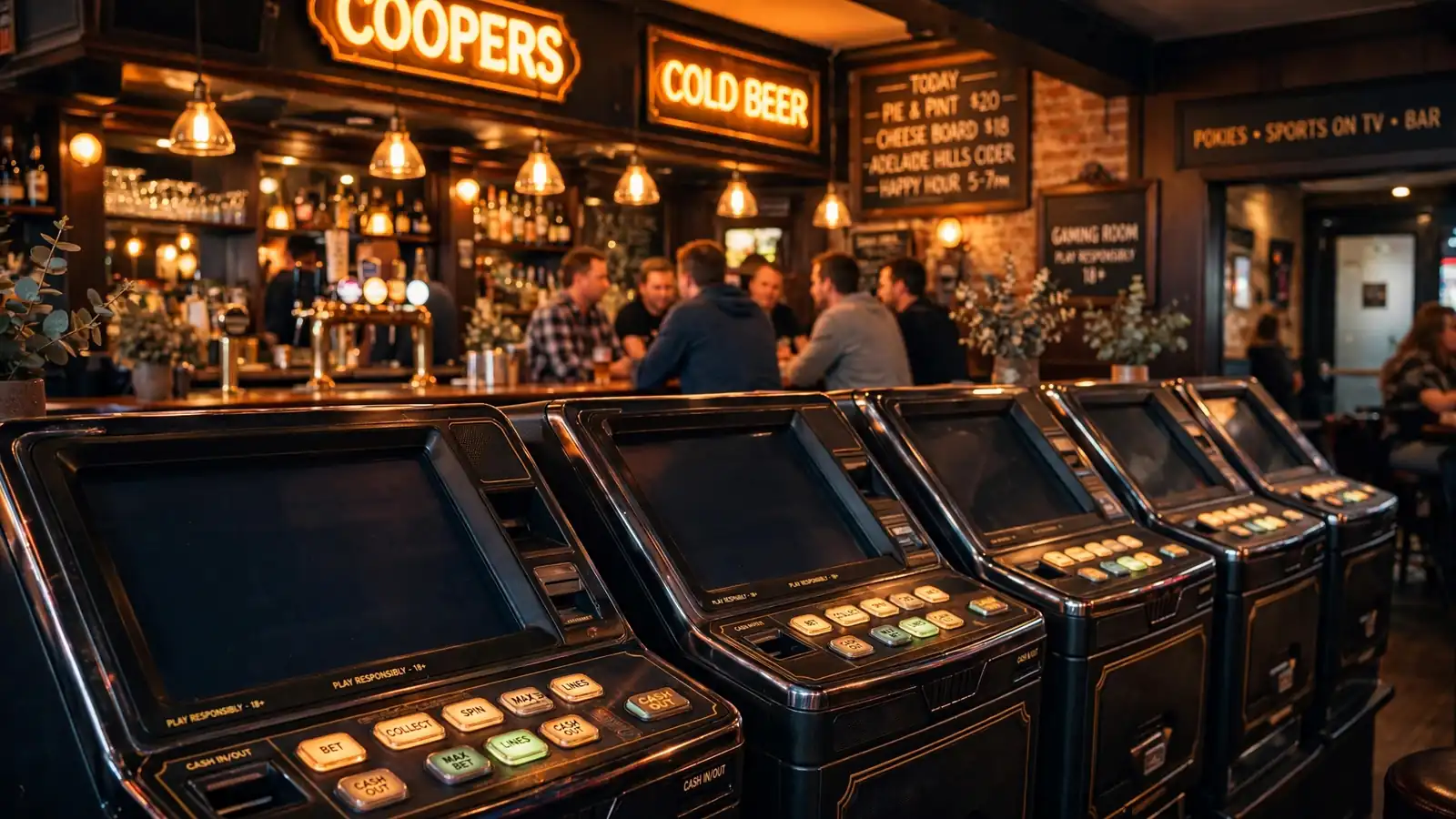
A claim to offer the best-paying pokies is also separate from the question of lawful operation. A payout promise cannot create a local regulator, and a payment being accepted cannot establish that winnings will be paid. With an offshore casino, the risk is not merely that an advertised condition proves inconvenient. If the operator withholds a balance, Australian players have no legal recourse in Australia to compel payment. That is a consequential difference, not a technical footnote.
BetStop does not close this gap: it applies to Australian-licensed operators and does not bind offshore sites. Its existence should not be mistaken for a safeguard that follows a person onto an offshore casino. In this market, the boundary matters precisely because familiar payment language and local-sounding offers can make an overseas service appear more accountable than it is.
The pattern is revealing. Australia has drawn a line around who may supply online casino games, while leaving the player outside the Act’s operator-focused prohibition. Yet that does not turn an offshore offer into a protected local service. When a dispute arises, the gap between being able to make a deposit and being able to enforce a withdrawal becomes plain. A local-sounding name cannot bridge it.
Why “24-Hour Pokies” Needs a Venue-Specific Check
A venue described as open late is not necessarily open through the night, and a city does not have one shared timetable for its pokies. Round-the-clock availability is a specific claim about an individual venue. It cannot be inferred from Perth’s size, a location’s reputation or the fact that a gaming floor exists.
The Role of the RGO
A dedicated Responsible Gambling Officer (RGO) is required at venues with more than 20 machines to provide oversight while machines are running. This is a supervision requirement and does not dictate the venue’s opening hours.
That distinction matters most when plans depend on arriving at an unusual hour. A listing marked “open now” reflects a particular moment and may not establish that pokies are operating at that time. The venue’s own current information is the relevant place to check both its opening hours and whether the gaming floor is available then. General references to Perth pokies hours can blur the difference between a venue’s overall trading hours and the hours of its machines.
There is a further point about supervision. A report by regionriverina.com.au says that, from 1 July, venues operating more than 20 gaming machines are required to have a dedicated Responsible gambling officer (RGO) on duty while those machines are running. The condition is tied to machine operation, not simply to a venue’s doors being open. It describes an oversight duty; it does not establish that a particular Perth venue runs its pokies overnight.
The officer’s presence is part of a broader idea about how a gaming floor is meant to be managed: gambling harm is not treated solely as a private matter between a patron and a machine. The rule places a named responsibility inside the venue, during the period when its machines are active. That is a meaningful safeguard, but it is not a timetable.
So a claim about 24-hour pokies needs to be checked at venue level, rather than read as a general feature of Perth. An advertised late closing time, where one is listed, should not be silently converted into continuous machine availability. Nor does the supervision requirement imply that machines operate whenever an officer is on duty. One concerns oversight while machines are running; the other concerns when they run.
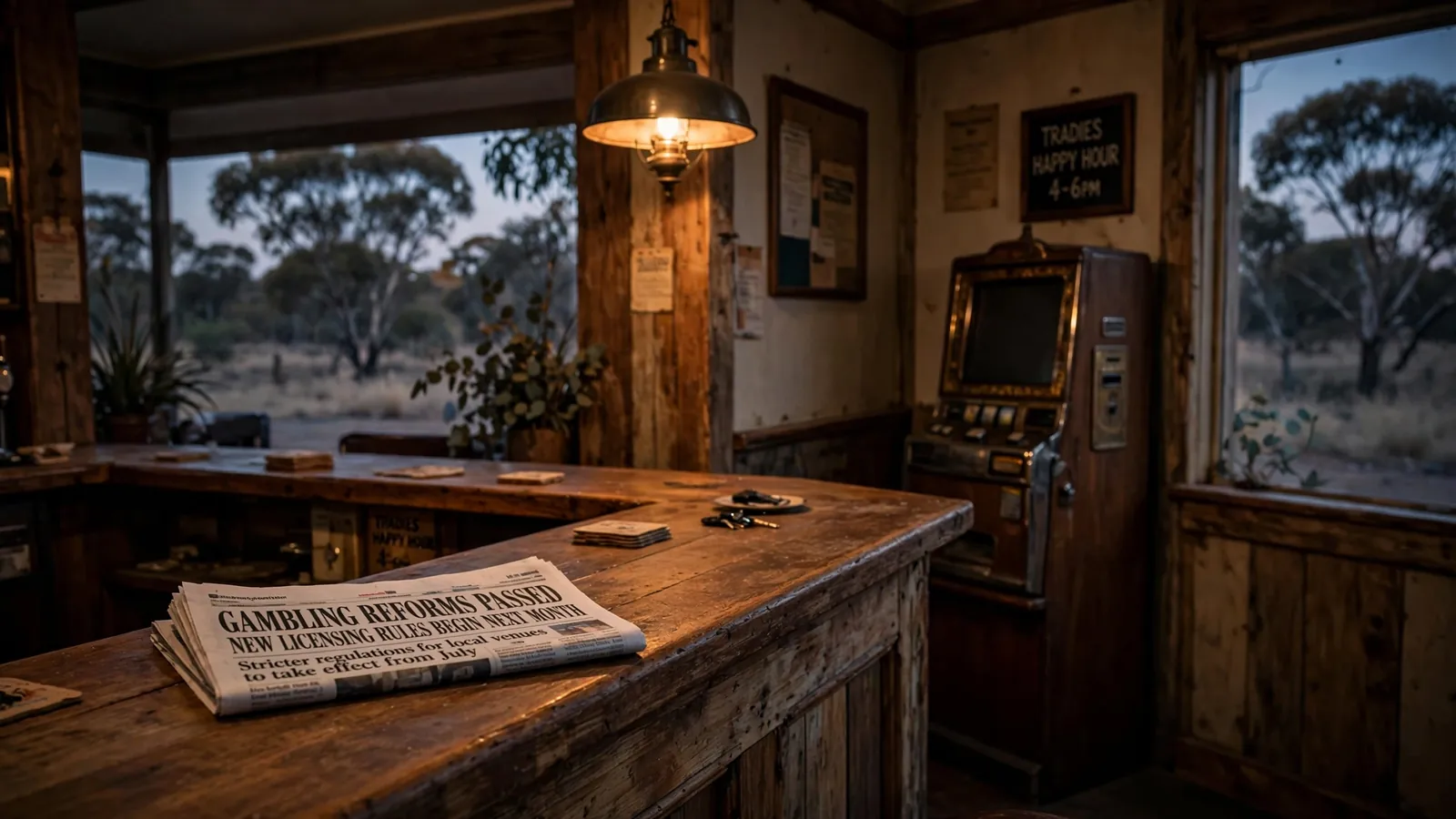
The distinction is modest, almost bureaucratic. It is also the difference between a city-shaped assumption and an actual operating schedule. A venue-specific check is what turns the phrase “open now” into useful information; the phrase alone cannot do that work.
CBD Clubs and the Limits of a Local Search
A search for clubs with pokies in Perth’s CBD can sound more definite than the information it produces. “Club” may describe a type of venue, a community organisation or simply the label attached to a place in a listing. The word alone does not establish that a particular club has pokies, and a CBD address does not settle the question either.
That distinction matters in a compact city centre, where names and categories travel easily between directories, maps and old conversations. A listing can suggest a useful starting point without confirming what is on the premises now. Nor does a broad phrase such as “best pokies in Perth CBD” identify a meaningful shortlist by itself. It leaves unanswered what “best” means, and whether the places being compared actually offer the same thing.
There is no need to turn that uncertainty into a roll-call of clubs. Naming a venue without reliable confirmation would make a local search look more settled than it is. The more careful reading is modest: CBD-focused wording points to a desired area, while “clubs” narrows the kind of place being sought. Neither phrase proves availability.
Self-exclusion is a separate concern from locating a venue. Deposit limits, loss limits and session time limits are among the standard responsible-gambling tools, alongside self-exclusion. These measures address how participation is managed; they do not verify that a club has pokies or that it is in the CBD. A local label and a personal safeguard answer different questions.
Legal Recourse
Australian players have no legal recourse in Australia to compel payment if an offshore online casino refuses to release winnings.
Self-exclusion also deserves plain language. It is not a rating, a venue feature to assume from a listing, or a promise that every setting works in the same way. Its relevance is practical: it belongs in the broader set of tools intended to help people limit or stop gambling. The presence of such options does not make an uncertain venue claim more certain.
The city-centre search therefore has a narrow but useful meaning. It can express a preference for a nearby club setting, while leaving the crucial venue-specific details unresolved. In a subject where a confident directory entry can be mistaken for confirmation, restraint is not evasiveness. It is accuracy.
Perth in the Australian Gambling Framework
Perth sits within Western Australia, but the rules around online gambling are set at the national level. That distinction matters when place names are mixed together: South Australia and Perth are not interchangeable jurisdictions, and a reference to Australian pokies does not, by itself, identify which rules apply to a particular venue or service.
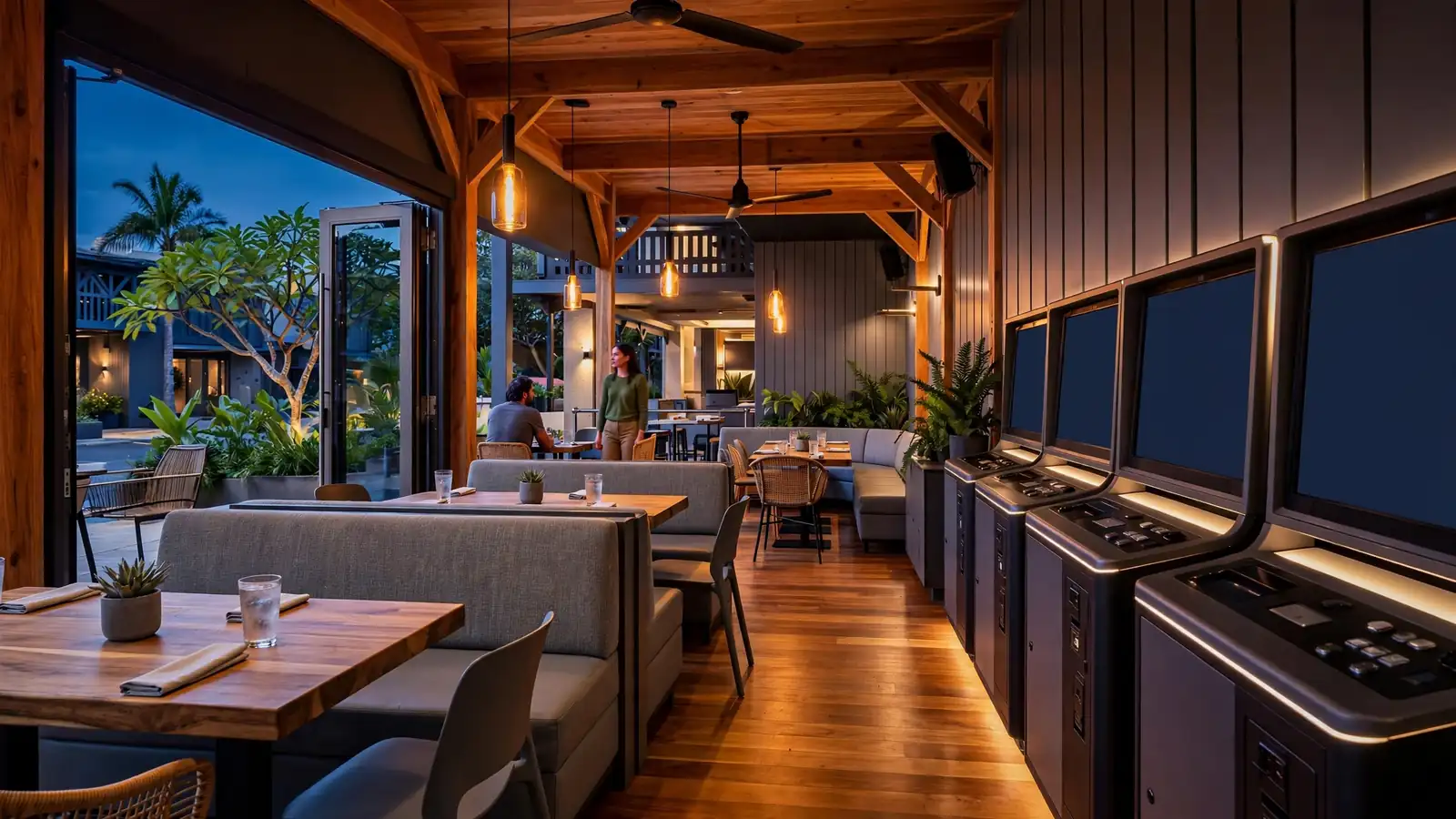
The Australian Communications and Media Authority (ACMA) enforces the Interactive Gambling Act 2001. Under that framework, real-money online casino games, including pokies, are prohibited services when offered to people in Australia. The law is directed at operators providing those services, rather than making a foreign website Australian simply because it can be reached from an Australian address.
Access is also part of the enforcement system. ACMA blocks illegal offshore gambling sites, and Australian internet service providers are required to follow the regulator’s blocklist. A site appearing in a search result, or loading at a particular moment, is therefore not evidence that it is lawful or locally regulated. Nor does a Perth label alter the national rules governing an online service.
This can make searches for pokies in Perth or South Australia sound more alike than the underlying questions are. A physical venue belongs to a state and its local setting; an online casino service falls under the federal interactive-gambling framework. The map and the law do not always use the same borders.

The distinction is modest but important. The national regulator’s role is not to certify every site that remains visible, but to enforce the law and restrict access to prohibited offshore services. A screen can suggest a wide-open market. The legal position is narrower.
Cashless Payments and the Meaning of PayID
“Cashless” can describe several different things: a payment made by bank transfer, a card transaction or a venue’s own arrangements for handling money. PayID belongs to the first category. Its name can make it sound like a separate wallet, but it is an alias layer built into Australia’s New Payments Platform (NPP). A transfer can be addressed to an email address, mobile number or Australian Business Number rather than to a bank account’s full details.
The NPP is supported by all major Australian banks and uses end-to-end encryption. Those features describe the payment infrastructure, not the business receiving a transfer. They do not establish that a gambling service is lawful, that a pokie is fair, or what return-to-player setting a game uses. A familiar payment label is not a quality mark.
Nor does PayID automatically mean that a Perth venue’s pokies accept it. The term refers to a way of transferring money between accounts; it does not, by itself, describe how a gaming floor handles cashless play. The distinction matters when “cashless pokies” is used loosely to mean anything from a card-based venue system to an online deposit.
Banks can also intervene. A specialist review has reported that some Australian banks, including major banks, may block PayID transfers to known gambling merchants. That is a changing payment-policy issue, not a guarantee that a transfer will succeed or fail. Bank acceptance does not grant a gambling operator permission to provide a service.
PayID is plumbing, not a verdict.
Are online pokies legal for Australian players?
Yes, Australians can play on offshore sites that accept them, but offering real-money online pokies to Australian residents without a domestic licence is illegal for operators. No Australian-licensed online casino exists, and players have no legal recourse in Australia if an offshore casino refuses to pay.
What is the legal age for online gambling in Australia?
You must be at least 18 years old to gamble online in Australia.
What is the cost-benefit calculation of casino promotions?
Compare the wagering requirement and cash-out limits with the bonus value. For example, a $500 bonus with 40x wagering requires $20,000 in bets before you can withdraw winnings; if wagering applies to a $500 deposit plus a $500 bonus at 35x, it requires $35,000 in bets.
Can casinos change the RTP of their games?
Yes. Some providers let casinos choose between RTP settings for the same game, so its return percentage may differ between casinos.
Are online pokies rigged?
Each spin is determined by a Random Number Generator and is independent of previous spins. A past win or losing streak does not predict the next result.
Do PayID deposits qualify for bonuses?
Yes. PayID is treated like any other qualifying deposit method at the recommended sites.
What’s the best strategy for playing pokies?
There is no strategy that can predict or control a spin: each result is random and independent. Set deposit, loss and time limits, and use self-exclusion if needed.
Written by the editors at Cuntspin Casino.