Pokies Open Near Me in Australia: Casino Hours
 Available in AU
Australian casinos operate around the clock as a whole, but individual entrances, gaming areas and services may follow separate arrangements.
Table of Contents
- What “Open Now” Means at an Australian Casino
- Early Starts, Addresses and the Limits of a Search
- Good Friday and Other Dates That Change the Routine
- Finding a Nearby Casino Beyond the City Centre
- The 24-Hour Question: Casinos and Their Facilities
- How Far “Near Me” Reaches Across Australia
- Late-Night Access Is Not the Same as a Late Closing Time
- Christmas Day and the Local Licence
- Anzac Day Searches and the Reality of Casino Scale
- Cash, Cheques and Online Addresses: What the Search Cannot Confirm
What “Open Now” Means at an Australian Casino
“Open now” can describe a casino’s overall operating status, but it does not settle whether every part of the property is available at that moment. All major Australian casinos operate around the clock. That is a statement about the casino as a whole, not a promise that every entrance, gaming area, restaurant or other facility is accessible continuously.
The distinction matters because a large property is not a single room with one timetable. Its public-facing facilities may have separate arrangements, and access to one part does not establish access to another. A casino may be operating while a particular service is unavailable. The phrase “pokies open near me” can therefore point towards a place that is open in the broad sense without answering what is actually accessible inside it.
This is less a contradiction than a problem of scale. A search result tends to compress a building into a label: open or closed. The building itself does not necessarily obey so tidy a description. “Open now” is useful as a first indication, but it is not a full account of a property’s doors, rooms and services.
If you’re looking for pokies open near you in Australia in 2026, this list offers a quick reference to the operator details provided. Check the relevant terms and availability before choosing where to play.
License: Curacao · Payout speed: crypto 30-60 minutes, fiat 1-5 days · Min. deposit: A$10 Wild Tokyo lists a Curaçao licence, a A$10 minimum deposit, and payout estimates of 30–60 minutes for crypto and 1–5 days for fiat.
License: Curacao The supplied detail for Golden Pokies is its Curaçao licence.
License: international iGaming licence – jurisdiction not named in the source · Payout speed: PayID 1-24 hours · Min. deposit: A$30 (PayID from A$10) House of Pokies lists an international iGaming licence, with the jurisdiction unspecified. Its stated PayID payout time is 1–24 hours; the minimum deposit is A$30, or A$10 for PayID.
License: Curacao eGaming (Dama N.V.) JeetCity Casino lists a Curaçao eGaming licence held by Dama N.V.
License: Curacao Gaming Control Board JustCasino lists a Curaçao Gaming Control Board licence.
License: Curacao Gaming Control Board OGL/2023/176/0095 (Hollycorn N.V.) Rollero Casino lists Curaçao Gaming Control Board licence OGL/2023/176/0095, held by Hollycorn N.V.
License: Curacao (operating since 2017) · Min. deposit: A$20 Uptown Pokies lists a Curaçao licence, says it has operated since 2017, and has a A$20 minimum deposit.
License: Curacao Gaming Authority (Jumpman Gaming Ltd) DragonSlots Casino lists a Curaçao Gaming Authority licence associated with Jumpman Gaming Ltd.
License: Curacao Gaming Control Board OGL/2023/176/0095 (Hollycorn N.V.) Neospin lists Curaçao Gaming Control Board licence OGL/2023/176/0095, held by Hollycorn N.V.
Payout speed: crypto under 1 hour, PayID 1-3 business days · Min. deposit: A$20 (A$30 to qualify for the bonus) Ricky Casino lists crypto payouts in under an hour and PayID payouts in 1–3 business days. Its minimum deposit is A$20, or A$30 to qualify for the bonus.
What the age rule establishes
Casino entry has a clear national minimum age: a person must be at least eighteen. That rule concerns entry to the casino; it does not mean that being old enough guarantees access to every facility on the property. Major Australian casinos require valid photo identification for entry, so age is not merely a matter of appearance at the door.
This is a straightforward boundary, though the surrounding places can make it look less so. A casino property may contain facilities with different purposes, and the casino’s age rule should not be confused with the availability of those facilities. A general notice that a property is open does not alter the entry requirement.
The phrase “nearest pokies open now” folds together two separate matters: physical proximity and immediate access. Neither is resolved simply by knowing that major casinos operate continuously. Distance says where a venue is; the operating status says something about the property; neither necessarily describes the availability of a particular area at that instant.
That is the limit of the useful general rule. A round-the-clock casino is not the same thing as a round-the-clock guarantee for every service it contains. The distinction is ordinary, but search language often erases it. Buildings are not search snippets.
A physical venue is not an online casino
There is another ambiguity in the word “open”. A person looking for a physical venue is asking about a place in the world. A website that loads on a phone is a different matter, and its accessibility does not make it a lawful Australian online casino.
The Interactive Gambling Act 2001 prohibits operators from providing real-money online casino games to people in Australia. The federal regulator, the Australian Communications and Media Authority (ACMA), enforces that law and monitors compliance with federal interactive-gambling rules. It can ask Australian internet providers to block websites that offer prohibited services or advertise them in Australia. That is a separate function from locating a physical casino.
ACMA’s enforcement record gives the distinction some weight. Since November 2019, following enforcement action, it has blocked more than 1,455 websites associated with illegal gambling or affiliate activity. A blocked address may no longer resolve through an Australian provider, while a website’s ability to load is not proof that its service is permitted. The web address is not a licence.
There is also a reported difference in the count of illegal services that have left the Australian market since ACMA began enforcement in 2017. One account puts the number above 210; another reports more than 190. Those figures should not be collapsed into a single exact total. The broader point is that enforcement has involved both blocking websites and services withdrawing from the market.
For a physical venue, then, “open now” is an operating-status question, with limits around the particular entrance or facility. For an online casino-style service, the word “open” says nothing about whether the service may lawfully be offered to Australians. Federal blocking powers address prohibited online gambling; they do not certify a venue’s current access arrangements.
Online Gambling
The Interactive Gambling Act 2001 prohibits operators from providing real-money online casino games to people in Australia.
The two meanings are easy to confuse because both appear on a screen and both use the language of availability. But one refers to a door, the other to an internet service governed by a separate federal law. A casino operating continuously does not turn an online casino into a lawful alternative, and a blocked gambling website does not tell anyone whether a physical property is open. Different doors. Different rules.
Early Starts, Addresses and the Limits of a Search
A request for a casino open at six or seven in the morning sounds precise. It gives a time, a kind of venue and a sense of proximity. Yet those details do not answer the same question. A location result can identify a casino; it cannot, by itself, establish whether its gaming floor, entrance or another part of the property is available at that hour.
This distinction matters because “open” is often treated as a single condition. A casino may occupy a large property with different areas and services, while a search result reduces the place to one label and one pin on a map. The pin can be useful for finding an address. It is not a live account of what is operating inside.
Early-hour wording can also blur the difference between a venue’s general operation and the particular facility being sought. Someone looking for somewhere to play at dawn may see a result that says a casino is open, then assume that every relevant area is open on the same terms. That conclusion does not follow from the address or from a broad status label. A restaurant, entrance, gaming area or other facility may be treated separately.
The same caution applies to a request for somewhere open until five or six in the morning. A closing time is not simply the reverse of an opening time: a result about the property may not specify when the area of interest stops admitting people or changes its service. Search snippets can flatten these distinctions, and a map marker has no way to resolve them. A clock in a result is useful only when it clearly refers to the right place and the right facility.
Addresses offer firmer ground, though only for geography. Lasseters Casino is at 93 Barrett Drive in Alice Springs, Northern Territory. Country Club Casino is listed at Country Club Avenue, Prospect, in Meander Valley. These are concrete location details, not promises about early access. Neither an address nor the name of a casino confirms that a particular area is open at six, seven or eight in the morning.
That separation between place and time is easy to overlook. A person may search for a nearby venue that is open at seven and receive a list assembled from location data, venue categories and opening-hour fields. Each field answers a different question. A correct address does not validate an hours entry; an hours entry, in turn, may refer to the wider property rather than the facility being sought. The result can look complete while leaving the decisive detail unresolved.
For an early visit, the useful check is therefore not merely whether a casino appears on a map. The relevant information needs to identify the exact property, the hours applying on the intended day, and the area those hours cover. If a listing gives only a general “open” status, it should not be read as confirmation that a particular facility is admitting people at the requested time. Direct venue information is more meaningful when it names the relevant service or area rather than relying on a single property-wide label.
Physical Addresses
Lasseters Casino is located at 93 Barrett Drive in Alice Springs, NT, and Country Club Casino is at Country Club Avenue, Prospect, in Meander Valley.
Distance also changes what “near” means. A result may be close to the centre of a town but inconvenient from a particular neighbourhood, or it may name a casino in a broader region without conveying the journey involved. An address narrows the geography; it does not tell whether the trip is worthwhile at an early hour, or whether the sought-after part of the property is available when arrival is planned.
This is not a technical quibble. Opening-hour language is a small piece of public infrastructure: it turns a complicated venue into a promise that can be acted on. When the wording is broad, the promise may be broader than the information behind it. A location can be certain while access remains uncertain. Two different facts.
For searches framed around dawn, the safest reading is modest: a result may point to a casino in the relevant area, while the time and facility still need to be confirmed separately. The Alice Springs and Meander Valley addresses help identify places on a map. They do not turn a map into an opening-hours notice.
Good Friday and Other Dates That Change the Routine
A casino’s ordinary operating pattern does not settle whether it is available on Good Friday. A venue may operate around the clock as part of its usual routine, but a public holiday is a separate question: special conditions can affect access, and a normal-hours listing cannot establish what applies on a particular date.

That distinction matters because “open” is an imprecise description. It may refer to the property as a whole, a particular entrance or a specific gaming area. A search result that says a venue is open does not necessarily describe every part of it, nor does a regular weekly schedule amount to a holiday notice. The calendar changes; the listing may not.
Good Friday searches often arise because a familiar routine suddenly seems uncertain. The date carries religious and civic significance, while restrictions and trading arrangements are dealt with through local rules rather than one national casino timetable. Australia’s casino industry is regulated by states and territories, and each property holds a licence issued by its own jurisdiction. That structure makes the location relevant: a statement about one casino cannot simply be carried across state or territory borders.
No national assumption should be made from the word “casino”, or from what happened at another property in another year. A venue’s own holiday announcement is more useful than an undated directory entry, but even a general announcement should be read for its scope. It may describe the building without specifying every facility. When the question concerns a particular service, only information that names that service can resolve it.
The same caution applies to requests about whether a casino is open today or tonight. “Today” is not a stable date, and a search result can outlast the information it displays. A listing may describe regular hours, while a venue’s current notice addresses a temporary or calendar-specific arrangement. The two statements are not necessarily in conflict; they answer different questions.
Attention: A casino’s regular weekly schedule does not amount to a holiday notice, as special conditions can affect access on dates like Good Friday.
Good Friday is not the only date on which routine expectations can become unreliable. Public holidays and special events can prompt changes to access or operating arrangements, but their effect is not uniform across Australia. A national calendar identifies the date, not the conditions under which a particular licensed property will operate. The licence belongs to the local jurisdiction, and practical arrangements belong to the venue.
This is why a broad claim such as “casinos are open on public holidays” is too blunt to guide a specific visit. It converts a general description of an industry into a promise about a particular door on a particular day. The reverse claim—that a holiday automatically means closure—would be just as unsupported. Neither follows from ordinary hours alone.
The useful distinction is between a regular schedule and a date-specific notice. For Good Friday, the relevant information is the casino’s announcement for that date, including whether it covers the area or facility in question. If no such notice is available, the honest answer remains uncertain rather than borrowed from another city’s routine. Calendar questions have local answers. No shortcut.
Finding a Nearby Casino Beyond the City Centre
“Near me” can describe a very different search in a regional setting than it does in a capital. The phrase points to distance, but it cannot make a dispersed map behave like a cluster of venues. The Northern Territory offers a useful example: a specialist casino directory counts three casinos across three cities. That is a snapshot from a directory, not a permanent guarantee that every listing or access arrangement remains unchanged.
The same directory identifies Alice Springs as the Territory’s city with the greatest casino presence: one casino. The wording sounds almost comic, but it reflects the scale of the comparison. In a place where the listed venues are divided among cities, “most” need not mean a dense choice of nearby properties. A count describes distribution; it does not say how far apart the venues are, how easy a journey may be, or whether a particular entrance or service is available.
That distinction matters when a search is meant to answer a practical question. A result for a casino in the same city may still be a substantial trip from the starting point. Conversely, a venue outside the main urban centre may be the relevant local option even when a search gives it less prominence than properties in larger gambling markets. The map, not the wording of the search, sets the actual distance.
The Territory also shows why national lists can flatten local differences. A count of casinos across a jurisdiction is not a directory of every place where gambling occurs, and it should not be read as a measure of convenience. Nor does the number reveal whether a venue is close to a particular suburb, town edge or road connection. Those are separate questions, dependent on the point of departure and the venue’s current details.
Alice Springs is therefore a useful point of orientation, rather than a promise of nearby choice for everyone in the region. Its single listed casino makes it the Territory’s leading city by that measure, while the overall three-city spread makes clear that access is distributed rather than concentrated in one centre. The figures describe a small map of venues, not a universal answer to “closest”.
A specialist directory counts three casinos across three cities.
Identified as the Territory’s city with the greatest casino presence, with one casino.
Venues are divided among cities, meaning proximity is shaped by geography rather than search results.
There is a social history tucked into that geography. Casinos are often imagined as fixtures of metropolitan nightlife, but the physical industry does not stop at the largest cities. In the Northern Territory, the directory’s count places venues across several cities, giving regional locations a place in the picture without pretending that distances disappear. A list can name a place; it cannot shorten the road.
For someone assessing a local option, the useful sequence is mundane: identify the city or district, confirm the venue’s location, and treat the operating status of the specific facility as a separate matter. A city-level result is a starting point, not proof that the nearest property is the one that suits a particular trip. The word “near” remains stubbornly local.
This example is deliberately limited. It says something about how casino locations are distributed in one jurisdiction; it is not a complete national directory, and it does not establish the nearest venue for every town or suburb. The Territory’s figures are a reminder that proximity is shaped by geography before it is shaped by a search result. The map has the final say.
The 24-Hour Question: Casinos and Their Facilities
The statement that all major Australian casinos operate around the clock is useful, but its scope matters. It describes the casino’s operating status; it does not certify that every room, entrance, counter or amenity within a property is available at every moment. A large venue is not a single switch marked on or off.
That distinction matters because a casino can contain spaces with different purposes and arrangements. The gaming floor, restaurants, bars, hotel areas, entertainment spaces and administrative services do not become one undivided operation simply because they share an address. Round-the-clock casino operation should not be read as a promise that each of those facilities keeps the same hours, admits the same people or offers the same service continuously.
The wording also applies to major casinos, not automatically to every place where gambling may take place. “Casino” is often used loosely in everyday conversation, but a search for nearby gaming does not establish that the result is a major casino or that the broad 24-hour statement applies to it. The label attached to a place matters less than what the venue actually is and what part of it is operating.
For someone trying to establish whether a casino is open now, the practical question can therefore divide into two. Is the casino operating as a property? And is the particular facility being sought available? The first may be answered by the general round-the-clock claim for major Australian casinos. The second requires information specific to that facility. One answer cannot safely stand in for the other.
Nor does a casino’s continuous operation mean that every entrance is necessarily available at all times. A property may have several ways in, and access arrangements can differ by area or purpose. The broad claim does not identify which entrance serves which part of the venue. It is a description of operating hours, not a map of access.
This is a small but consequential distinction in a country where casino regulation belongs to state and territory jurisdictions and each property operates under its local licence. The national statement concerns major casinos as a category; it does not erase the individuality of their buildings, services or arrangements. Scale creates the impression of one seamless venue. Administration is less seamless.
Continuous Operation
Continuous operation of a major casino does not guarantee universal access to every internal facility or entrance.
A request for a casino that is open for twenty-four hours can therefore be understood at the right level: the major casino itself operates continuously. A request for a particular service at that casino is narrower, and the general claim does not settle it. The two ideas are often compressed into one phrase, but they answer different questions.
The same care applies to the word “open”. It may mean that a casino is operating, that a particular part of the property can be entered, or that a named service is available. Those meanings are related, not interchangeable. A round-the-clock claim establishes the first for major Australian casinos. It does not, by itself, establish the rest.
A useful boundary, then: continuous operation is not universal access.
How Far “Near Me” Reaches Across Australia
“Near me” has no fixed radius in a country where distance can mean a short trip within a city or a much longer journey between population centres. A result labelled nearby is therefore a geographic starting point, not a guarantee that a particular gambling facility is close, open or accessible. The phrase compresses a large map into a small screen.
A specialist gambling directory review counts gambling activity across 147 Australian cities and records more than 20 full-scale casinos across the country’s eight state and territory jurisdictions. Those figures describe the review’s categories and snapshot, rather than a permanent boundary around what counts as a casino or a gambling city. The distinction matters: a city counted as having gambling facilities does not thereby have a full-scale casino, and a national total says little about the distance between one facility and the next.
Sydney offers a more concentrated picture. The same kind of specialist review identifies Sydney, in New South Wales, as Australia’s largest gambling city, with 11 gambling facilities. That figure concerns facilities, not 11 casinos. It suggests why a location-based search in a major urban centre may return several different kinds of result, while the same wording elsewhere could point to a much broader area.
The city’s scale does not make every result interchangeable. A facility’s location, its operating arrangements and the part of the property being sought are separate questions. A map can help establish where a named venue sits; a broad label such as “gambling facility” cannot settle what is available inside it. Geography gives the first answer, not the whole one.
This is the limit of a national comparison. The count of cities shows that gambling facilities are not confined to one metropolitan centre, while Sydney’s tally illustrates how they may cluster in a large city. Neither figure establishes which venue is nearest to a particular address. That depends on where the search begins and on the kind of facility being counted.
A national map is not a local directory. For someone seeking a nearby casino, the useful distinction is between a city with gambling activity and a specific casino at a verifiable address. “Near” is a relation, not a property.
Late-Night Access Is Not the Same as a Late Closing Time
The phrase “open late” suggests a familiar kind of venue: doors open in the evening, a closing hour approaches, and the night ends when staff turn people away. That pattern does not describe the operating schedule of major Australian casinos. They operate around the clock, so late-night access is not simply a matter of arriving before a stated closing time.
The distinction matters because a casino is a property made up of different spaces and services. The building’s round-the-clock operation does not establish that every part of it is available at every hour. A particular service may have its own schedule, and access to one area should not be mistaken for access to the whole property. The broad operating fact is useful, but it is not a promise about every facility.
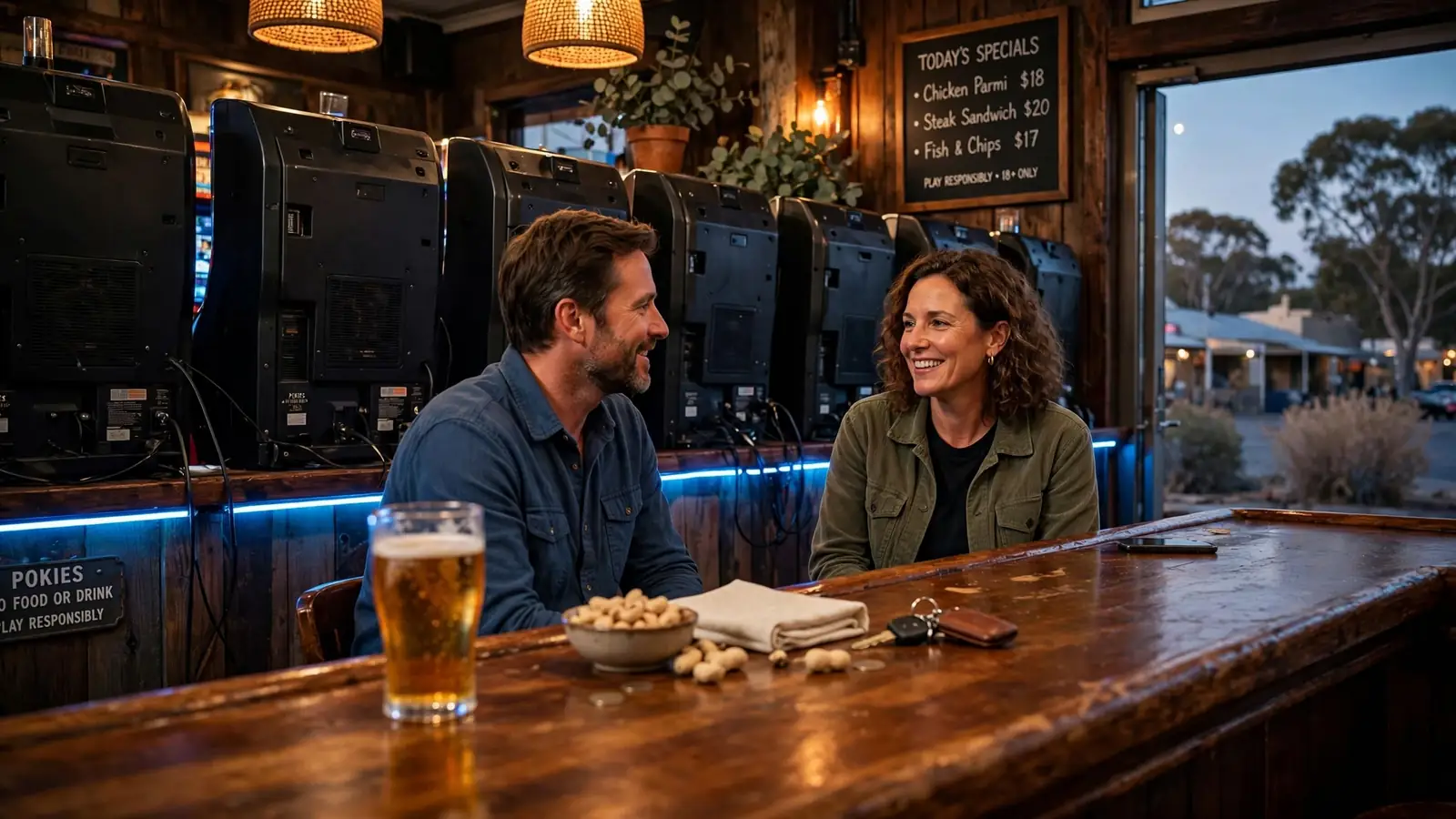
This is why searches for a casino open late can produce an answer that sounds simpler than the question. A venue may have no nightly closing time in the ordinary sense, while the specific amenity sought within it follows a different routine. “Late” can mean arriving after dinner, looking for somewhere in the small hours, or needing a particular service. Those are not interchangeable needs.
The language of closing hours belongs to shops, theatres and restaurants, where a single time often settles the matter. A casino’s continuous operation instead describes the property at a general level. It says less about the precise experience available at the moment of arrival. The distinction is not a technicality; it is the difference between finding an open building and finding the particular place or service intended.
Major casinos’ 24-hour operation therefore gives a useful starting point for late-night access, not a universal schedule for every venue or facility in Australia. The word “major” also matters: the statement should not be stretched into a claim that every gaming venue remains open through the night. A closing time may be absent from the overall picture and still matter for an individual service.
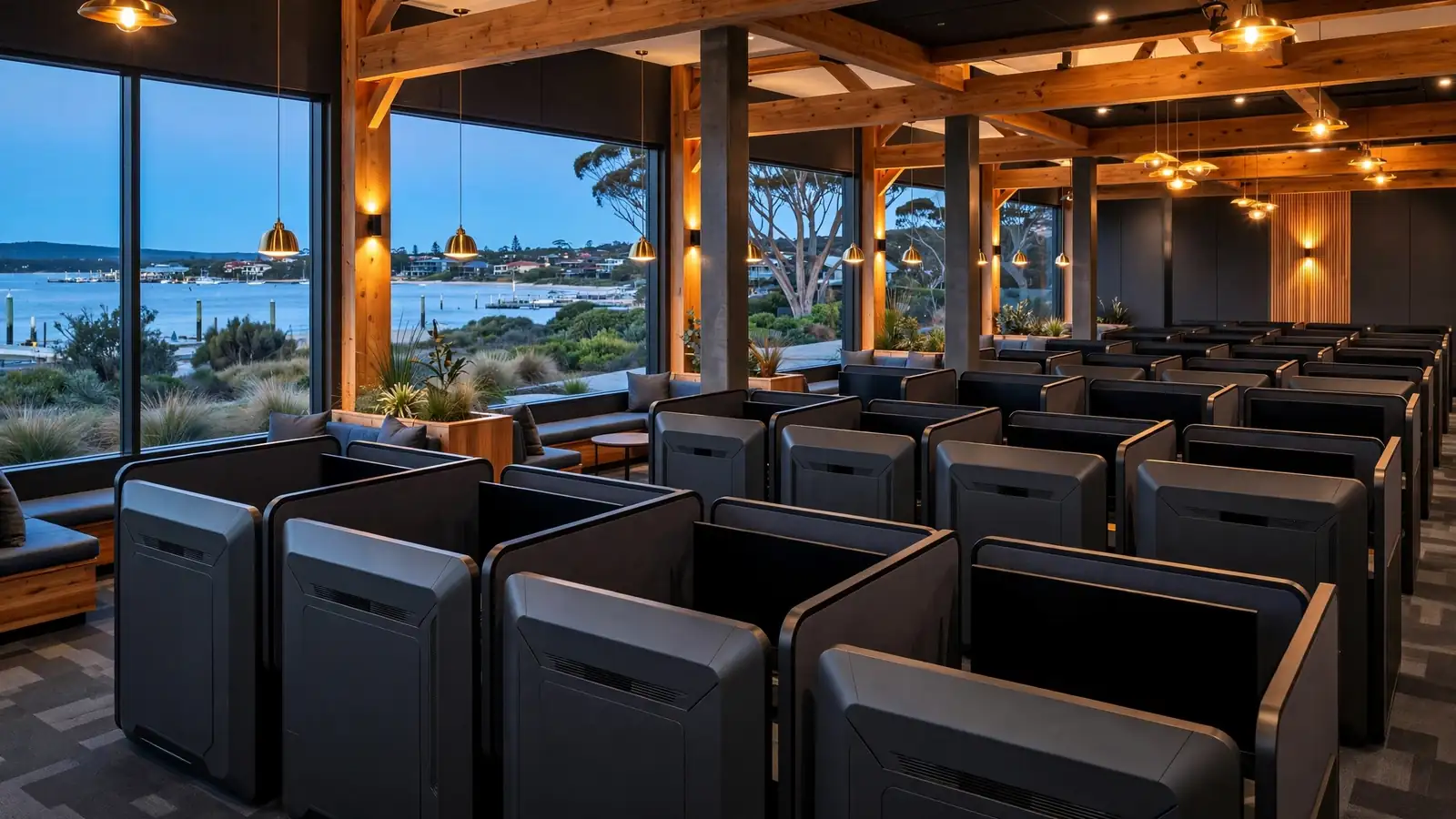
Round-the-clock does not mean every door, every service, every moment.
Christmas Day and the Local Licence
Christmas Day can make an ordinary idea of “open” less useful. A casino property may have round-the-clock operations as its general pattern, but that does not establish which entrance, gaming area or other facility is available on a particular public holiday. The date itself is not a reliable timetable.
The local setting matters because Australia does not issue one national casino licence. Each property operates under a licence granted by the state or territory where it is located, and the casino industry is regulated at that level. That jurisdictional structure is the reason Christmas availability should be treated as a local question rather than inferred from a national rule.
It also means that a casino’s usual operation cannot, on its own, settle whether a particular part of the property will be accessible on Christmas Day. A venue name appearing in a general directory, or a familiar pattern of operation, does not answer that narrower question. The relevant detail is the arrangement applying to the specific property and facility on that date.

This is distinct from Good Friday, which raises its own holiday-specific uncertainty. The two dates should not be treated as interchangeable, or as evidence that every state and territory follows the same calendar arrangements. Australian casino regulation is divided among jurisdictions; a single national answer would flatten that reality.
Christmas is often described as a day when routine stops. In a large entertainment property, routine may instead become selective: one service continues while another does not. The distinction is less dramatic than a blanket closure, but more consequential for anyone assuming that the whole building shares one timetable.
So a request for pokies open on Christmas Day near a particular place cannot be answered by the date alone. Nor does the existence of a local casino licence automatically disclose holiday access. The licence identifies the jurisdictional framework; the day’s practical arrangements remain specific to the venue and the facilities within it.
A local question, then. Not a national promise.
Anzac Day Searches and the Reality of Casino Scale
Anzac Day can alter the routine of public venues, but the date alone does not establish whether a casino, its gaming floor or another part of the property will be accessible. Ordinary operating arrangements are not a reliable substitute for holiday-specific information. A venue’s conditions may depend on its own arrangements and the rules applying in its state or territory.
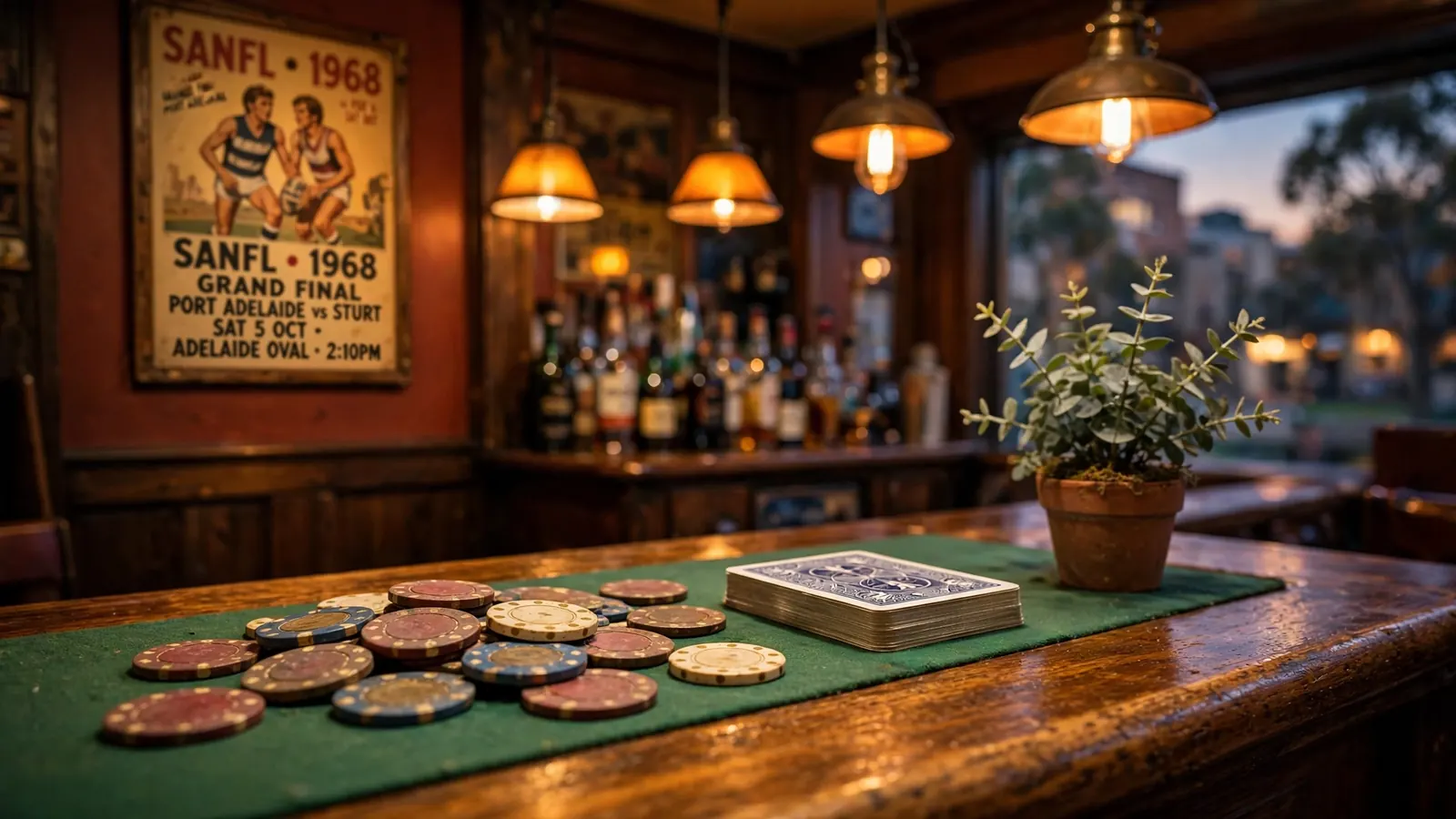
That distinction matters when someone is trying to establish whether a nearby casino will be open on the day. The phrase “open” can refer to the property as a whole, a particular entrance or a specific service; those are not necessarily interchangeable. A casino may be a large, mixed-use site, while access to one area says little about another.
No nationwide Anzac Day schedule can be inferred from the fact that major Australian casinos operate around the clock in ordinary circumstances. Nor does the holiday itself settle the question in the opposite direction. The sensible reading is narrower: availability on that date needs to be confirmed for the particular property and facility, rather than assumed from general casino hours.
The broader physical sector has measurable scale. Australian casino venue licences endorse a total of 3,308 gaming machines installed across the country. That figure describes the licensed estate; it does not identify which venues will admit the public on Anzac Day, or establish the status of any one facility. Scale is not a timetable.
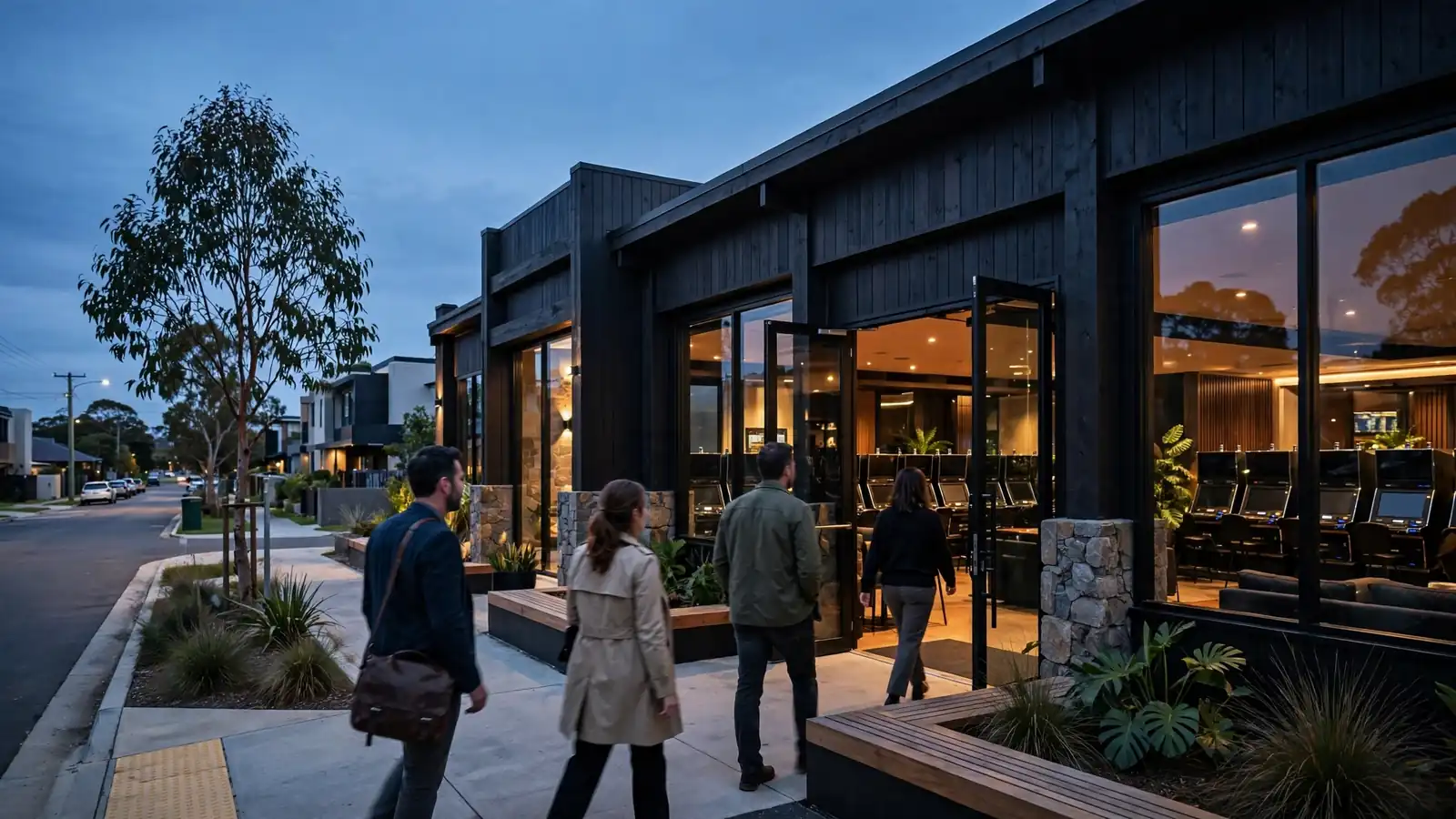
There is an old civic tension here. A national day of remembrance sits alongside commercial properties whose schedules are shaped by local arrangements and licensing. Neither the symbolism of the date nor the size of the casino sector supplies a universal opening notice. For a specific day, the address matters. So does the calendar.
Cash, Cheques and Online Addresses: What the Search Cannot Confirm
A nearby venue’s address and operating status do not settle how it handles payments. A listing that mentions cash, or a review that praises a venue, is not the same as confirmation that a particular casino offers cash services or accepts cheques. Those details need to come from the venue itself; a map entry cannot issue a cheque.
“Top rated” is another slippery label. Ratings reflect the platform and the people who have submitted reviews, not an official ranking of Australian casinos. Without a named, transparent basis for comparison, the phrase says more about the listing than the venue. Popularity is not a licence category.
Online addresses require a sharper distinction. A gambling website may load, accept account traffic or appear under a different domain without being authorised to provide online casino games to people in Australia. Under the Interactive Gambling Act 2001, offering real-money online casino games to customers physically in Australia is illegal for operators. An accessible page proves only that the page can be reached at that moment.
The Australian Communications and Media Authority (ACMA), the federal regulator, can ask internet providers to block websites offering prohibited gambling services or advertising them. Regulatory and enforcement reporting has recorded ACMA blocking action against illegal gambling services, including alternate domains associated with Fair Go. Blocking can change which addresses resolve through Australian providers; a replacement address is not evidence of approval. A domain is not a licence.
The physical venue and the online service are separate matters, even when their names appear related. Cash or cheque arrangements belong to the venue’s own published information. A website’s address, changing domain or collection of star ratings cannot verify them, nor can it establish that an online casino is lawful in Australia. These are different questions, and a search result often bundles them together. That is the small trap.
Written by the editors at Cuntspin Casino.