Live Dealer Casinos Online in Australia: Legal Limits
 Available in AU
Live-dealer tables may be accessible from Australia, but that does not make their operators locally licensed.

Table of Contents
- The Live Table Offshore, and the Australian Legal Boundary
- Bonuses: The Turnover Behind the Welcome
- Bitcoin and Crypto: What the Available Evidence Can—and Cannot—Confirm
- Live Dealer Games Without an Invented Catalogue
- Reviews, Providers and the Limits of a Free Trial
- Roulette on a Phone: The Mobile Question
- Real-Money Play and the Uneven Risk
- Blackjack at a Live Table: No Verified Table List
- Casino Software, Withdrawals and the Paperwork Before Payout
- “Top” Live Dealer Sites and the Problem of an Empty List
The Live Table Offshore, and the Australian Legal Boundary
A live-dealer casino presents itself as a room of tables brought to a screen: a human dealer, a camera, and play conducted remotely. In Australia, that familiar image sits on an unusual legal map. There is no Australian-licensed online casino, and the gap is not a sign that local approval is waiting just around the corner. Under the Interactive Gambling Act 2001, companies may not provide real-money online casino games to people in Australia without a domestic licence. No such licences have been issued.
The rule concerns the service being offered, not merely the location of its servers or the nationality of the company behind it. Online casino-style games, including table games, are treated as prohibited interactive gambling services when supplied to customers in Australia. A live dealer does not change that category. The camera may make the table feel present; it does not bring the operator within an Australian licensing system.
That distinction explains why the phrase “Australian online casino” can be misleading. A site may accept Australian customers while operating from overseas, but acceptance is not local authorisation. The law places its burden on operators, rather than making an individual player criminally liable simply for using an offshore service. Australians may play on offshore sites that accept them, but this does not turn those businesses into locally licensed casinos or give them domestic oversight.
The regulator responsible for enforcing the Act is the Australian Communications and Media Authority, usually shortened to ACMA. Its role includes restricting access to illegal offshore gambling services. When ACMA adds a service to its blocklist, Australian internet providers must act on that list and block access. The result is an uneven landscape: offshore services may be reachable, yet access can be disrupted by regulatory action. Reachability is not recognition.
This arrangement reflects a particular choice about responsibility. The state has not created a domestic licensing route for online casinos, then invited operators to compete under local supervision. Instead, the law bars companies from offering the prohibited services to Australians, while enforcement measures seek to limit access to offshore operators. The practical presence of a foreign site does not undo the legal boundary around its offer.

For the player, the limits of protection matter more than the terminology on a site’s landing page. If an offshore casino refuses to pay winnings, an Australian player has no legal recourse in Australia against that operator. A foreign licence, if one is claimed, is not an Australian licence and does not supply the protections of a domestic casino regime. Nor does the fact that a site accepts Australian customers establish that Australian authorities supervise its conduct.
The phrase “best live dealer casino online Australia 2026” can therefore suggest a kind of local choice that does not exist in the legal sense. There is no Australian-licensed provider to distinguish from its domestic competitors, because there are no licensed online casinos in the country. Any comparison of offshore services begins outside that system. It cannot honestly be presented as a shortlist of Australian-regulated venues.
There is also a difference between the law’s treatment of the operator and the player’s exposure to practical harm. The absence of player criminal liability does not mean that a player has the same safeguards available in a regulated domestic market. In particular, the lack of Australian legal recourse if winnings are withheld leaves a gap between being able to access a service and being able to enforce a claim against it. The law may draw its line around the company. The financial consequences can still reach the customer.
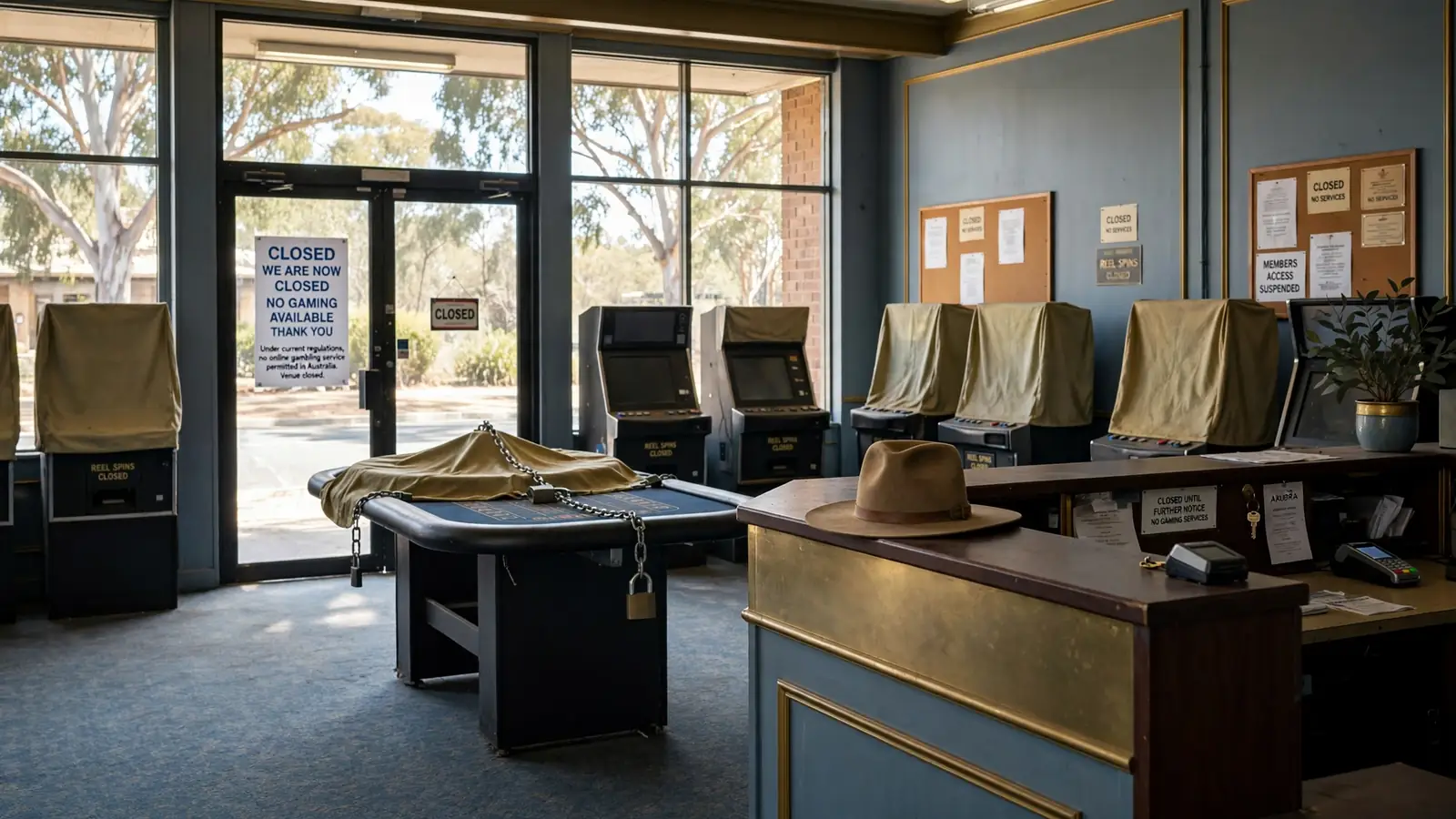
Age remains a separate legal boundary: the minimum age for gambling in Australia, including online pokies, is eighteen. That rule does not create an exception for offshore casino services, nor does an operator’s willingness to accept a customer establish local approval. The central point remains the status of the service itself: Australian law prohibits companies from providing real-money online casino games to people in Australia without a domestic licence, and none is available.
A live table can look immediate and familiar, with a dealer addressing a remote audience as though distance had been abolished. In legal terms, distance has not disappeared; it has become part of the risk. An offshore operator may be visible, accessible for a time, and presented in the language of a local market. None of those qualities amounts to domestic licensing, and none supplies an Australian route to recover winnings if a dispute ends badly. A polished room. A distant jurisdiction.
No Legal Recourse
If an offshore casino refuses to pay winnings, Australian players have no legal recourse in Australia against that operator.
Bonuses: The Turnover Behind the Welcome
A welcome bonus is presented as an addition to a balance. Its practical value, however, depends less on the headline amount than on the wagering requirement attached to it: the amount that must be bet before bonus-related winnings become eligible for withdrawal. The multiplier turns a sum that looks immediate into a commitment to keep playing.
That distinction matters in any offer described as a live-dealer bonus. The label says where the promotion is meant to apply; it does not explain how much turnover is required, which balance the multiplier applies to, or what happens if the conditions are not completed. The welcome is the visible part. The arithmetic is the contract.
The multiplier changes the scale
A specialist casino review advises treating a wagering requirement of 35x or less as a more restrained threshold, and describes anything above 40x as punishing. That is an assessment, not a universal industry rule. The useful point is the scale: a multiplier is not a small administrative detail. Applied to a bonus, it can require many times the advertised sum in bets.
Consider the review’s example of a $500 bonus carrying a 40x requirement. The resulting turnover is $20,000 before a cent of the winnings can be withdrawn. The bonus is still described as $500, but the condition makes clear that the amount is not simply cash added to a player’s pocket. It is conditional credit whose value depends on completing a substantial sequence of betting.

A different calculation applies when the requirement covers both the deposit and the bonus. With a $500 deposit and a $500 bonus, a 35x multiplier on the combined $1,000 produces $35,000 in required bets. The multiplier is lower than in the first illustration, yet the required turnover is higher because it is applied to a larger base. Reading “35x” without checking what it multiplies can therefore give a misleading impression.
The two examples expose the detail that promotional language tends to compress: the base amount, the multiplier and the point at which the obligation is considered complete. A percentage match or a generous-sounding bonus amount cannot answer those questions. Nor does a smaller multiplier automatically mean a smaller wagering burden. The underlying sum matters just as much.
“No deposit” is not the whole condition
A no-deposit offer sounds distinct because it does not begin with a qualifying deposit. But that phrase alone says nothing about the amount of wagering required, the eligible activity, or any cap on cashable winnings. It describes one feature of entry, not the full terms or the eventual value.
The same caution applies to free spins. A specialist casino review notes that an offer of spins may limit the amount of winnings that can be cashed out. A balance displayed after play may therefore not represent the amount that can ultimately be withdrawn. The cap, if one applies, belongs alongside the wagering rule in any honest calculation of value.
These conditions can also interact. A bonus might require turnover and separately restrict the amount of winnings that can be retained. In that case, completing the wagering requirement would not by itself establish that every displayed win is available as cash. Each clause answers a different question: how much must be bet, what activity counts, and what sum remains eligible afterward.
Bonus Turnover Calculation
Determine if the multiplier applies to the bonus alone or the combined deposit and bonus.
Multiply the base amount by the wagering requirement (e.g., $500 bonus × 40x = $20,000).
Compare the resulting turnover requirement against the advertised bonus amount to understand the actual workload.
Read the arithmetic before the headline
A careful comparison begins by locating the multiplier and identifying its base: bonus alone, or deposit plus bonus. Then comes the qualifying activity and any maximum on cashable winnings. If any of those terms is absent or unclear, the headline amount cannot carry the weight of a meaningful valuation.
This is especially important when a live-dealer welcome offer is described as “best.” That word can hide incompatible terms: one promotion may have a lower multiplier but apply it to a combined balance; another may advertise a larger bonus while requiring far more turnover. Without the calculation, the ranking is only a gloss.
The figures above are illustrations of how the stated conditions work, not a promise that a particular offer will be available or remain unchanged. Bonus terms are attached to individual promotions, and the arithmetic should be read from the terms governing that offer rather than assumed from its label.
A bonus can still have entertainment value for someone who understands its restrictions. But it should not be mistaken for an uncomplicated cash advantage. The multiplier converts a welcome into a workload, and the workload is measured in bets, not in the size of the banner.
The headline is brief. The obligation is not.
Bitcoin and Crypto: What the Available Evidence Can—and Cannot—Confirm
The phrase “Bitcoin live-dealer casino” joins two separate claims: that an online casino offers live-dealer play, and that it accepts Bitcoin. Adding “crypto” broadens the payment label but does not make either claim more precise. A site’s general reference to digital currency would not, by itself, establish which currency it accepts, how deposits are handled, or whether a live table is available to Australian visitors.

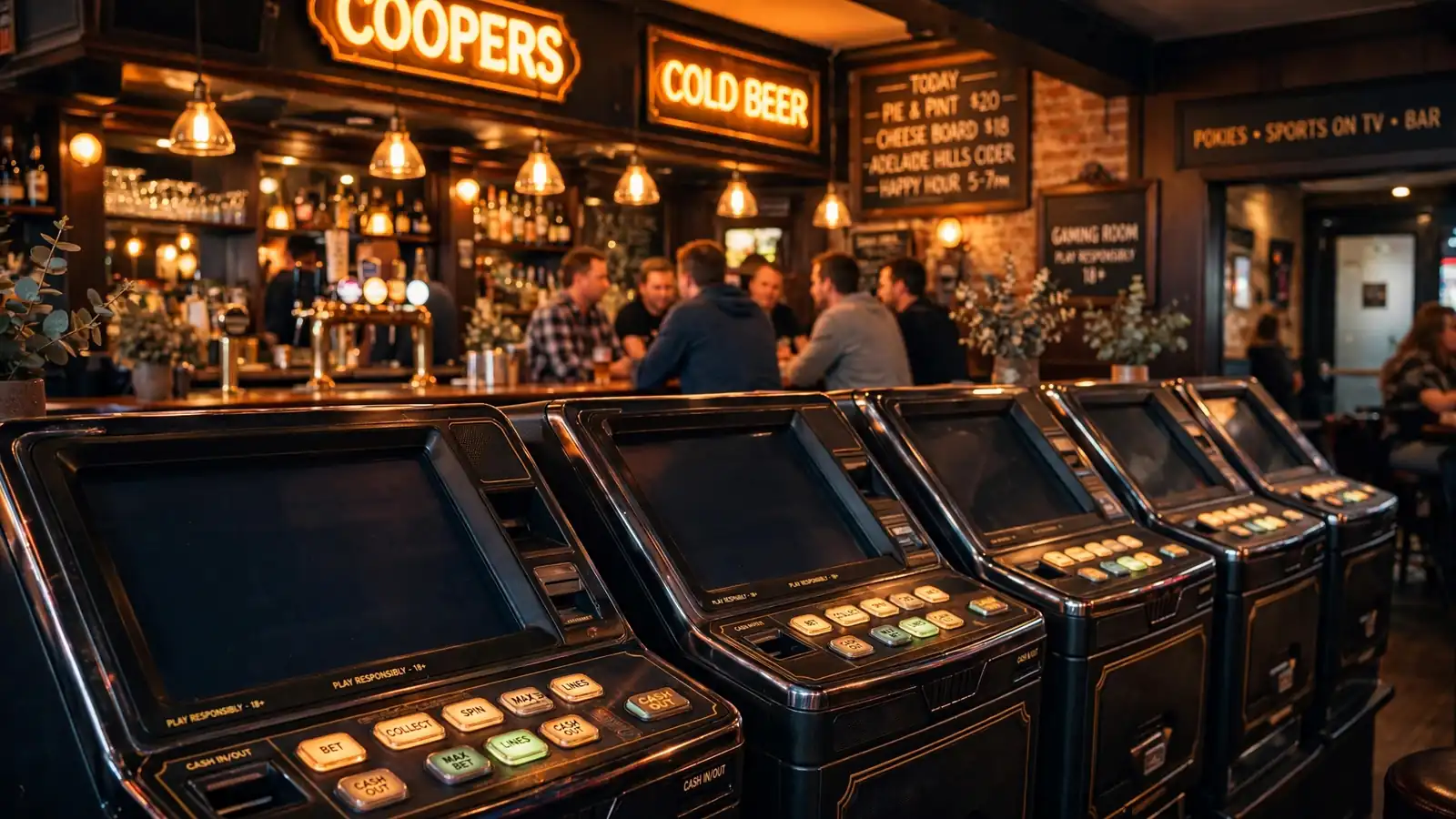
That distinction matters because a payment method is not a licence, a guarantee of fair play or proof that an advertised service can be used in Australia. Bitcoin does not change the legal character of an online casino game. Under the Interactive Gambling Act 2001, operators are prohibited from providing real-money online casino games to people in Australia. The Australian Communications and Media Authority enforces that law and blocks access to illegal offshore gambling sites. A new payment rail does not redraw the boundary.
Crypto language can make a service sound detached from the ordinary institutions that govern money. The impression is misleading. The transaction still has to be accepted by an operator, and the game still has to be offered by that operator. Neither claim follows from the word “Bitcoin” appearing in a casino’s marketing. Nor does a crypto label explain what happens if a withdrawal is delayed or refused. The currency changes the proposed route for payment, not the underlying relationship between player and operator.
There is a further ambiguity in the word “accepting”. It might refer to deposits, withdrawals, or both; it might describe a single currency or a wider group of tokens. Without clear terms, those are different propositions rather than interchangeable descriptions. A live-dealer service may also be described broadly while the actual availability of particular games depends on the operator. The language of a payment page cannot settle that question.
Bitcoin and other cryptocurrencies change the payment route, but they do not exempt offshore operators from the Interactive Gambling Act 2001 or ACMA blocking.
For Australians, the central issue is not whether Bitcoin can be used somewhere in online commerce. It is whether a particular operator is offering real-money casino play to people in Australia, a service that the law prohibits operators from providing. Offshore websites may be subject to access blocking, and a crypto payment does not exempt them from that framework. The technology may travel across borders with little ceremony. The law does not travel with it in the same way.
So a claim about a Bitcoin-funded live table needs more than a joined-up label. Payment, game availability and legal status are separate matters. Treating them as one can turn a neat phrase into a false assurance. The vocabulary is easier than the verification.
Live Dealer Games Without an Invented Catalogue
“Live dealer” sounds like a description of what happens at a table: a dealer conducts a game while players join remotely. But the label is not a catalogue. It does not, by itself, establish which games a platform offers, how a table operates or whether a particular service is available in Australia. The distinction matters because familiar language can make an unverified offer seem settled.
The phrase also carries a suggestion of presence. A dealer, a table and a game appear to bring the social ritual of a casino into a digital setting. Yet the category name alone says little about the experience behind it. It cannot confirm the details of a table, the rules applied there or the conditions under which it can be accessed. A polished label may be precise about its marketing and vague about everything else.


That gap is especially important in a market where online casino-style games are prohibited services when offered to people in Australia. The Interactive Gambling Act 2001 places the legal restriction on operators providing those services. A live presentation does not turn an online casino game into something outside that category. Nor does a platform’s description settle whether its offering is lawful for Australian residents.
This is not a small distinction between wording and presentation. The word “live” can sound like a quality claim, as if it guarantees immediacy or a particular kind of interaction. It does not. It identifies a broad format, not a standard of fairness, transparency or player protection. Those qualities require evidence beyond a name.
The same caution applies to the word “platform.” It may refer to the place where games are presented, but the term says nothing on its own about the provider, the content or the safeguards attached to a service. A list of live-dealer games would be useful only if each entry could be tied to evidence about what is actually offered. Without that, a long catalogue would trade accuracy for appearance.
There is a social history tucked inside the appeal of the format. Casinos have long sold more than rules and outcomes: they sell atmosphere, ceremony and the sense that a game is happening somewhere beyond the player’s own room. Digital language borrows that promise. But atmosphere is not a legal status, and a dealer shown on a screen does not supply the protections that a domestic regulator would provide.
For Australian readers, the sensible description is therefore a limited one: live dealer is a category label for online casino-style play, not proof of a particular game or a reliable signal of its conditions. The category can be discussed without pretending that every platform carries the same tables, or that its language verifies what happens behind the screen.
A label is not a safeguard.
Live Dealer Labels
- “Live dealer” describes a format, not a guarantee of fairness or transparency.
- A live presentation does not make an online casino game lawful under Australian law.
- The term “platform” does not verify the provider, content, or available safeguards.
- A visible dealer does not replace the protections provided by a domestic regulator.
Reviews, Providers and the Limits of a Free Trial
A casino review is often presented as a verdict, though its useful work is closer to accounting: separating what has been observed from what has merely been promised. A polished page can describe a live table, a software supplier or a trial mode with equal confidence. Those descriptions are not interchangeable forms of proof.
For a live-dealer service, the word “provider” can refer to the company supplying games or to the operator presenting them. The distinction matters. A supplier’s name, even when genuine, does not establish which games an operator carries, whether a particular table is available in Australia, or what conditions attach to play. A review that blurs those separate claims turns a label into evidence. It is a small sleight of hand, and not one performed at the table.
The same care applies to reviews themselves. A useful account should make clear what it is assessing: the operator, its stated game catalogue, or an individual product. It should keep claims specific to the service being discussed rather than borrowing the reputation of a software name. General statements about a provider cannot settle practical questions about an operator’s offer. Nor does confident wording make a claim current or independently checked.
“Free” is another word that asks for definition. In ordinary use, it may mean a demonstration mode without a real-money stake; it may also appear beside a promotional offer with conditions. Those are different arrangements. The label alone says little about whether a product can be tried, what it contains, or whether any winnings can be withdrawn. In other parts of casino marketing, free-spin offers may carry a cash-out cap; the attractive adjective does not remove the fine print.

A free trial also has a limited job. It can show how an interface behaves or how a game is presented, but it cannot establish the fairness of a real-money service, the operator’s treatment of withdrawals, or the protections available to an Australian player. A demonstration is not a licence, and a familiar provider name is not a guarantee of recourse. The law’s attention is directed at operators, not at the decorative certainty of their product pages.
There is a social history in these labels. Gambling has long been sold through the language of access: a seat at the table, a look behind the curtain, a chance to try before committing. Online, the same invitation arrives as a button or badge. Its apparent lightness can obscure the boundary between seeing a game and entering a real-money service. Reviews are most credible when they keep that boundary visible, and least useful when they turn vocabulary into reassurance.
A name is not a test. A trial is not a safeguard.
Roulette on a Phone: The Mobile Question
A phone changes the shape of a roulette session, not the rules that govern the service behind it. The small screen makes the practical question seem simple: can a live roulette table be used on a mobile device? But that question contains several different ones. There is the ability to open a site, the ability to reach a particular table, and the ability to follow the action clearly enough to make a considered decision. They are not interchangeable.

A live dealer game is presented as a table hosted by a person, rather than as a purely automated game. On a phone, that distinction matters because the table’s presentation must fit a compact screen. The word “mobile” by itself does not establish whether a site has a dedicated app, whether its pages adapt to a browser, or whether a roulette table is available in either format. Those are separate features, not consequences of the label.
Nor does the general category of live roulette establish a particular layout, dealer, or set of table options. Roulette has a familiar public image: a wheel, a ball, a dealer’s hand, and the attentive pause before the result. Familiarity can make a product sound more definite than it is. A description of live roulette is not, on its own, a description of a specific mobile experience.
There is also a difference between reaching a service and having meaningful safeguards around it. Australia has no domestic licence for online casinos. Under the Interactive Gambling Act 2001, operators cannot lawfully provide real-money online casino games to people in Australia. A change from computer to phone does not alter that boundary. Australian players may face no criminal liability for playing offshore, but they have no legal recourse in Australia if an offshore casino refuses to pay winnings.
That distinction is especially important when a service is designed to feel immediate. A phone can make a remote table feel close at hand; it cannot make the operator locally accountable. BetStop does not bind offshore casino sites: the scheme applies to Australian-licensed operators, and there is no Australian-licensed online casino.
Mobile access is therefore best understood as a technical question, not a mark of approval or protection. A site appearing on a phone says nothing, by itself, about its legal standing, its handling of a dispute, or the exact roulette experience it offers. In this market, the screen is the easy part. The boundary remains where it was.

Real-Money Play and the Uneven Risk
Real-money play at a live-dealer table carries a distinction that can disappear behind the familiar language of casino accounts and wagers: the operator’s legal position and the player’s exposure are not the same thing. Under Australia’s approach, the law is directed at companies providing prohibited online gambling services, rather than at individual players. That does not turn an offshore service into a locally protected one.
The difference becomes sharpest when winnings are disputed. An Australian player who is refused payment by an offshore casino has no legal recourse in Australia. The wager may have been made from an ordinary home, on an ordinary screen, with the dealer appearing in real time; none of that creates a domestic authority able to compel the operator to pay. The interface can feel immediate. The remedy is not.
That is the unevenness in real-money live-dealer gambling: the operator is the party the law targets, while the player may still bear the practical cost of a broken promise. Legal rules do not automatically supply a route to recover money from a business beyond the country’s reach. Nor does the fact that a player is not the target of the prohibition amount to a guarantee that a dispute can be resolved locally.
The word “real” in real-money casino play refers to the stakes, not to the strength of the player’s protection. A live dealer can make a remote game feel less abstract than a digital interface, but the human presence on screen does not change who controls the account or where a complaint can be pursued. A table streamed into a home is not a local institution.
Attention: The lack of criminal liability for the player does not mean there are safeguards in place; the financial risk remains with the customer.
This is why the financial question cannot be reduced to whether a site accepts Australian customers. Access and recourse are separate matters. An offshore operator may be reachable from Australia; if it withholds winnings, Australian players have no domestic legal remedy. That absence is not a minor condition tucked behind the game. It is part of the risk attached to staking money there.
The distinction is plain, though not comforting: the player is not the law’s target, yet the player may be left to absorb the loss. A live table does not make that boundary less real.
Blackjack at a Live Table: No Verified Table List
Blackjack has a familiar shape: a dealer, cards, decisions made against the dealer’s hand. Put a camera between that table and a remote player, and the game acquires a new setting, but not a different legal status in Australia. The Interactive Gambling Act 2001 treats online blackjack supplied to people in the country as a prohibited interactive gambling service. The law places the burden on the operator, not on an individual player.
That distinction matters. A service can be unlawful to provide without making the player the person the statute targets. It does not, however, create a protected domestic market. Australia has no licensed online casino, and a player who is not paid by an offshore operator has no Australian legal recourse to recover the winnings. The apparent simplicity of a card game does not simplify that exposure.
The Australian Communications and Media Authority enforces the Act and blocks access to illegal offshore gambling sites; internet service providers must comply with its blocklist. A web page or table description appearing online is not proof that a service is lawful, available, or subject to Australian oversight. Nor does the word “live” supply any assurance about how a table is run. It describes a format, not a safeguard.
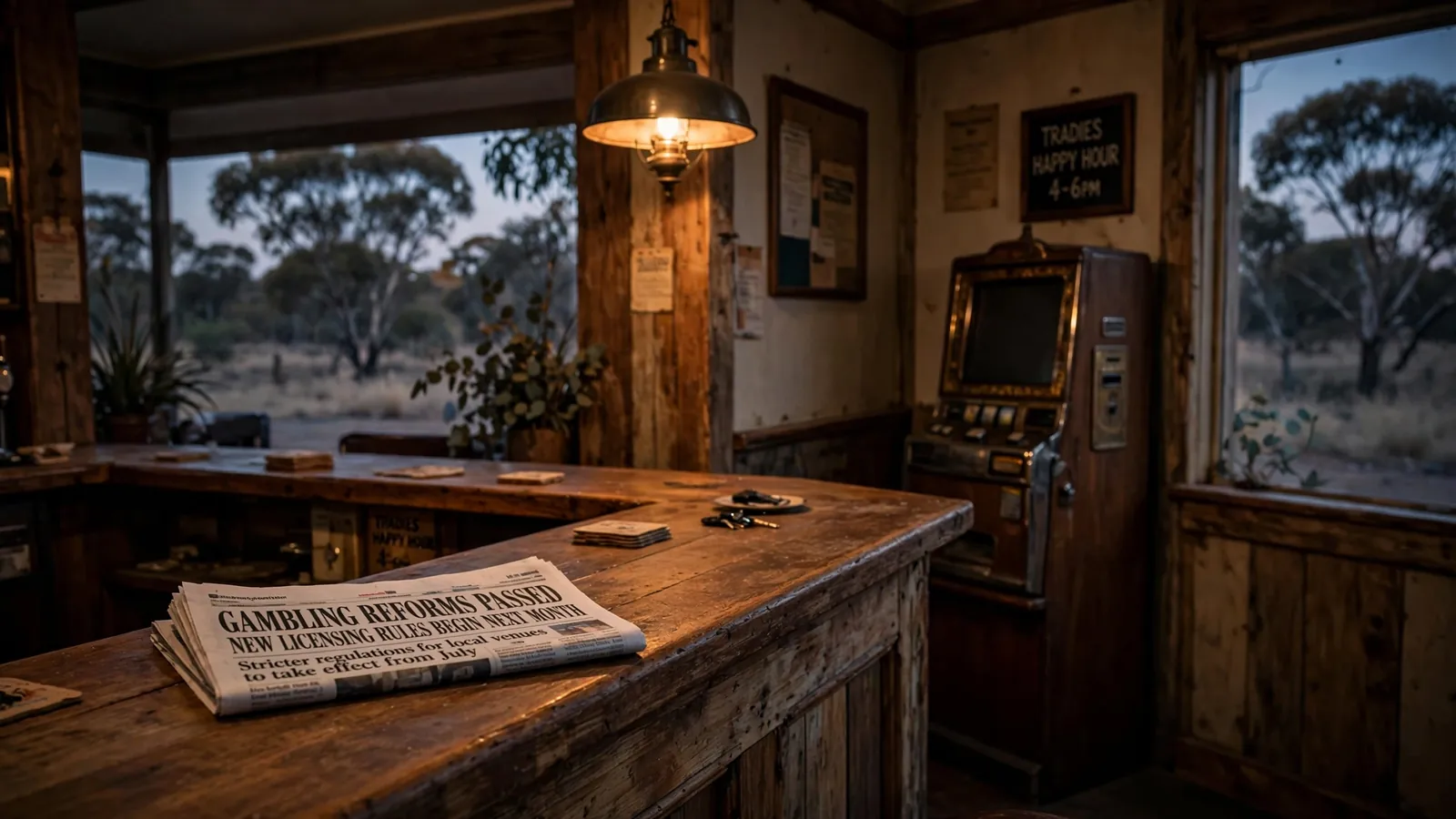
Blackjack also has a particular appeal because its decisions seem legible. Cards are visible; choices happen in sequence; the rules can be learned. That visibility may make a remote game feel less opaque than a machine game. Yet a visible dealer is not the same as an accountable local operator. The decisive question is not merely what happens at the table, but who is responsible when the account, payment, or result becomes disputed.
For Australians, that responsibility sits across a legal boundary. The prohibition governs operators offering online casino games to people in the country, while enforcement includes blocking offshore sites. These measures do not turn an offshore table into an Australian-licensed one, and they do not supply local recourse if a dispute arises. Familiar rules, unfamiliar protections.
There is no basis for treating blackjack as an exception to the wider category of online casino games. Its cards, dealer and measured pace may give it the air of a traditional table, but the setting is still an online gambling service. In Australia, the law draws the line at the service being provided, not at whether the game looks recognisable.
Casino Software, Withdrawals and the Paperwork Before Payout
Software names and polished interface claims can make an offshore casino look more knowable than it is. A live video feed may show a table and a dealer, but it does not, by itself, establish who operates the service, how disputes are handled or whether a payout will arrive. Nor does the word “software” settle those questions. A game provider’s name, where one is disclosed, is not a substitute for evidence about the operator’s conduct.
Common Withdrawal Requirements
Casinos often require identity verification via photographs of ID, proof of address, and selfies. Additionally, some operators impose weekly or monthly withdrawal limits, typically between $5,000 and $10,000.
The same caution applies to live-dealer bonuses. A promotional label says little about the practical business of getting funds out; the conditions attached to an offer are a separate matter. Here, the more consequential detail is what happens after a balance is ready to withdraw: identity checks, documentary demands and any cap on the amount paid over a set period.
A specialist review reports that casinos commonly require identity checks before a first withdrawal. The process may involve a photograph of an identity document, proof of residential address and, in some cases, a selfie with the document. These checks can be part of an operator’s account procedures, but their existence is not a promise that a withdrawal will be approved. Documents need to be verified before the first cash-out, and an account holder may face delay if the requested material is incomplete or inconsistent.
Then there is the ceiling. A specialist review describes some casinos as setting weekly or monthly withdrawal limits in the range of $5,000 to $10,000. Under such a cap, a $50,000 jackpot could be paid in instalments over several years rather than as one transfer. The striking part is not the arithmetic; it is the change in what “winning” means when access to the money is rationed by the operator.
These figures are not a universal schedule. Limits and document rules belong to each operator’s terms and can change; a software badge or a lively table cannot confirm them. The relevant paperwork is the withdrawal policy, including the cap, the verification steps and the rules for handling a pending cash-out. Those details deserve attention before any deposit, not after a large balance has become a negotiation.
In Australia, that distinction carries particular weight: offshore casino operators are not locally licensed, and Australian players have no domestic legal recourse if one refuses to pay winnings. A payout policy is not protection. It is only a description of what the operator says it will do.
“Top” Live Dealer Sites and the Problem of an Empty List
When choosing a live dealer casino online in Australia for 2026, it helps to check the specific details available for each operator, such as licensing, payment speeds and minimum deposits. Use these notes as a starting point for deciding what to look into further.
License: Curacao · Payout speed: crypto 30-60 minutes, fiat 1-5 days · Min. deposit: A$10 Wild Tokyo lists a A$10 minimum deposit and gives separate payout estimates for crypto and fiat: 30–60 minutes and 1–5 days, respectively. Its listed licence is Curacao.
License: Curacao Golden Pokies lists a Curacao licence. This makes its licensing jurisdiction the key available detail to consider.
License: international iGaming licence – jurisdiction not named in the source · Payout speed: PayID 1-24 hours · Min. deposit: A$30 (PayID from A$10) House of Pokies lists an international iGaming licence, though the source does not name its jurisdiction. PayID payouts are listed at 1–24 hours, with a A$30 minimum deposit or A$10 when using PayID.
License: Curacao eGaming (Dama N.V.) JeetCity Casino lists a Curacao eGaming licence under Dama N.V. This provides a specific licensing detail for readers to consider.
License: Curacao Gaming Control Board JustCasino lists a Curacao Gaming Control Board licence. Its licensing information is the available detail to weigh when considering the operator.
License: Curacao Gaming Control Board OGL/2023/176/0095 (Hollycorn N.V.) Rollero Casino lists a Curacao Gaming Control Board OGL/2023/176/0095 licence under Hollycorn N.V. The licence reference is its specific listed credential.
License: Curacao (operating since 2017) · Min. deposit: A$20 Uptown Pokies lists a Curacao licence, has been operating since 2017, and sets its minimum deposit at A$20. These details offer a concise snapshot of its stated history and entry point.
License: Curacao Gaming Authority (Jumpman Gaming Ltd) DragonSlots Casino lists a Curacao Gaming Authority licence under Jumpman Gaming Ltd. This identifies both the stated licensing body and the company named alongside it.
License: Curacao Gaming Control Board OGL/2023/176/0095 (Hollycorn N.V.) Neospin lists a Curacao Gaming Control Board OGL/2023/176/0095 licence under Hollycorn N.V. The licence reference is the specific detail available for assessing the operator.
Payout speed: crypto under 1 hour, PayID 1-3 business days · Min. deposit: A$20 (A$30 to qualify for the bonus) Ricky Casino lists crypto payouts in under an hour and PayID payouts in 1–3 business days. Its minimum deposit is A$20, rising to A$30 to qualify for the bonus.
A ranking of live-dealer casinos can look like a piece of consumer guidance: several names, a few distinctions, then a quiet nudge towards one choice. In Australia, that familiar format carries a problem more substantial than a missing scorecard. There is no Australian-licensed online casino. A list labelled “top” cannot therefore be read as a league table of locally licensed services.
The word itself does little work. It may suggest that one site has been tested against another, that standards have been checked, or that a place near the top amounts to some kind of assurance. None of those meanings follows from a heading. A ranking is only as useful as its criteria and the evidence behind them; without those, ordering names lends an appearance of certainty without supplying its substance.
That distinction matters particularly in a market where the legal boundary is not a minor footnote. Australian law prohibits operators from providing real-money online casino games to people in the country, and the absence of a domestic licensing system leaves no locally licensed casino for a “best” list to identify. Offshore services may use language aimed at Australian customers, but that language does not turn them into Australian-regulated businesses. Nor does inclusion in a ranking amount to official approval.

A reader looking for a casino with live dealing is often trying to reduce a large, uncertain field to a manageable choice. The trouble is that a neat list can conceal what it cannot establish. A polished description, prominent placement or confident label does not, by itself, demonstrate local authorisation or create domestic protections. Editorial presentation is not regulation.
So “top live dealer casinos” is an easy phrase to print and a harder promise to honour. In this setting, a responsible account has to distinguish a ranking from a verified endorsement, and neither should be mistaken for a list of Australian-licensed online casinos. That may make for less satisfying browsing. It is also more honest about what the label can mean.
The empty space matters.
How do I know if an online casino is safe to play at?
There is no Australian-licensed online casino, and an offshore site accepting Australian players does not have Australian authorisation. A foreign licence does not provide Australian oversight or a local legal route to recover winnings if the operator refuses to pay.
What is the legal age for online gambling in Australia?
You must be at least 18 to gamble in Australia, including on online pokies.
What’s the best strategy for playing pokies?
There is no strategy that can predict or control a spin: each one is an independent random event. The same pokie may also have different return percentages at different casinos.
What does “wagering requirement” actually mean?
It is the amount you must bet before bonus-related winnings can be withdrawn. For example, a $500 bonus with a 40x requirement calls for $20,000 in bets; if the requirement applies to a $500 deposit plus a $500 bonus at 35x, the turnover is $35,000.
Are online pokies rigged?
Each spin is determined by a random number generator, so one spin does not determine the next. However, some providers let casinos choose between different return-to-player settings for the same game.
What is the cost-benefit calculation of casino promotions?
Compare the bonus with the turnover required to unlock withdrawals: for example, a $500 bonus at 40x requires $20,000 in bets. A requirement of 35x or less is a more restrained threshold, while anything above 40x is considered punishing; also check whether free-spin winnings are capped.
Written by the editors at Cuntspin Casino.