Best pokies in Tasmania: venue hours and online limits
 Available in AU
Tasmanian venue rules, random outcomes and Australian online protections shape what searches for pokies can reliably establish.
Table of Contents
- Open Now? What Venue Rules Can—and Cannot—Tell You
- What “Best” Can Mean When Pokie Returns Vary
- Airport and CBD Searches Need Local Details
- Venues, Gaming Machines and the Record of Harm
- The Spirit of Tasmania and the Online-Casino Distinction
- Opening Hours Are Not the Same as 24-Hour Access
- Pokies in Tasmania: Random Spins, Not Reliable Patterns
- Online Pokies Searches and the Limits of Australian Protection
- CBD Clubs and Responsible-Gambling Oversight
- Cashless Searches, PayID and a Geographic Mismatch
Open Now? What Venue Rules Can—and Cannot—Tell You
“Open now” is a practical question, but it has a short shelf life. A venue’s hours can change, and a listing that was accurate earlier may not describe the present moment. Searches for pokies in Tasmania often fold several things into one: whether a venue is open, whether its gaming machines are operating, and whether a particular place has the machines being sought. Those are separate matters, and an answer to one does not settle the others.
The rules reported for larger gaming-machine venues concern staffing while machines are operating, not a timetable for the public. A report by regionriverina.com.au says that, from 1 July, venues with more than 20 gaming machines are required to have a dedicated responsible gambling officer, or RGO, on duty whenever those machines are in operation. That describes a condition attached to machine operations. It does not say when a Tasmanian venue opens its doors, when its machines begin operating, or whether either is happening at a particular moment.
The distinction is easy to lose because opening hours and operating rules both use the language of time. One concerns a business’s daily schedule; the other sets a staffing requirement during machine operation. A venue could satisfy the latter during whatever hours its machines operate, without that rule revealing what those hours are. The regulation is not a clock.
The same report describes a one-month grace period for venues to take down signage and put the responsible gambling officer arrangements in place. That period is about transition to the reported requirements. It is not a promise that venues will open during a particular period, nor a measure of how early or late pokies may be operating. A grace period belongs to implementation, not to the daily schedule.
This matters when the wording is urgent: a person may want to know whether pokies are available now, early in the morning, or late at night. The RGO requirement cannot answer any of those questions. It applies only to venues above the stated machine threshold, and only while their machines are operating. It does not establish whether a smaller venue has machines, whether a larger one is currently open, or what hours any named venue keeps.
The search for “pokies open now Tasmania” therefore calls for current venue information, not an inference from a rule about staffing. The most useful detail is a time-specific opening notice from the venue itself or a current listing that gives its hours. Even then, opening the building and operating the machines need not be identical events. An establishment may have different areas, services or schedules; the word “open” can conceal that distinction.
Early-opening searches invite the same caution. Phrases about pokies being available at six or seven in the morning express a desired time, not evidence that a Tasmanian venue offers access then. The RGO rule gives no early-start time. Nor does it say that a venue must run machines continuously once it has opened. A staffing obligation applies when machines are operating; it does not require them to operate.
Late-opening searches work no differently. The size threshold and officer requirement do not set a closing time, authorise round-the-clock operation, or confirm that machines remain available after other parts of a venue close. Those details belong to the venue’s own current schedule. A general rule can describe a condition of operation without specifying the beginning or end of that operation.
Staffing requirements for venues with more than 20 gaming machines, such as the presence of a responsible gambling officer, do not establish the venue’s public opening hours or the specific times machines are operating.
Names can be just as misleading as times. A search including “Crown Tasmania pokies” does not, by itself, establish that a named brand corresponds to a Tasmanian venue, that the venue has gaming machines, or that it is open. Familiarity is not a location check. The dependable answer to an immediate-hours question must identify the actual place and the current status of the service being sought, rather than rely on a name or a staffing requirement.
There is a social purpose behind the RGO requirement: the presence of a designated officer connects machine operation with a responsible-gambling function. That is a meaningful condition, but it is not a substitute for an opening notice. In public life, rules often define what must accompany an activity, while leaving its schedule to other arrangements. Here, the officer requirement speaks to the circumstances under which machines operate, not to the public timetable.
For searches about whether Tasmanian pokies are open now, the useful distinction is plain: current hours answer when a venue is open; the reported RGO rule says what staffing is required at certain larger venues while machines operate. One cannot be used to calculate the other. The regulation has a job. So does the clock.
What “Best” Can Mean When Pokie Returns Vary
For players in Tasmania looking at pokies in 2026, operator details can help frame what to check before choosing a site. This list offers a concise reference based on the information available for each operator.
License: Curacao · Payout speed: crypto 30-60 minutes, fiat 1-5 days · Min. deposit: A$10 Wild Tokyo lists a Curacao licence and an A$10 minimum deposit. Its stated payout times are 30–60 minutes for crypto and 1–5 days for fiat.
License: Curacao Golden Pokies is listed with a Curacao licence.
License: international iGaming licence – jurisdiction not named in the source · Payout speed: PayID 1-24 hours · Min. deposit: A$30 (PayID from A$10) House of Pokies lists an international iGaming licence, though the source does not name the jurisdiction. PayID payouts are stated as 1–24 hours, and the minimum deposit is A$30, or A$10 with PayID.
License: Curacao eGaming (Dama N.V.) JeetCity Casino is listed with a Curacao eGaming licence held by Dama N.V.
License: Curacao Gaming Control Board JustCasino is listed with a Curacao Gaming Control Board licence.
License: Curacao Gaming Control Board OGL/2023/176/0095 (Hollycorn N.V.) Rollero Casino is listed with Curacao Gaming Control Board licence OGL/2023/176/0095, held by Hollycorn N.V.
License: Curacao (operating since 2017) · Min. deposit: A$20 Uptown Pokies is listed as operating since 2017 and has a Curacao licence. Its minimum deposit is A$20.
License: Curacao Gaming Authority (Jumpman Gaming Ltd) DragonSlots Casino is listed with a Curacao Gaming Authority licence held by Jumpman Gaming Ltd.
License: Curacao Gaming Control Board OGL/2023/176/0095 (Hollycorn N.V.) Neospin is listed with Curacao Gaming Control Board licence OGL/2023/176/0095, held by Hollycorn N.V.
Payout speed: crypto under 1 hour, PayID 1-3 business days · Min. deposit: A$20 (A$30 to qualify for the bonus) Ricky Casino lists crypto payouts in under an hour and PayID payouts in 1–3 business days. Its minimum deposit is A$20, or A$30 to qualify for the bonus.
“Best” sounds like a ranking, but a pokie’s title is not enough to establish how much it returns. Some game providers allow casinos to choose between different return-to-player settings for the same game. A specialist review reports that this can leave one title configured differently at different casinos. The name on the screen, then, may be identical while the setting behind it is not.
That distinction matters when comparing pokies in Tasmania. A familiar game name does not, by itself, show what return setting is in use at a particular venue. Nor does a game’s appearance, theme or popularity reveal that setting. Those features can make a pokie recognisable; they cannot settle a question about its return.
The word “best” can carry several meanings. It might mean a game a person enjoys, one whose rules are easy to follow, or one with a return setting that appears more favourable. Those are different judgements, and they should not be collapsed into a single promise of “best-paying” play. A claim about returns needs to relate to the setting in use, not merely to the title printed on the machine.
Even a return setting is not a forecast of what will happen during a particular visit. Each spin is generated as a separate random event, so a previous result does not direct the next one. A run of wins does not make a loss due, and a run of losses does not make a win more likely on the next spin. The machine has no memory in that sense. Patterns may be compelling to the person watching them; they are not instructions from the game.
This is where the search for the best pokies in Tasmania meets a less satisfying truth: a comparison can be meaningful only when it compares like with like. Game title alone is not enough if the same title can be offered at different return settings. And no setting turns a random sequence into a dependable source of results. “Best paying” is therefore not a quality that can safely be inferred from a game’s reputation or a striking session.
Tasmania’s casino and venue language can make the question seem local and concrete: a particular pokie, in a particular place, with a particular return. The important distinction is between the place and the setting. A venue name may identify where a machine is found; it does not explain which return setting has been selected for that game. Likewise, knowing a game’s provider does not establish the configuration used by a casino.
There is a social history tucked inside this technical detail. Gambling has long been presented through visible symbols: machine cabinets, bright themes, names designed to linger in the mind. The setting that shapes a game’s stated return is less visible. That imbalance is not accidental in its effect. The memorable part is the story on the screen; the consequential comparison asks what configuration sits behind it.
Attention: A game’s title or popularity does not reveal its return-to-player (RTP) setting, as some providers allow casinos to choose between different configurations for the same game.
A careful way to think about “best”, then, is as a question of what is being compared and what can actually be known. A title can be compared with another title as entertainment, but a return comparison requires attention to the setting at the casino. And neither comparison can predict the outcome of an individual spin. That is a narrower answer than a ranked list, but a more honest one.
Randomness is not a promise of balance in the short term. Independent spins can produce uneven stretches, and the outcome of one does not compensate for another. The language of “due” wins turns uncertainty into a story of eventual correction; the mechanism itself offers no such assurance.
For anyone weighing what “best” means, the central point is simple: names are not settings, and settings are not predictions. A pokie may be recognisable across casinos, yet its return configuration may differ. The next spin remains uncertain. That is the comparison’s limit—and its most useful starting point.
Airport and CBD Searches Need Local Details
“Near” is a small word carrying a large amount of geography. A venue described as near an airport might be close by road, convenient from a particular terminal, or merely somewhere in the wider area. Without a confirmed address and a clear measure of distance, the label tells little about how practical the trip would be.
The same problem applies to searches for pokies near a Tasmanian airport or inside one. The wording can suggest that a gaming venue is part of the airport, but a search phrase is not evidence of that. An airport name, a map pin and a venue address would need to refer to the same place before the claim could be taken seriously. Even then, distance on a map would not settle questions about the route, transport or access.
Tasmania is not a single point on a map. A request for pokies near Tasmania may mean close to a particular town, a starting point or a destination elsewhere on the island. “Near me” is more useful only when the location being used is accurate and the results identify where each venue actually is. A broad regional label cannot do that work by itself.
The CBD raises a similar difficulty. A city-centre search sounds precise, but it depends on which central area is meant and how far beyond it the word “near” is allowed to stretch. A listing can appear relevant because it uses a familiar place name, while the actual address may tell a different story. A location label is a beginning, not a measurement.
There is also a geographic mismatch in wording that joins Tasmania and Victoria. They are separate states, so a result carrying both names may reflect a search area, a business description or a confused location field. It should not be read as proof that a Tasmanian venue sits near a Victorian address. Search tools are good at assembling words; they are less responsible for the geography implied by them.
For a useful comparison, the basic details are prosaic: the venue’s full address, the town or suburb, and the distance from the specific landmark being considered. A map can help clarify the route, but a pin without a reliable venue identity can create false confidence. Likewise, a phrase such as “airport pokies” may describe a nearby area rather than a facility within the airport itself.
Do
- Check the venue’s full address
- Verify the town or suburb
- Confirm the distance from a specific landmark
Don’t
- Rely on broad labels like “near”
- Assume a venue is inside an airport based on search phrases
- Trust a map pin without a reliable venue identity
This matters because location is not decoration. It shapes the cost and effort of a visit, especially when the destination is unfamiliar. A result that omits its address, blends several places into one label or relies on “near” without saying near what leaves the central question unanswered. The most persuasive description is not necessarily the most useful one.
Tasmania-wide wording can make a listing look broader than its actual reach. North Tasmania, the CBD and an airport are different geographic frames, not interchangeable shorthand. Claims about proximity need a named point of reference and a destination that can be checked. Otherwise, “near” remains an invitation to guess.
A map pin is not a location proof.
Venues, Gaming Machines and the Record of Harm
A venue’s reputation and its responsibilities are different kinds of evidence. A place may be called one of Tasmania’s best pokies venues because of its atmosphere, range or convenience; none of those descriptions explains how the venue responds when gambling begins to cause harm. That question belongs to oversight, not ranking.
A report published by regionriverina.com.au describes a requirement for venues operating more than 20 gaming machines to have a dedicated responsible gambling officer (RGO) on duty while those machines are running. It also says venues are allowed a one-month transition period to take down relevant signage and put the officer arrangements in place. These are reported requirements, not a measure of any individual venue’s performance. The number of machines sets the threshold; it says nothing about whether a venue is welcoming, well run or suitable for a particular person.
The RGO role matters because gambling harm can become visible in ordinary interactions: a patron may show behaviour suggesting that gambling is affecting them or placing them at risk. The point of having a designated officer is institutional. Responsibility is not left entirely to a passing staff member’s judgement or to the patron’s ability to ask for help. The officer is part of the venue’s response while machines are operating.
That does not make oversight a guarantee against harm. A role can be assigned and still depend on how concerns are noticed, handled and recorded. The reported requirement for a gambling incident register addresses another part of the same problem: venues are to document occurrences, including instances in which a patron’s behaviour indicates possible risk or existing effects of gambling harm. Recording incidents turns them into more than private moments between a customer and a staff member. It creates a venue-level record.
A register is not a public scorecard, and its existence cannot establish that one venue is safer than another. Nor does a record alone show what action followed. Its value lies in making incidents legible to the organisation responsible for the machines, rather than allowing every encounter to disappear as an isolated episode. That is a modest form of accountability. Still, it is accountability.
For someone comparing venues in Tasmania, the distinction is useful. A search for the best pokies venue may produce descriptions of amenities or machine choice, but governance asks different questions: whether the venue has the required responsible gambling arrangements, and whether it treats signs of harm as matters to document. Without venue-specific evidence, a broad label such as “best” cannot answer those questions.
The language of regulation is procedural: an officer on duty, a transition period, a register. The human reality is less tidy. Gambling harm may emerge gradually, and a venue’s obligations begin not with a ranking but with what it does when a person’s behaviour signals trouble.
Governance and Oversight
- The RGO requirement applies only to venues with more than 20 machines.
- Gambling incident registers create a venue-level record of potential harm.
- Institutional responsibility reduces reliance on individual staff judgement.
- Regulatory compliance is separate from a venue’s general reputation or ranking.
The Spirit of Tasmania and the Online-Casino Distinction
A question about pokies aboard the Spirit of Tasmania is a question about a particular physical setting: whether gaming machines are available on the vessel. The ship’s name, by itself, cannot answer that. Nor does a search for “Spirit of Tasmania pokies” establish that machines are present. A vessel and a land-based venue are different places, and assumptions about one should not be carried across to the other.
The same distinction matters when a search combines Tasmania with casino language. A request about Crown-branded pokies may refer to a venue someone believes is in Tasmania, while a request for online pokies points to something else entirely: real-money gambling delivered over the internet. Similar words can make those subjects look interchangeable. They are not.
Tasmania does not create a special exception for online casino games. Under the Interactive Gambling Act 2001, companies cannot legally provide real-money online pokies to people in Australia without a domestic licence. No Australian online-casino licences have been issued, so there is no Australian-licensed online casino. A location word in a search, or the use of a familiar venue name, does not change that legal position.
That also puts “no deposit” language in its proper place. A bonus phrase can make an online offer sound separate from ordinary gambling, but it does not turn a real-money online casino into a locally licensed service. The relevant distinction is not whether money is deposited at the outset; it is whether an operator is providing online casino games for real-money play to someone in Australia. The legal status does not hinge on the wording of a promotion.
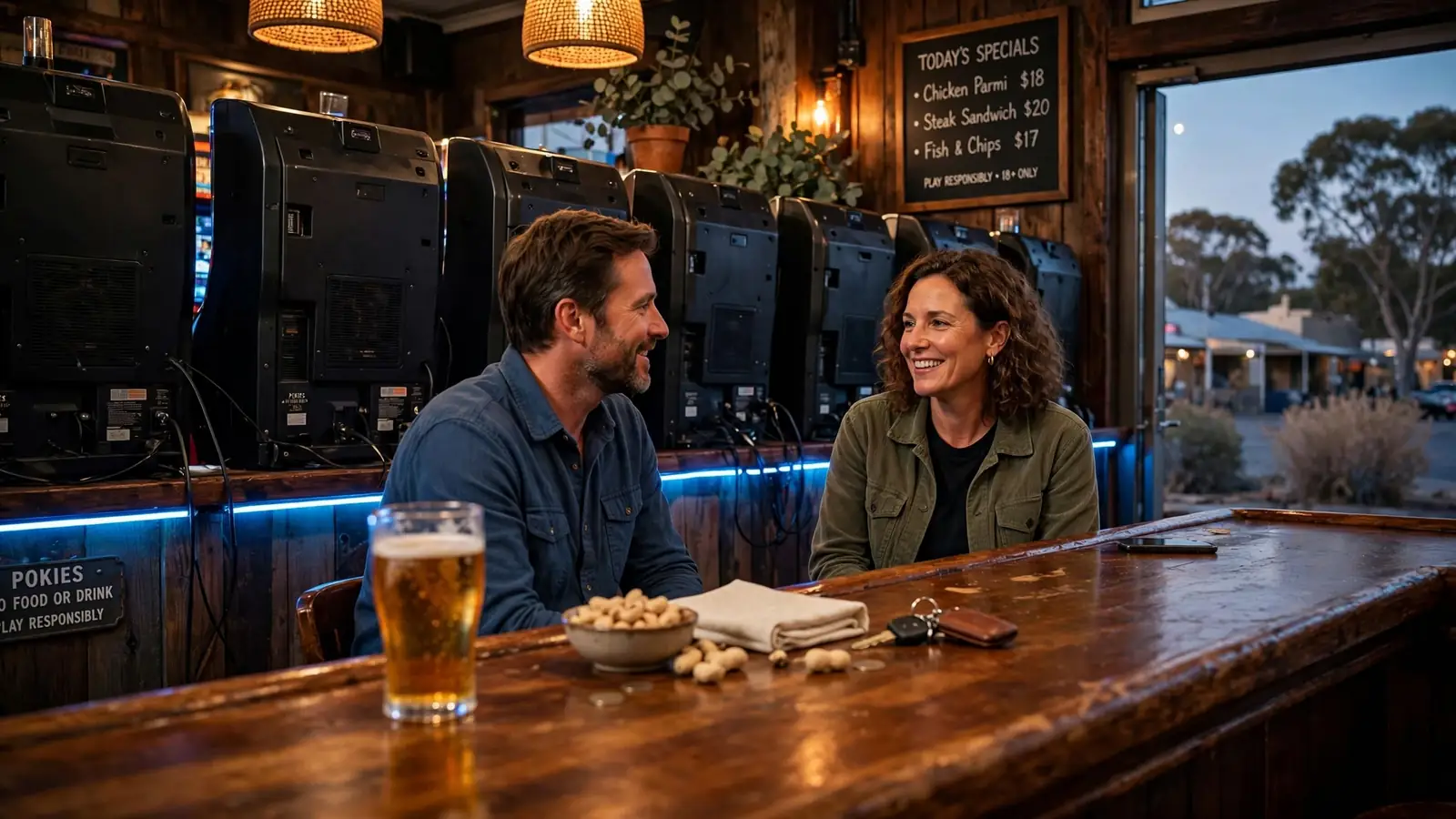
A physical venue enquiry follows a different path. It concerns a specific place and what it offers there, rather than an online service. A name appearing in a search is not proof that a venue is in Tasmania, that it has pokies, or that a vessel carries them. Those details require reliable information about the actual location. The internet is remarkably good at placing words beside each other; geography remains less obliging.
The financial distinction matters too. If an offshore online casino refuses to pay winnings, an Australian player has no legal recourse in Australia to recover them. That is not a small-print variation on the experience of visiting a physical venue. It is a different kind of exposure, attached to a service that lacks a domestic online-casino licence.
So the Spirit of Tasmania question and the online-pokies question should remain separate. One asks what may be available in a named physical setting; the other concerns real-money gambling through an online operator. A venue name, a ship name, or a bonus label cannot settle either question on its own. The legal boundary is plain. The search wording often is not.
Opening Hours Are Not the Same as 24-Hour Access
A venue’s operating obligations and its opening times answer different questions. A staffing rule can describe what must be in place while pokies are running; it cannot establish whether a particular Tasmanian venue is open now, when it closes, or whether it offers access through the night. The distinction matters because “24-hour access” sounds like a simple feature, but it depends on the hours of an actual venue.
A staffing rule is a condition attached to machine operation, not a public timetable; it cannot be used to confirm 24-hour access or current opening status.
A report by regionriverina.com.au describes a requirement taking effect from 1 July: a venue with more than 20 gaming machines is to have a dedicated responsible gambling officer (RGO) on duty whenever those machines are operating. That is a condition attached to machine operation, not a timetable. It does not mean a venue must run its pokies continuously, nor does it identify the opening hours of any particular location in Tasmania.
The difference is easy to lose in a broad phrase such as “pokies hours”. A requirement about who must be present while machines operate may sit beside information about a venue’s schedule, but it is not a substitute for that schedule. The first concerns oversight during operation. The second concerns when doors open and close. One cannot be read as proof of the other.
This is why claims about 24-hour pokies in Tasmania need to be tied to a named venue and current opening information. A general rule applying to venues above a machine threshold does not establish round-the-clock access across the state. Nor can it settle whether a venue is open at a particular moment: operating requirements do not function as a live status notice.
There is a social logic to the distinction. Regulation often describes the conditions under which an activity may proceed, while the public wants to know whether it is available at a particular place and time. Those are separate kinds of information, even when they appear together in a listing. A responsible gambling officer requirement concerns the presence of a designated staff member during machine operation; it says nothing, by itself, about the venue’s daily schedule.
So a claim that a Tasmanian venue has 24-hour pokies cannot be inferred from the RGO rule. Opening times need to be checked against information for the venue itself, and any “open now” status is time-sensitive. A rule about operating conditions may be important, but it is not a clock.
Different questions. Different evidence.
Pokies in Tasmania: Random Spins, Not Reliable Patterns
A pokie’s last result is not a clue to its next one. Each spin is generated separately by a Random Number Generator, so a run of wins does not make another win due, and a stretch of losses does not mean the machine is preparing to pay. The sequence may look like a story. The machinery does not remember it.
That matters when people talk about patterns in Tasmanian venues. A machine’s lights, sounds and near-misses can make outcomes feel connected, as if persistence or timing might reveal a hidden rhythm. But an independent random event has no memory of the one before it. Watching a screen closely can reveal what has happened; it cannot turn that history into a dependable forecast.
Return settings add a different complication. A specialist review reports that some game providers give casinos a choice of more than one RTP setting for the same pokie. As a result, identical game titles can be configured with different stated return percentages at different casinos. The name on the screen, by itself, cannot settle which setting is in use.
RTP is not a promise about an individual visit, session or sequence of spins. It describes a setting for the game, not a schedule of when a result will appear. Even where a percentage is disclosed, it cannot tell anyone what the next spin will do. A long-run measure and a single outcome belong to different scales of time.
Each spin is a separate random event generated by a Random Number Generator; previous results do not influence or predict the outcome of the next spin.
This distinction can also help make sense of searches about maximum bets or cash payouts in Tasmania. A largest permitted stake and a largest possible prize are not measures of whether a machine is due to pay, and neither can be inferred from recent results. Those details would need to be established for the particular game and venue; a general label such as “best pokies” cannot provide them.
The more useful comparison is therefore not a hunt for a lucky sequence. It is a question of what is actually known about the game and its setting, set against what no machine can disclose about an upcoming spin. A familiar title may conceal different RTP configurations, while an apparently meaningful streak remains just a sequence of independent outcomes.
Randomness is not a code waiting to be cracked. It is simply less theatrical than the screen suggests.
Online Pokies Searches and the Limits of Australian Protection
A request for online pokies in Tasmania can sound like a request for a local venue, but the distinction matters. A physical venue in Tasmania and an internet service offering real-money pokies are not governed as interchangeable versions of the same thing. A website’s use of Tasmanian language, or its claim to serve Australian players, does not make it an Australian-licensed casino.
Under the Interactive Gambling Act 2001, operators cannot legally provide real-money online casino games to people in Australia without a domestic licence. No Australian online-casino licences have been issued. The law is directed at the businesses providing the service, rather than imposing a penalty on an individual player simply for using an offshore site. That distinction is not a seal of safety.

Some offshore sites may accept Australians, but acceptance is not the same as Australian oversight. If an offshore casino withholds winnings, a player has no legal recourse in Australia to compel payment. The distance is not merely a matter of time zones or customer-service queues; it is a gap in enforceable protection. A polished site can still leave its customer with nowhere local to turn.
That is why phrases such as “best-paying” or “high-limit” online pokies cannot settle the more basic question of what protection accompanies play. Promotional claims do not create a domestic licence, and a Tasmanian reference in a site’s wording does not establish a Tasmanian base. Nor does the phrase “near Tasmania” make an online service a nearby physical venue. Geography, on a screen, is often decoration.
Australian authorities can act against prohibited services, while internet providers are required to follow the regulator’s blocklist. Blocking is an enforcement measure, not a guarantee that every offshore site is safe or that every attempt to reach one will end in the same way. The legal boundary remains clear even when a website makes it look blurred.
BetStop, Australia’s self-exclusion register, applies to Australian-licensed operators only; it does not bind offshore casinos. Since there are no Australian-licensed online casinos, it should not be treated as a safeguard for offshore online pokies. A protection with no reach into the service being used is a narrow protection indeed.
For anyone seeking pokies in Tasmania, the safer distinction is between researching a physical venue and entering an online real-money service. Search wording may combine both, but the consequences differ sharply. Offshore access does not bring Australian consumer remedies with it. That is the catch.
Legal Risks
Players using offshore online casinos have no legal recourse in Australia to recover winnings if the operator refuses to pay.
CBD Clubs and Responsible-Gambling Oversight
The words “club” and “pokies” can suggest a familiar civic arrangement: a place for meals, company and local events, with gambling folded into the room rather than set apart as a separate destination. In Tasmania’s central business districts, that association is not a directory. A club’s name or social character does not, by itself, establish what facilities it provides.
The more useful distinction is between a venue’s identity and its obligations when gambling harm becomes visible. A report published by regionriverina.com.au describes a requirement for venues to keep a gambling incident register. It is intended to record occurrences, including situations in which a patron’s behaviour indicates they may be at risk of, or affected by, gambling harm. The point is not to turn a person’s distress into an administrative curiosity. It is to make an incident something the venue must recognise and record.
That record-keeping idea reflects a broader shift in how gambling is governed. The older image of responsibility placed almost all weight on individual restraint: a person was expected to know when to stop, while the institution remained mostly in the background. Oversight asks a different question. What does a venue do when signs of harm appear in the place where gambling is taking place? A register cannot resolve the causes of financial or personal distress, but it can make the venue’s response less dependent on memory or discretion alone.
Self-exclusion is another responsible-gambling tool, alongside deposit, loss and session-time limits. These measures are not interchangeable. A limit shapes a person’s permitted activity; self-exclusion is a boundary intended to keep them away from gambling. Their existence does not reveal which facilities a particular club offers, or how a particular venue handles a difficult moment. It does, however, show that responsibility is not only a matter of individual willpower.
A search for the best pokies in a Tasmanian CBD can easily turn a social institution into a set of machines and amenities. That is a narrow portrait. Clubs, where gambling is part of their operations, also sit within expectations about recognising harm and documenting incidents. The register is modest machinery: no grand cure, no dramatic intervention. Still, it changes the record. A concern noticed on the floor is no longer meant to vanish with the shift.
Cashless Searches, PayID and a Geographic Mismatch
“Cashless” can describe more than one arrangement. At a physical venue, it may refer to how transactions are handled on site; PayID, by contrast, is a way to transfer money between bank accounts. The shared word does not make the systems interchangeable, or establish that a Tasmanian venue offers a particular cashless option.
PayID works as an alias layer on Australia’s New Payments Platform. A transfer can be directed using an email address, mobile number or Australian Business Number rather than entering account details. For a real-money online casino transaction, PayID would first need to be linked to a bank account. That describes the payment mechanism, not the legal status of the service receiving funds. PayID support is no proof of a casino licence, fair play or clear information about a pokie’s return.
That distinction matters in Australia. The Interactive Gambling Act 2001 prohibits operators from providing real-money online casino games to people in the country, and no Australian online-casino licences have been issued. PayID’s presence in a payment discussion does not turn an offshore casino into a domestic venue or confer Australian consumer protection. A bank transfer is still a bank transfer; the alias does not alter the destination.
The phrase “Newcastle, Tasmania” also needs care. Newcastle is not evidence of a Tasmanian location simply because the two place names appear together in a request for pokies. A geographic label can be misplaced, ambiguous or carried over from another search. It cannot establish where a venue is, what machines it has, or whether it accepts cashless payments.
So the useful distinction is modest but important: PayID names an account-to-account transfer method, while cashless venue arrangements concern transactions at a physical site. Neither phrase, by itself, verifies a Tasmanian venue’s facilities. Geography, like payment terminology, is not a licence to fill in the blanks.
Are online pokies legal for Australian players?
Yes, Australians can legally play on offshore sites that accept them, but companies cannot legally offer real-money online pokies to Australian residents without a domestic licence, and none have been issued. Players have no legal recourse in Australia if an offshore casino refuses to pay winnings.
What is the legal age for online gambling in Australia?
You must be 18 or older to gamble online in Australia.
What is the cost-benefit calculation of casino promotions?
Check the wagering requirement against the bonus amount: a $500 bonus with a 40x requirement means $20,000 in bets before you can withdraw winnings. If the requirement applies to a $500 deposit plus a $500 bonus at 35x, it means $35,000 in bets; free-spin winnings may also have a cash-out cap.
What does “wagering requirement” actually mean?
It is the amount you must bet, usually expressed as a multiplier, before bonus winnings can be withdrawn. For example, a $500 bonus with a 40x requirement requires $20,000 in bets.
Created by the ”Cuntspin Casino” editorial team.