Pokies Parlour Casino in Australia: Meaning and Access
 Available in AU
A parlour describes a physical gaming area, while casino licensing is tied to the state or territory where a venue operates.
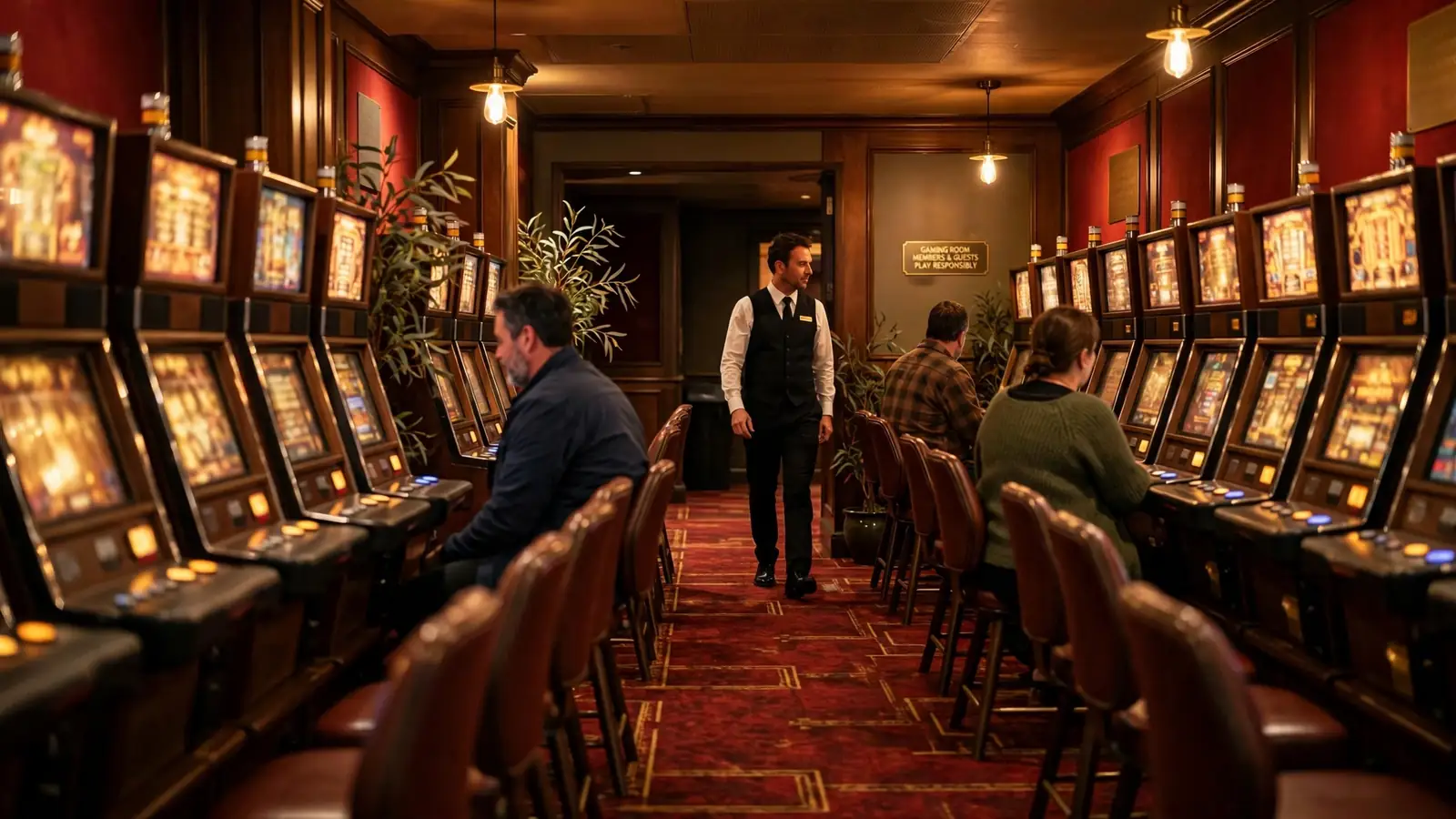
Table of Contents
- A Parlour Is a Place, Not an Online Casino
- Where Australian Casino Halls Sit on the Map
- The Machines Behind the Word “Pokies”
- VIP Language and the Reality of Casino Access
- Sign-Up Bonuses, Domains and the Fine Print
- Free Chips and Spins: Promotional Words, Not Proof
- What a Parlour Casino Review Can Actually Verify
- Bonus Claims in an Australian Setting
- Playing Online, and the Limits of a Working Website
- Real-Money Casino Searches and the Australian Boundary
A Parlour Is a Place, Not an Online Casino
In Australia, “pokies parlour” points first towards a physical setting: a room or floor within a casino where electronic gaming is part of the venue’s activity. The word parlour gives the place a smaller, more intimate sound than casino. It can suggest a separate room, a familiar local haunt, or simply an area set aside for play. But it is not, by itself, a formal licence category. The legal identity of a venue comes from its jurisdiction and licence, not from the name used in conversation.
That distinction matters because the same words can be carried from a building to a web page with little effort. An online operator may borrow the language of parlours and casino floors, but a familiar label does not turn a website into a land-based venue. Nor does it confer Australian licensing. In Australia, casino regulation belongs to the state or territory where a property operates, and each casino holds a licence issued by that local jurisdiction. The system is geographically grounded: a venue is authorised through the laws of the place in which it stands.
Choosing a pokies parlour casino in Australia involves checking the details that matter to you, such as licensing and the payment information available. This list offers a concise reference for reviewing the operators featured on this page.
License: Curacao · Payout speed: crypto 30-60 minutes, fiat 1-5 days · Min. deposit: A$10 Wild Tokyo lists a Curacao licence and a minimum deposit of A$10. Its stated payout times are 30–60 minutes for crypto and 1–5 days for fiat.
License: Curacao Golden Pokies lists a Curacao licence. This is the licensing detail provided for this operator.
License: international iGaming licence – jurisdiction not named in the source · Payout speed: PayID 1-24 hours · Min. deposit: A$30 (PayID from A$10) House of Pokies lists an international iGaming licence, though the jurisdiction is not named in the source. PayID payouts are stated at 1–24 hours, and the minimum deposit is A$30, or A$10 via PayID.
License: Curacao eGaming (Dama N.V.) JeetCity Casino lists a Curacao eGaming licence held by Dama N.V.
License: Curacao Gaming Control Board JustCasino lists a Curacao Gaming Control Board licence.
License: Curacao Gaming Control Board OGL/2023/176/0095 (Hollycorn N.V.) Rollero Casino lists Curacao Gaming Control Board licence OGL/2023/176/0095, held by Hollycorn N.V.
License: Curacao (operating since 2017) · Min. deposit: A$20 Uptown Pokies lists a Curacao licence, has been operating since 2017, and has a minimum deposit of A$20.
License: Curacao Gaming Authority (Jumpman Gaming Ltd) DragonSlots Casino lists a Curacao Gaming Authority licence held by Jumpman Gaming Ltd.
License: Curacao Gaming Control Board OGL/2023/176/0095 (Hollycorn N.V.) Neospin lists Curacao Gaming Control Board licence OGL/2023/176/0095, held by Hollycorn N.V.
Payout speed: crypto under 1 hour, PayID 1-3 business days · Min. deposit: A$20 (A$30 to qualify for the bonus) Ricky Casino states that crypto payouts take under 1 hour and PayID payouts take 1–3 business days. Its minimum deposit is A$20, or A$30 to qualify for the bonus.
A parlour, then, is best understood as a description of space, not proof of status. A search result dressed in the language of a physical casino remains a website. A real casino, by contrast, has a location, an operator and a local licensing framework. Those details are not decorative. They are the difference between a public institution subject to a jurisdiction’s rules and a string of promotional language on a screen.
The distinction reflects an older social arrangement. Land-based casinos are not merely collections of games; they are buildings that a state permits to operate under defined conditions. Their doors, floors and operating hours belong to a local system of oversight. The atmosphere may invite people to forget the bureaucracy behind it, but the licence is what makes the venue legible to the law. A parlour sounds cosy. Regulation is less cosy.
A specialist review describes Australia as having more than twenty full-scale casinos spread across all eight states and territories. That is a count reported by a review, not a permanent feature of the landscape: venues can open, close or change status. The larger point is that “casino” here refers to physical properties embedded in local jurisdictions, rather than a single national chain of online rooms. A national market can exist as a collection of state and territory frameworks without creating one common casino licence.
Entry has its own clear boundary. The minimum age for casino admission is eighteen across Australia, and valid photo identification is required at major casinos. That requirement turns the doorway into a point of official recognition: an asserted age is not enough; identity has to be documented. It is a small but telling feature of the physical venue. A building can check who crosses its threshold in a way a page of casino-themed graphics cannot reproduce.
Major Australian casinos operate around the clock. Their continuous hours may make them feel less like ordinary civic buildings and more like enclosed worlds with their own time, but they remain physical premises governed by a local licence. The clock does not make them online services; the building does not become a website after midnight. Place still matters.
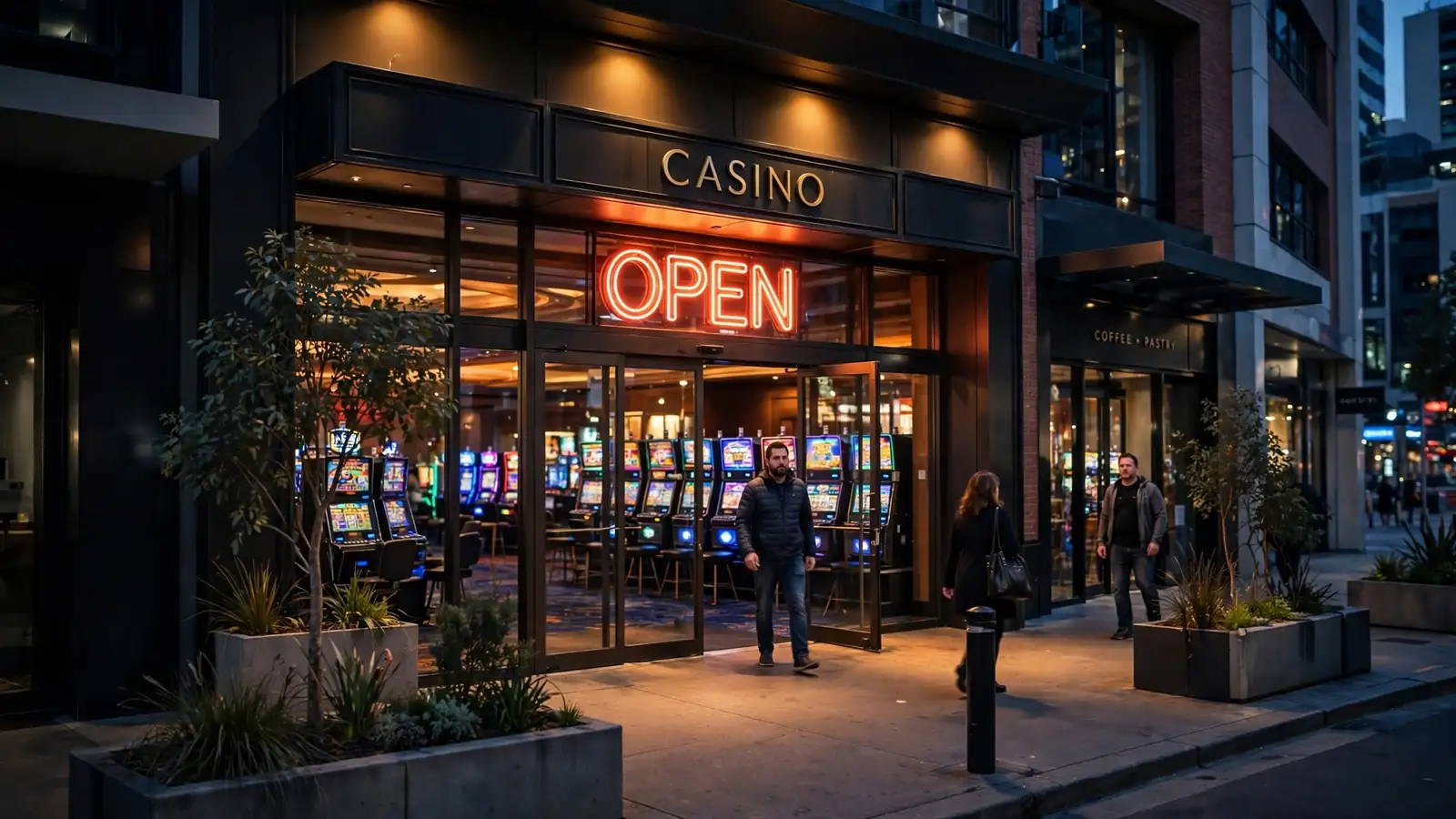
The law draws a particularly sharp line around online casino-style gambling. Under the Interactive Gambling Act 2001, operators may not provide real-money casino games to people located in Australia. The prohibited category includes familiar casino formats such as poker, blackjack, roulette and slots. The restriction concerns what an operator provides, not whether its site uses the words “parlour”, “club” or “casino”. Names can travel freely. Legal permission cannot.
This also means that an offshore site should not be mistaken for an Australian casino simply because it is accessible or presents itself with local imagery. Australian online casinos offering real-money casino games are not a locally licensed counterpart to the buildings on the ground. The legal framework distinguishes the physical casino industry, licensed by states and territories, from online casino services prohibited under federal law. A casino floor has a jurisdiction beneath it; a digital imitation does not acquire one by borrowing the floor’s vocabulary.
Legal Prohibition
Under the Interactive Gambling Act 2001, operators may not provide real-money casino games to people located in Australia.
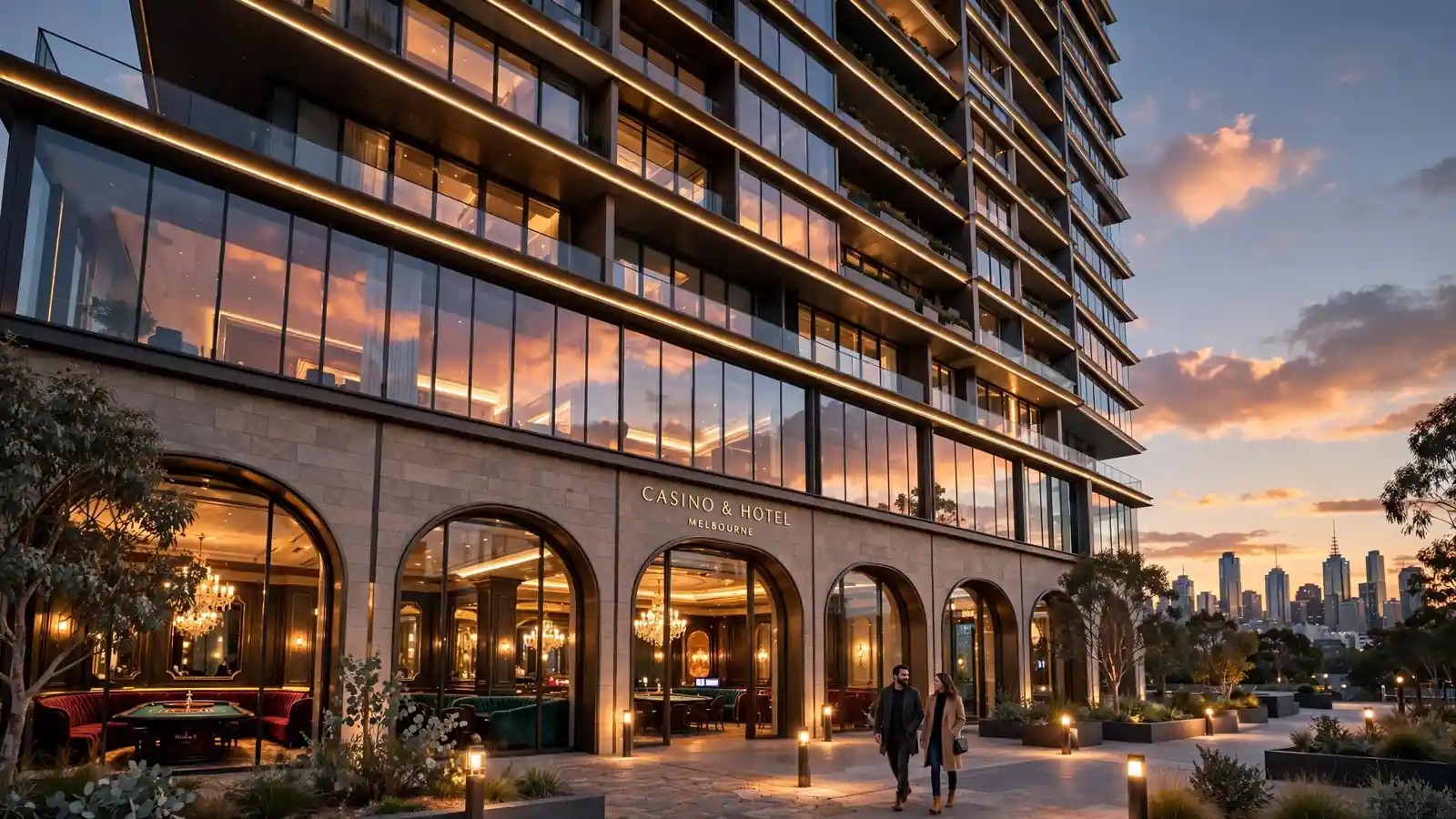
The phrase “pokies parlour” therefore has a grounded meaning in Australia when it refers to a room or gaming area inside a licensed physical casino. It may be informal, and it may be used loosely, but its strongest sense is architectural: a place people enter, within a property regulated by the jurisdiction where it stands. The online version is only wording until its legal character is established—and Australian law does not permit operators to offer real-money online casino games to people here. Same vocabulary. Different world.
Where Australian Casino Halls Sit on the Map
Australia’s casino geography is not confined to the largest capitals. The venues sit within a much wider map of gaming activity, but counts drawn from directories should be read as snapshots rather than permanent features of the landscape. A specialist gambling-venue review counts facilities in 147 Australian cities. That figure describes the scope of its own tally; it is not a census etched into the country’s boundaries.
Sydney appears at the dense end of that map. The same kind of specialist review identifies it as Australia’s largest gambling city, with 11 gambling facilities. The label refers to a concentration of venues, not to a single casino district. In a city spread across a harbour and many suburbs, a count says little by itself about how close any facility is to another, or about what sort of venue each one is.
The map becomes more striking beyond the eastern capitals. In the Northern Territory, a specialist review lists three casinos across three cities. Alice Springs is included with one casino, identified as the territory’s city with the most casinos. The wording sounds like a ranking, though the count gives it a modest scale: one venue. The town’s casino has a precise address, Lasseters Casino at 93 Barrett Drive, Alice Springs, NT 0870. Here, a place name and street address do more useful work than a broad regional label.
Other locations show how casino venues attach themselves to very different kinds of urban geography. Jupiters Gold Coast Casino & Hotel is on Broadbeach Island, on the Gold Coast. Country Club Casino is listed on Country Club Avenue in Prospect, within Meander Valley. One sits amid a coastal resort setting; the other is associated with a locality in Tasmania’s Meander Valley. These are concrete points on the map, not evidence that every casino follows the same development pattern.

That difference matters. A “casino city” can mean a large metropolitan area with several facilities, or a smaller place where one venue carries much of the local casino identity. National totals flatten those distinctions. The address restores them. A venue on an island near a beach, one on a town’s named drive and one in a valley locality belong to the same broad category, but not to the same social landscape.
Directories also draw boundaries according to their own methods: what they count as a facility, which locations they include and when the listing was assembled. That is why totals such as 147 cities, or Sydney’s 11 facilities, are best treated as attributed tallies rather than timeless national statistics. The physical locations themselves are more stable reference points, even when listings change.
The spread, then, is not simply a chain of capital-city landmarks. It reaches from Sydney’s concentration to the Gold Coast, Tasmania’s Meander Valley and Alice Springs in the interior. Geography supplies the context; each address supplies the detail.
Australia’s largest gambling city with 11 identified gambling facilities.
Includes Lasseters Casino at 93 Barrett Drive, NT 0870.
Home to Jupiters Gold Coast Casino & Hotel on Broadbeach Island.
Location of the Country Club Casino on Country Club Avenue in Meander Valley.
The Machines Behind the Word “Pokies”
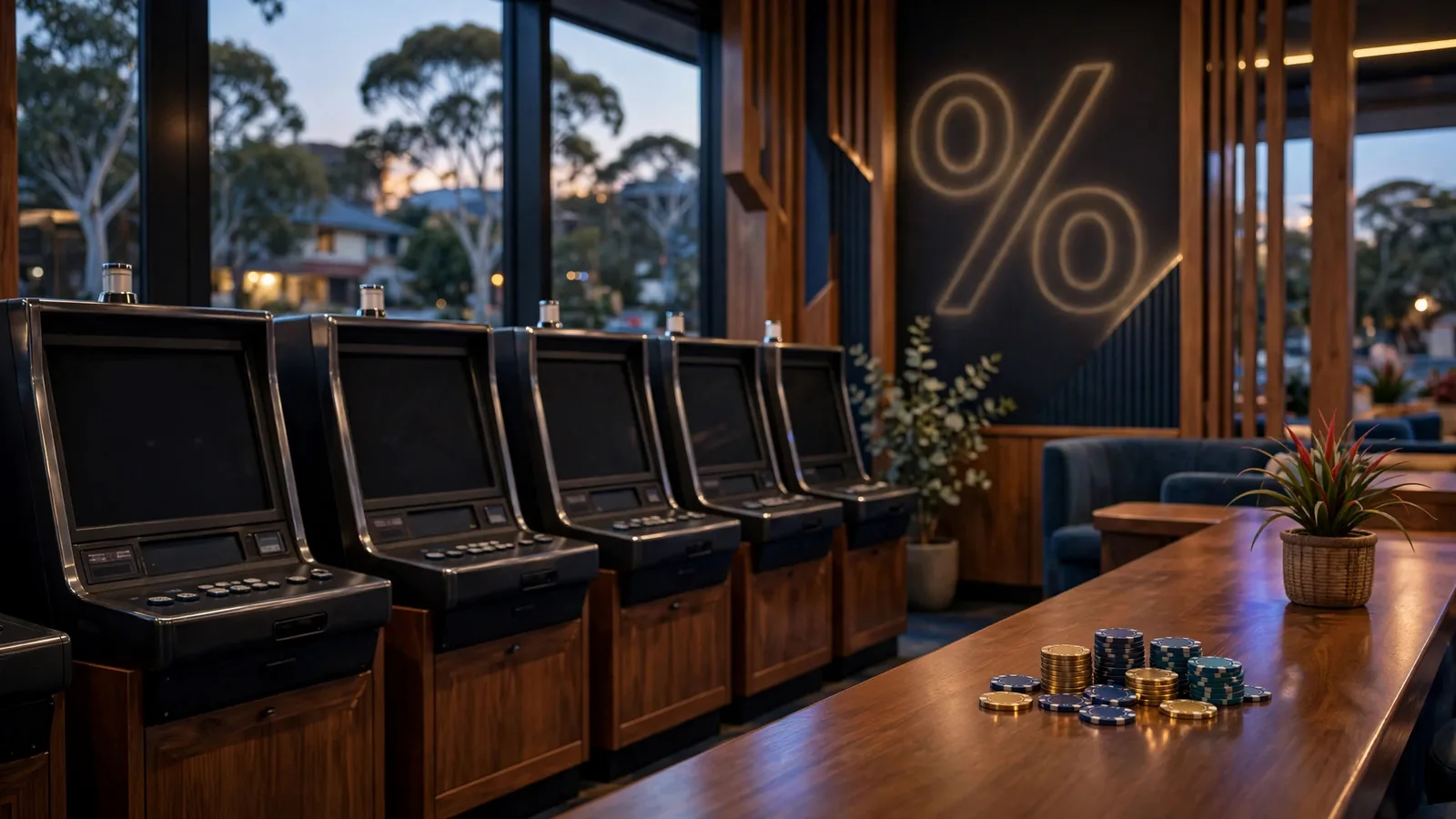
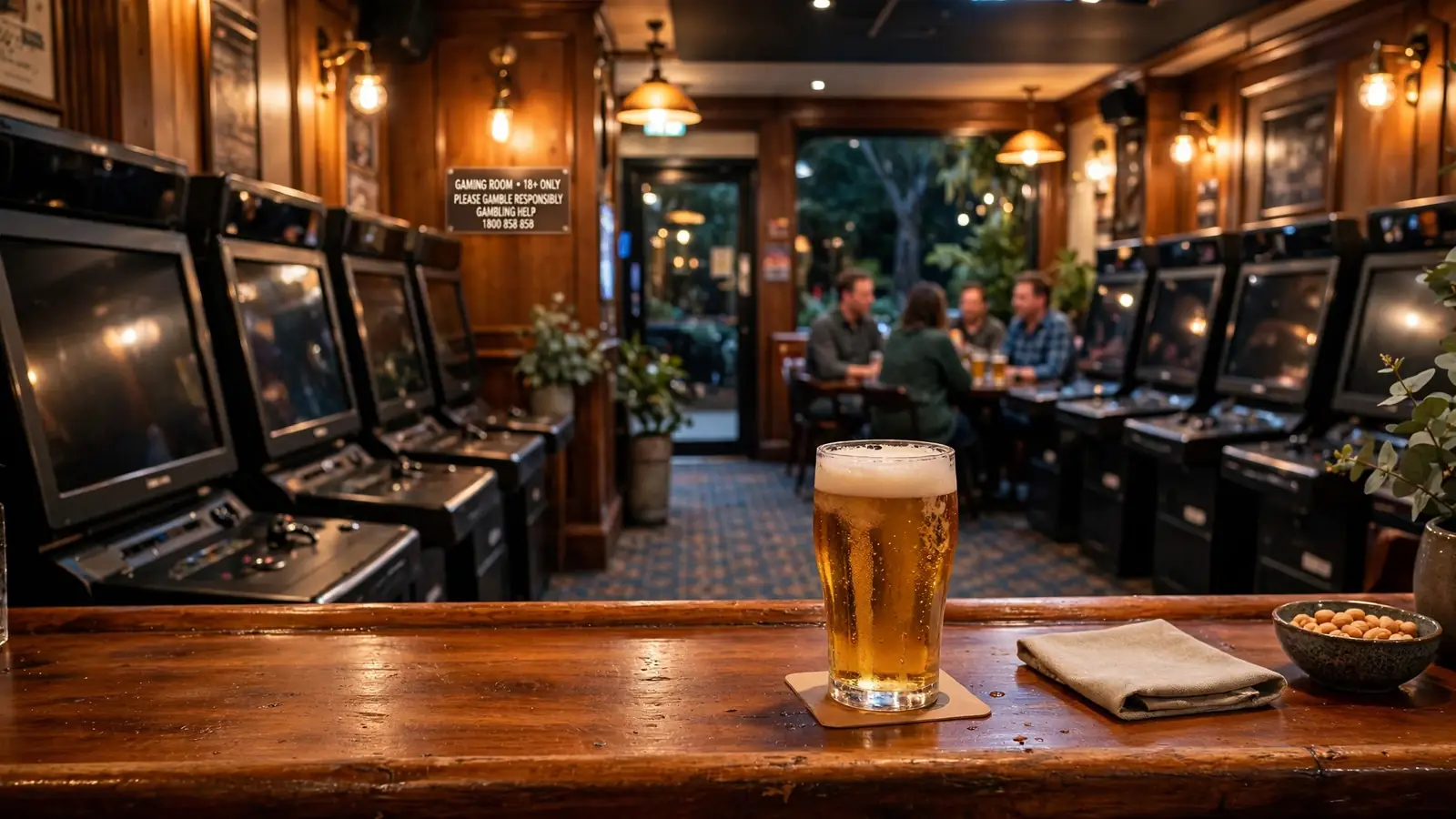
“Pokies” is the familiar Australian word for electronic gaming machines. Paired with “parlour”, it evokes a room arranged around rows of machines, though the word alone does not identify a particular venue or describe its layout. The image is cultural as much as architectural: a compact name for a conspicuous part of casino life.
The national count gives that image a firmer scale. Across Australian casinos, 3,308 gaming machines are both endorsed on venue licences and installed. The two conditions matter. A machine appearing on a licence is not, by itself, evidence that it is on the floor; the count concerns machines that meet both descriptions.
That total belongs to casinos across the country, not to one parlour, city or state. It is a measure of the machines present in casino venues, rather than a count of every gaming machine in Australia. Nor does it tell how the machines are distributed between properties, how often they are used, or what a visitor will find in any particular room.
The language of a parlour can make the machinery sound almost incidental, tucked behind the idea of a place. In practice, the count shows why the association persists: electronic gaming machines form a defined and measurable part of the casino environment. Yet a national total cannot turn a general image into a directory. The word points toward a kind of setting; the figure describes the machines across casino venues as a whole.
The number is specific. The picture is not.
VIP Language and the Reality of Casino Access
“VIP” carries the grammar of a door within a door. In a casino setting, it can suggest a quieter room, a more attentive service tier or a relationship with the venue that differs from an ordinary visit. The phrase “VIP parlour” borrows that promise of distinction. It does not, by itself, establish what lies behind it.
A label is not an access policy. Without a venue’s own published terms, it cannot show whether a space is members-only, how membership is obtained, whether an invitation is required, or what facilities are included. Nor does the wording prove that a particular room exists. “VIP” may be descriptive, promotional or simply part of a name; the distinction matters because each carries a different expectation.
That expectation has a social history. Casinos have long sorted rooms and services by status, turning privacy and personal attention into signs of importance. The language can make access sound like a reward, even where the practical rules are less dramatic. A polished label does not settle the terms.
Australian casino entry has a nationwide minimum age of 18. Beyond that threshold, any additional conditions attached to a particular VIP area belong to the venue’s own policy, not to the phrase itself. A public description should therefore identify the actual operator and state what it confirms, rather than treating “VIP” as evidence of an invitation system or privileged access.
The careful reading is modest: VIP signals a claimed distinction, not a verified right of entry. If the wording appears without a clear venue policy, the status it implies remains just that—an implication.
A velvet rope in language.
Entry Requirements
The minimum age for casino admission across Australia is eighteen, and valid photo identification is required at major casinos.
Sign-Up Bonuses, Domains and the Fine Print
A promise of a no-deposit sign-up bonus can make an online offer sound as though the main question is whether a new account qualifies. In Australia, that framing leaves out the more important issue: real-money online casino games cannot lawfully be provided to people in the country. A bonus attached to such a service does not change its legal character, however carefully the offer is worded.
The language of an offer can still be examined for what it claims. “No deposit” describes an asserted condition of joining; it does not, by itself, explain what an account must provide, what restrictions apply, or whether the offer is available to someone in Australia. A sign-up headline is not the full agreement. The conditions behind it may define who is eligible, how the claimed benefit can be used, and what happens if the account is closed or the terms are changed.
That distinction matters because promotional language is designed to draw attention to the apparent benefit, while conditions tend to sit elsewhere: in linked terms, account rules or notices that are less prominent than the headline. A claim can therefore be clear in one narrow sense and still leave its practical meaning uncertain. The wording may say that no payment is required at registration; it does not establish that the service is lawful here, that the offer is available to Australian residents, or that the account can be used on the stated terms.
A domain adds another layer. The address in a browser is a route to a website, not a certificate of its status. A page that loads, accepts account traffic or appears under a different address has not thereby become an Australian-licensed online casino. Australia does not provide a local licence for real-money online casino services to residents; the operator’s own description, or an offshore licence, cannot create one.
The route itself may change. A specialist review reports that website blocking can affect which domains resolve through Australian internet providers, while alternate addresses may appear over time. That is a description of how access can shift, not proof that any particular new address is genuine, authorised or safe. A familiar logo or a page that resembles an earlier version may offer continuity of appearance without establishing continuity of operator or legal standing.
This is where the fine print and the address need to be read together. An offer may be presented on one domain and lead to account pages hosted elsewhere; terms may identify a company that differs from the name displayed on the landing page. Those details can help explain what the site claims about its own operation. They cannot turn the claim into Australian approval. Nor does an address change settle whether an earlier offer remains in force: only the site’s wording can show what it asserts, and that assertion remains separate from the law.
The safest reading of a bonus headline is therefore a narrow one: it is a commercial claim made by the service displaying it. It should not be treated as evidence that the service may legally provide online casino play to people in Australia. This is not a technical distinction. The Interactive Gambling Act 2001 prohibits operators from supplying real-money online casino games to people physically located in Australia, including casino-style games presented through a website. The offer’s label does not override that boundary.
Attention: A no-deposit sign-up bonus or a functioning domain does not establish that a service is lawful or licensed in Australia.
There is a social history in the apparent neatness of these promotions. A short phrase reduces a complicated transaction to a welcome gesture, as if the account began with a gift rather than with a set of terms and a commercial relationship. But the polished simplicity is not the same as transparency. A bonus headline, an alternate web address and a functioning registration form each describe something about the presentation. None establishes Australian authorisation.
For that reason, claims about a no-deposit offer are best understood as claims, not as a reason to open an account or supply personal information. The domain may change; the sales wording may remain familiar. Neither familiarity nor accessibility supplies the missing legal status. A clean-looking page is still only a page.
Free Chips and Spins: Promotional Words, Not Proof
“Free chips” and “free spins” make an offer sound separate from ordinary gambling: a gift, perhaps, rather than an invitation to play. The language is familiar because it borrows from hospitality and entertainment. Chips appear to be tokens; spins sound like a feature of a game. But a promotional label does not change what is being offered or settle whether it can lawfully be made available to people in Australia.
The distinction matters especially for online casino-style games. Under the Interactive Gambling Act 2001, operators cannot provide real-money online casino games to people physically in Australia. That prohibition covers games such as slots, poker, blackjack and roulette. Calling a credit “free” does not turn a prohibited service into a permitted one. Nor does a promotional page establish that an offer is available to Australian audiences simply by describing it in cheerful terms.
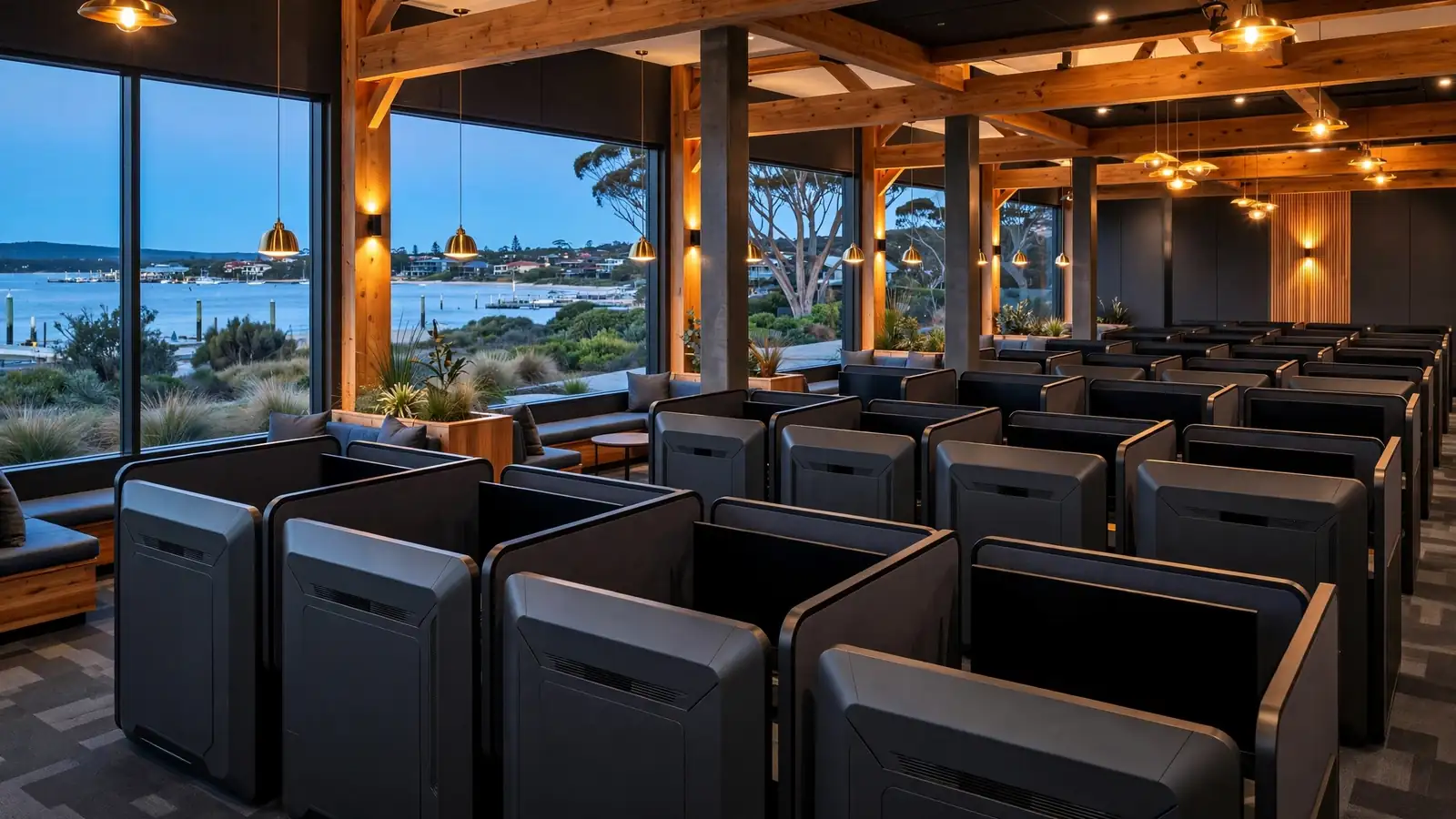
The word “free” is also incomplete on its own. It says nothing decisive about what a player must do to receive or use the promotion, what restrictions apply, or whether the offer is genuine. Those details are often placed elsewhere in terms and conditions. Even a clearly written set of terms, however, would explain an offer rather than establish that an offshore online casino may lawfully provide its games here. The label and the legal status answer different questions.
This is why “free” should be read as promotional language, not as evidence. A site may present chips or spins as a welcome, a reward or a limited-time feature. None of those descriptions proves that the service is authorised for Australians, that the promotion can be claimed from Australia, or that the site’s account of its own rules is reliable. A functioning page is not a licence; a persuasive banner is not one either.
The regulatory record also makes alternate addresses a poor substitute for evidence. A specialist review reports that the Australian Communications and Media Authority has taken website-blocking action against illegal gambling services, including alternate domains associated with Fair Go. Blocking can affect which addresses are reachable through Australian internet providers, while replacement addresses may appear. A new address does not make the underlying offer lawful. It is only a different route to a web page.
That point is easy to lose in the small print. Promotions are designed to draw attention to the benefit and away from the conditions surrounding it. The reader sees the gift before the service behind it. Yet for Australian online casino offers, the service is the central issue: a free-chip or free-spin claim cannot override the federal prohibition, and advertising prohibited interactive gambling services to Australian audiences is not allowed.
Do
- Read the full terms and conditions
- Verify the legal status of the provider
Don’t
- Trust “free chips” as proof of legitimacy
- Assume an alternate domain implies authorization
There is no need to treat every promotional phrase as proof of a scam; the phrase alone cannot prove that either. It proves only that someone has chosen to describe an offer as free. Whether the offer is accessible, what conditions it carries and whether its provider may lawfully serve people in Australia are separate matters. The vocabulary is bright. The boundary is not.
What a Parlour Casino Review Can Actually Verify
A review can verify particulars that leave a trace: what a page says about itself, whether its terms are visible, whether its contact details are consistent, and whether an address leads to the same material at different times. These are observations, not a verdict. A polished page may be accurately described and still provide no reliable evidence of the service behind it.
That distinction matters in reviews of sites presented as a “pokies parlour.” The word can make an online page sound like a physical gaming venue, while the review may move between the two without marking the change. A careful account identifies what it actually examined: a website, a named location, or a claim made by an operator. If those categories blur, confidence can grow faster than evidence.
Screenshots have limits. They record what appeared on a screen at a particular moment; they do not establish who controls the site, whether its claims are true, or what happens after an account is created. The same applies to reports that a page loads, accepts account traffic, or can be reached through another web address. Access is a technical condition, not proof of Australian licensing.
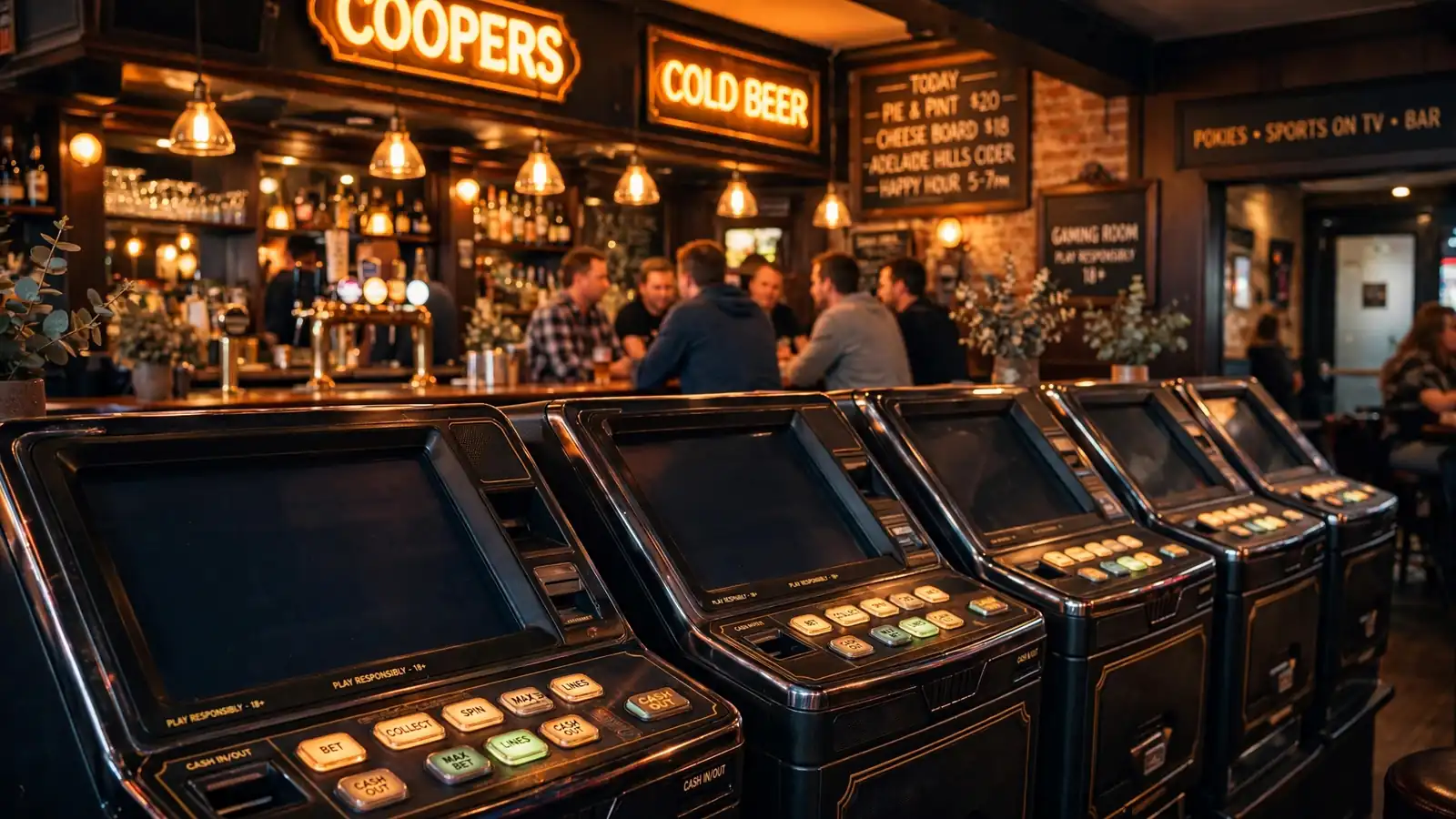
An alternate address can be especially persuasive because it gives a review something concrete to point to. Yet domain changes may reflect little more than a change in routing or availability. They do not transform the legal status of the service. A site’s ability to keep appearing under a new address is not a credential; it may simply make the trail harder to follow.
A specialist review has described ACMA website-blocking action involving illegal gambling services, including alternate domains associated with Fair Go. That account is useful as a reminder that enforcement can concern web addresses as well as the service named on a page. It should not be turned into a blanket conclusion about every site that uses an alternate domain, or treated as proof that any particular page is legitimate. The detail needs attribution and proportion.
Review language often moves from “the page opened” to “the casino is available,” then quietly to “the casino is safe.” Each step carries a claim that the previous observation cannot support. A review can report that a website loaded for its reviewer. It cannot infer from that event alone that the service is authorised to provide online casino games in Australia. Nor does a user’s successful access settle the matter.
The same discipline applies to praise and warnings. Specific, dated observations are more useful than broad labels such as “trusted” or “blocked.” A sound review separates what it saw from what it inferred, and marks statements supplied by the operator as statements rather than independent findings. If its evidence consists mainly of an accessible page, a working account route and a substitute domain, the central conclusion remains unverified.
Review Limitations
- Technical accessibility is not proof of Australian licensing
- Screenshots only record a moment in time, not operator identity
- Domain changes may reflect routing rather than legal status
- User access does not verify that a service is authorized
That is not a small distinction. It is the difference between describing a website and certifying a business. A review may document the first. The second requires evidence that screenshots and changing addresses cannot provide.
Bonus Claims in an Australian Setting
A bonus attached to a casino-like name can sound like a small courtesy: an extra reason to visit, a little more play, a perk for joining. The language borrows from retail, where an added benefit is often merely an inducement to buy. Gambling is not ordinary retail, and the same cheerful vocabulary carries a different weight when it promotes play.
In Australia, that distinction is shaped by federal law as well as the rules governing physical venues. The Interactive Gambling Act 2001 makes real-money online casino games prohibited for people in Australia. A bonus claim cannot turn such a service into a lawful one, nor does polished wording change what is being promoted. “Reward” is a description, not a legal category.
The Australian Communications and Media Authority (ACMA) enforces the federal law and monitors compliance with interactive gambling rules. It can ask Australian internet service providers to block websites that provide prohibited interactive gambling services or advertise them in Australia. The regulator’s role matters because a promotion is not just a sentence on a page: it may be part of how a service reaches its audience.
That leaves a useful distinction between a claim and its context. A phrase promising a casino bonus may evoke a land-based venue, an online account, or a general promotional offer. The wording alone does not identify which one it is, whether the offer exists, or whether it is lawful to promote to Australians. Those questions cannot be settled by the attractive simplicity of the headline.
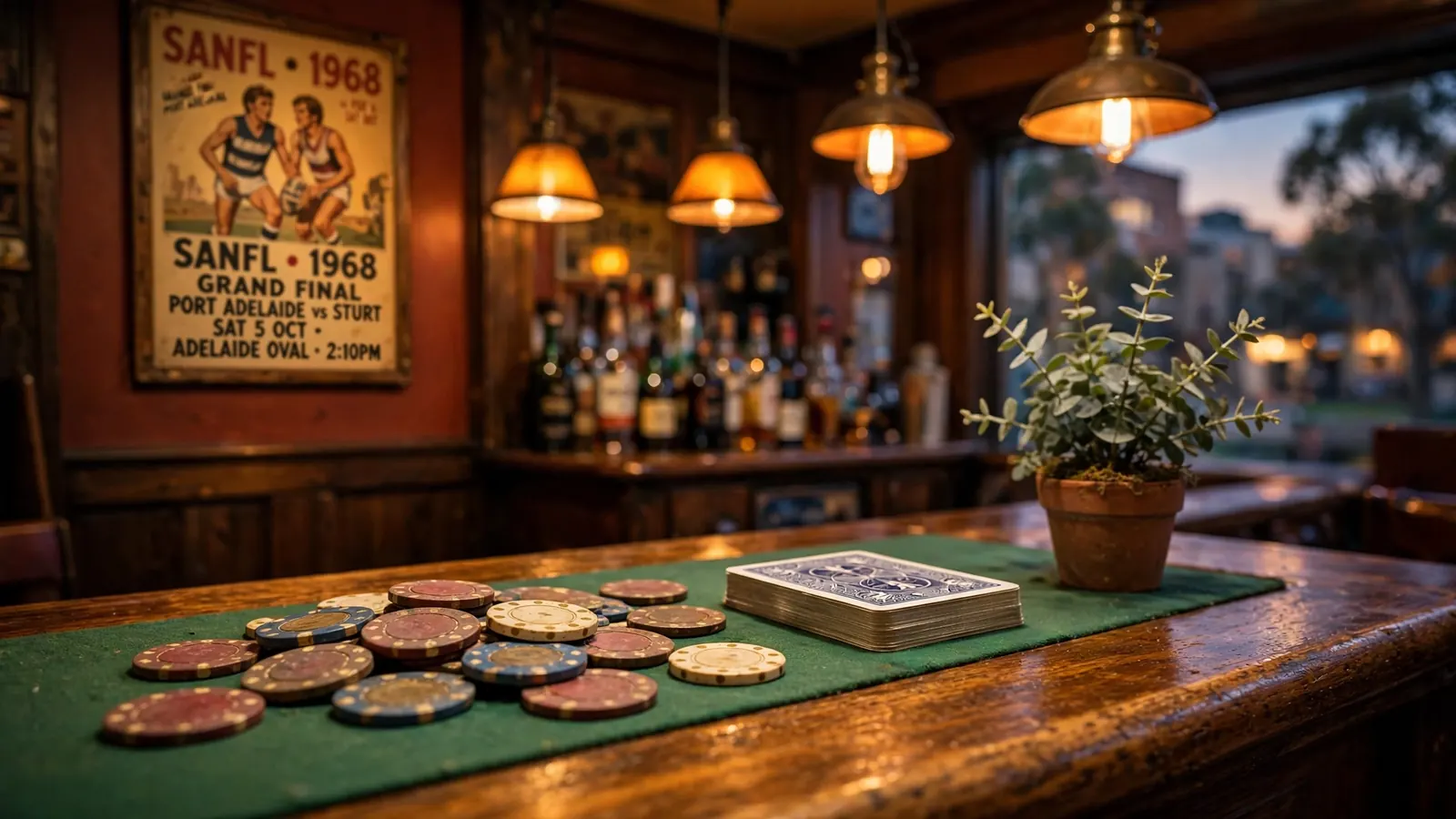
There is also a cultural point in the word “bonus”. It makes gambling sound like a transaction with a pleasant surplus, as though the extra feature were separate from the activity it encourages. But promotional language is designed to frame a choice. In a regulated setting, the framing itself matters.
A careful account of casino promotions therefore avoids treating bonus language as proof of value or legitimacy. It describes the claim as a claim, identifies the kind of service involved, and keeps the Australian legal boundary in view. That is less dazzling than the promise. It is also more exact.
Playing Online, and the Limits of a Working Website
A site can load, display casino games or accept account traffic without being an Australian-licensed online casino. Those are technical events: a server answers, a page appears, a form receives details. None changes the legal status of the service. In Australia, real-money online casino games are prohibited when offered to people in the country, whether the screen shows cards, a roulette wheel or digital reels.
The distinction matters because the internet makes availability look like permission. A working page can feel official simply by being polished and responsive; an alternate address can restore access when another stops resolving. Yet a domain is an address, not a licence. Nor does an account pathway certify that the service may lawfully provide casino play to Australians. The appearance of normality is cheap to manufacture.
ACMA Enforcement Statistics
Since November 2019, the Australian Communications and Media Authority has blocked more than 1,455 illegal gambling and affiliate websites. Additionally, since 2017, reports on illegal services leaving the market vary between 190 and over 210.
The law assigns enforcement to the Australian Communications and Media Authority, the federal body responsible for the Interactive Gambling Act 2001 and compliance with federal interactive-gambling rules. The Act prohibits operators from supplying real-money online casino games to people physically located in Australia. The responsibility for enforcing that boundary rests with the regulator, not with the design of a website or the confidence of its marketing.
ACMA can ask Australian internet service providers to block access to sites that provide prohibited interactive gambling services or advertise them in Australia. Blocking is a practical measure rather than a verdict delivered by a browser: it can interrupt access at the network level, while a service may try to reappear under another domain. A changed address does not amount to a changed legal position. It changes the route, not the rule.
The scale of enforcement gives that distinction weight. Following enforcement action, ACMA has blocked more than 1,455 illegal gambling and affiliate websites since November 2019. These figures describe a continuing regulatory effort, not a catalogue of every site a person might encounter. A page that remains reachable has not thereby passed an official test; a page that fails to load may reflect blocking, technical trouble or some other interruption. Reachability is a poor witness.
There is also a difference between a service withdrawing and a website being blocked. Since enforcement began in 2017, published totals for illegal services that have left the Australian market do not agree: one account puts the number above 210, while another says more than 190. Both accounts point to withdrawals, but neither makes a particular site’s current accessibility evidence of its standing.
This is why online casino language can mislead without being especially clever. “Play online” describes an activity and “casino” suggests a familiar institution, but neither phrase settles who is providing the service or under what law. A page may accept registration details and still be prohibited from offering its games in Australia. A page may carry familiar branding and still have no local authority to operate as an online casino. The interface performs certainty; the law asks a different question.

Searches for a digital version of a pokies parlour therefore meet a boundary that the screen cannot erase. The physical venue and the online service are not interchangeable simply because both use the word casino. In the online setting, a functioning website is evidence only that a website is functioning. That is all.
Real-Money Casino Searches and the Australian Boundary
A real-money casino result can borrow the language of a familiar venue: parlour, casino, pokies. The resemblance does not carry over into law. In Australia, land-based casinos operate under licences issued by their state or territory; that local system does not create a route for an online casino to offer real-money games to people in the country.
The Interactive Gambling Act 2001 draws a different boundary for the internet. It prohibits operators from providing real-money online casino games to people physically in Australia, including slots and table games. The federal rule applies to the service, not to the atmosphere its name tries to conjure. A parlour-inspired label cannot turn an offshore website into a local casino.
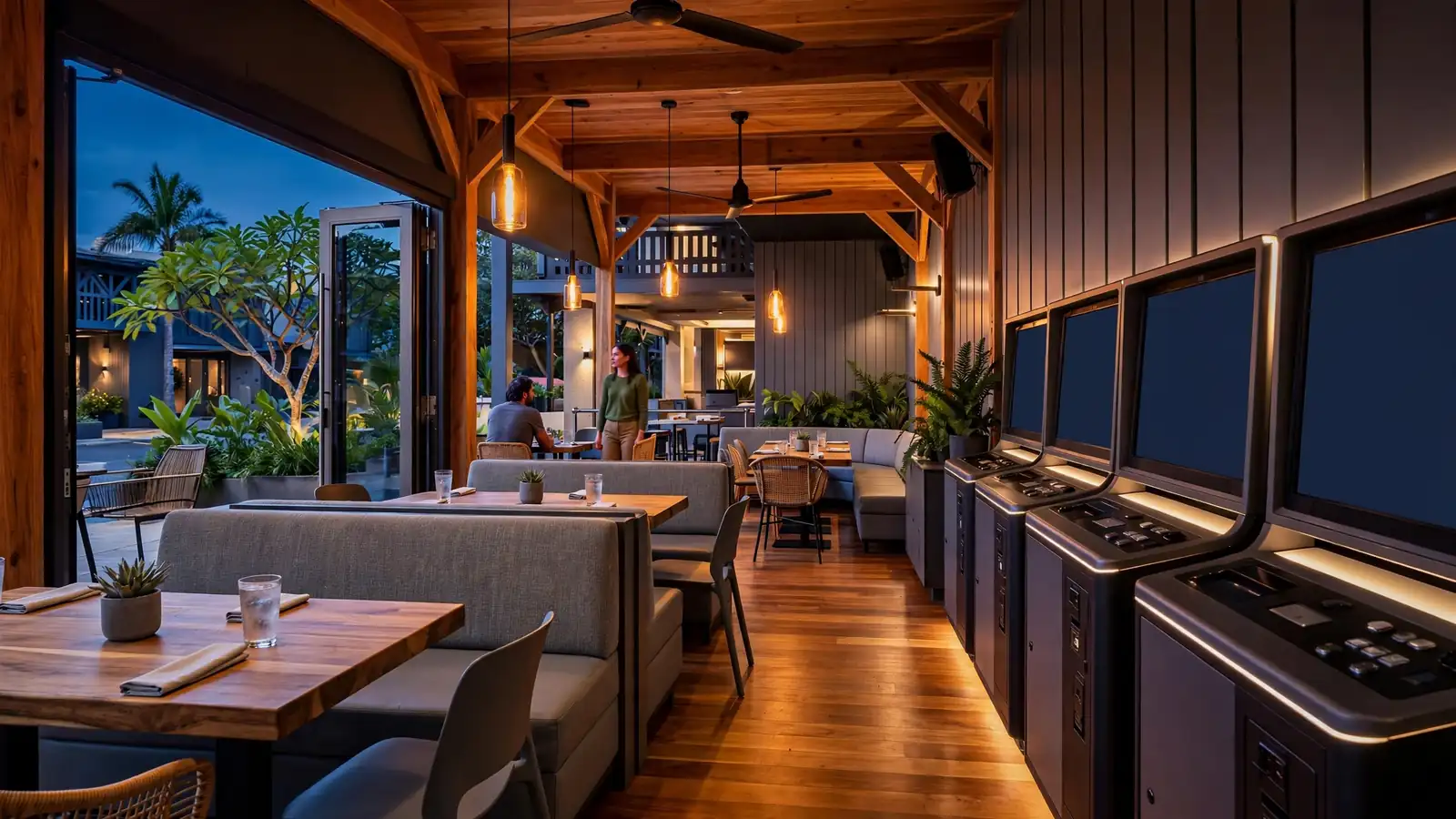
Enforcement belongs to the Australian Communications and Media Authority (ACMA), the federal body responsible for the Act and compliance with interactive gambling laws. Following enforcement action, ACMA has blocked more than 1,455 illegal gambling and affiliate websites since November 2019. The figure describes enforcement against online services; it is not a count of land-based venues or a measure of their local licensing.
That distinction matters because an Australian casino is a physical property within a state or territory licensing system. An offshore operator may use casino imagery and language, but it does not thereby acquire an Australian casino licence. Nor does a familiar name alter the federal prohibition on supplying real-money online casino games to people here.
The boundary is not between a convincing website and an unconvincing one. It is between a locally licensed physical venue and an online service that Australian law prohibits operators from providing. Search visibility is only visibility. It confers no legal status.
Prepared by the Cuntspin Casino editorial staff.